Lewitzer ponies have a lot to offer. Especially for children who want to learn to ride or who are looking for a loyal horse lover, the Lewitzer should not be missing from the shortlist.
Find out about the advantages of the Lewitzer horse breed.
Breed description
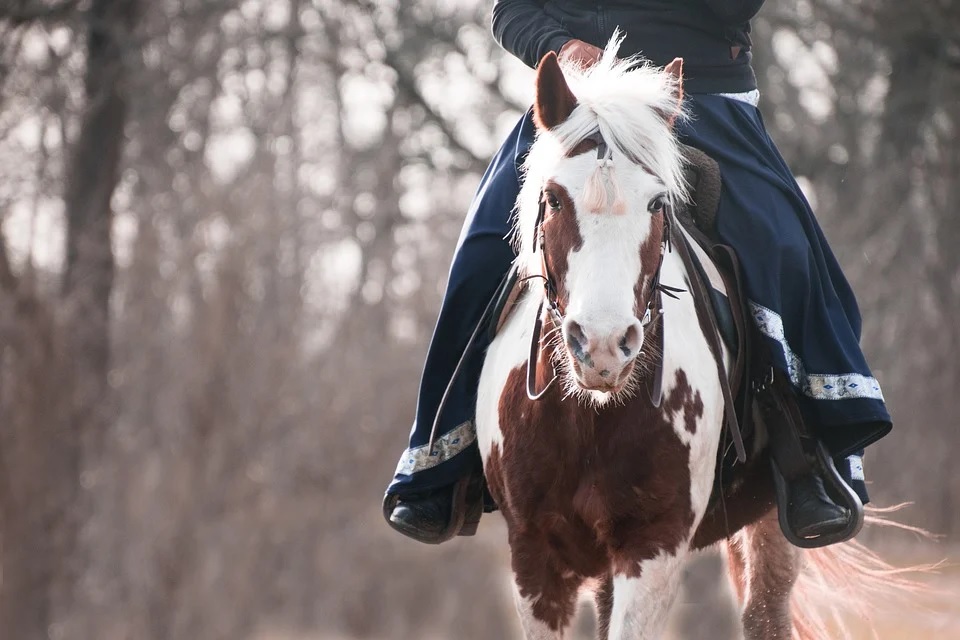
The Lewitzer horse breed consists of ponies with a maximum height of 147/148 centimeters, which thus reach the final dimension for pony size.
They are divided into four categories, each (more or less) representing a specific use of the ponies. The Lewitzer Pony is registered as a breed in the German Pony Breeding Association or in the German Pinto Central Register, or DPZR for short.
1st category: Height between 115 and 132 centimeters
2nd category: Height between 133 and 147 centimeters – use as a leisure pony and in agriculture
3rd category: Height between 138 and 147 centimeters – pure riding pony with an elegant appearance
4th category: Height between 136 and 147 centimeters – mainly agricultural use
Origin and breed history
In 1971, on Gut Lewitz in Mecklenburg-Western Pomerania near the town of Neustadt-Glewe, the idea arose to create a new breed line from existing pied ponies.
The basic idea was to “create” a pony that is easy to handle for children thanks to its firmness of character, docility, and willingness to perform, and which also makes it easy for light adults to enjoy riding.
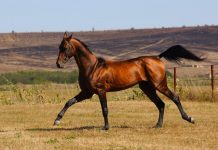
The result was a cross between the local ponies and thoroughbred Arabs and Trakehners. These ensure a noble appearance.
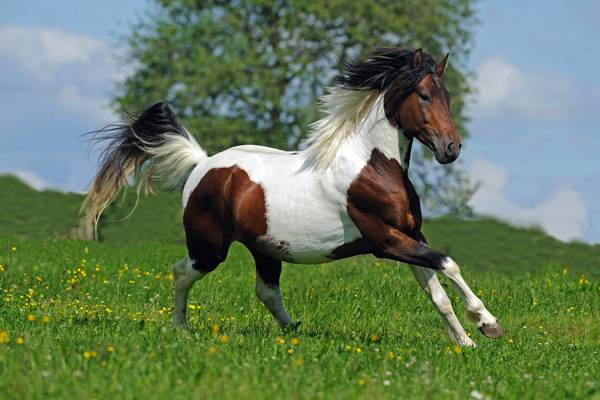
The result was a new breed, which became known throughout Germany and beyond the borders, in particular, due to its breed-typical Tobiano check, although the appearance including color/check can have different variations.
The name Lewitzer refers accordingly to the place where the idea came from and the first breeding attempt was made.
For further breeding, only Lewitz horses were used that had previously passed a riding aptitude and traction performance test in GDR times in order to create a correspondingly good quality as a basis for the offspring.
The appearance of the Lewitzer
The Lewitzer ponies have a relatively small but expressive head. This is ensured by a broad forehead, which is slightly arched in profile, while the bridge of the nose runs very straight down.
Some of them show a strong resemblance to thoroughbred Arabs, in which the nose/nostril area is slightly curved upwards.
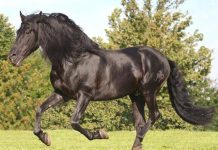
The neck is very muscular, broad, and arched. It has a length that is visually in harmony with the physique. The base of the neck forms an ideal line towards the withers and allows an almost seamless transition to the rounded neck crest.
This is of particular importance for dressage equestrianism because a “self-supporting” neck creates a harmonious image when the pony is “on the reins”.
From the withers, the short back section follows, which is followed by a rounded, slightly sloping croup. Strong back muscles underline the above-average load capacity of the Lewitzer pony.
The base of the tail is lower in the Lewitzer than in the classic warmblood pony. The extremities look robust and the joints show strong girth.
The joint positions are correct. There is a small fetlock hanging in the lower extremity area. The hooves are firm and have a normal shape that makes shoeing easy.
The Lewitzer pony has a normal long coat, which has an equally normal density.
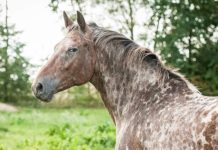
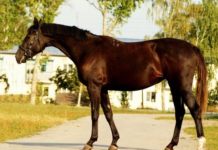
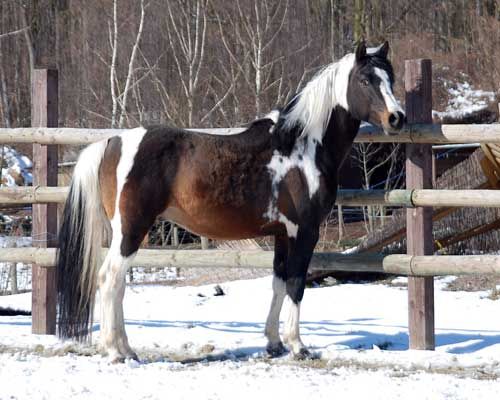
There are some differences in coat colors. Although single-colored Lewitzers are not desired for breeding reasons, they still appear as browns or foxes and rarely also as mold. Otherwise, piebald coat colors are the “flagship” of the Lewitzer breed. They can be small or large.
As Tobianos, they present themselves as black horses, foxes, and browns. “Tobiano” refers to spot that has sharply defined patches of color, the edges of which are smooth.
This is often associated with light-colored hooves and/or pronounced leg markings. On the other hand, the Tobiano gene appears less often in the form of spots or large-scale markings on the head than it occurs in other horse breeds.
Temperament and essence
The Lewitzer horses are characterized by their pleasant character and a good dose of balance, which makes them the ideal pony for smaller children and inexperienced riders.
They are considered undemanding and prove to be strong-nerved animals that are not easily frightened.
In dealing, they impress with their friendly nature. Lewitzer categories one and two are very calm, which makes them ideal for use as carriage horses.
The nobler category three shows a more spirited nature, which is due to the lively thoroughbred Arabian as a breeding horse. They are not as nervous and exuberant as the Lewitzer riders in the other categories, which is why they are only suitable to a limited extent for small and/or inexperienced riders.
Husbandry and nutrition
Attitude
Lewitzer horses have no special requirements when it comes to keeping horses. They are considered to be very frugal and can easily survive a day of rest in the stable without subsequently becoming an irrepressible animal due to excess energy.
Regular exercise is of course a must for all horses and ponies, as well as for the Lewitzer breed.
But you don’t have to work out to keep a Lewitzer in check. Accordingly, it is equally suitable for stable housing as well as for grazing.
An enormous pasture area is not necessary. It is enough for Lewitzer if they can find enough to eat. A “play vehicle” is ideal, because a Lewitzer is not suitable for individual keeping.
Due to its high regenerative capacity and robust health, it can also spend the winter outdoors. However, the Lewitzer does not find icy winds and extremely low temperatures pleasant, so keeping a stable in the cold months should make up at least a large part of it.
Nutrition
The Lewitzer horse is easy to feed. This means that the pony does not have any great demands when it comes to nutrition.
Oats should be given in the amount that is adapted to the physical strain in order to avoid obesity but to provide sufficient sources of energy.
Otherwise, lush meadows and, if necessary, hay or silage additions are possible. Occasional bran or flaxseed feedings aid digestion, but are not a requirement.
Education and care
Upbringing
Lewitzer ponies are very docile and have an extremely good perception.
That makes parenting pretty easy. As with all other horses, creating a basis of trust is an important factor so that Lewitzer can be enthusiastic about learning. If he has bad experiences, this makes his further upbringing more difficult.
Since Lewitzer ponies are very sociable “representatives” and have many talents slumbering in them, they are easy to train.
Whether for dressage riding, the carriage ride, as a load carrier, or as an all-terrain horse, with the appropriate trust in the rider/guide, they are open to everything.
Above all, their strong nerves benefit them at tournaments and when riding out or in the field, which simplifies the education of dressage lessons and jumping behavior as well as keeping calm during carriage rides even in stressful situations.
Maintenance
The need for care includes a normal workload, as with other horses. However, more frequent cleaning actions may be necessary if a Lewitzer is to appear clean.
Due to the piebalds and correspondingly white fur areas, it behaves like molds: they almost attract dirt.
Rolling around in the pasture or in the stable is enough to make unsightly dirty spots clearly visible. Here it needs a wash every now and then.
After the work is done on hot summer days, a Lewitzer is happy to have a refreshing shower. Otherwise, Lewitzer are no less or more maintenance-intensive than other horses.
Health and Typical Diseases
Lewitzer ponies usually present themselves with robust health, good mental and psychological resilience. Breed-typical diseases are difficult to determine in horses and ponies.
Hereditary diseases are usually based on individual parents. For example, if the mother mare shows severe osteoarthritis, the foals have an increased risk of developing osteoarthritis as well.
Most of the time, however, “typical diseases” result from excessive or inadequate physical exertion, unsuitable animal / species-appropriate husbandry, and inadequate care.
In addition to osteoarthritis diseases, hoof rolls are also reported in Lewitzer ponies.
The latter is an inflammation in the navicular bone, hoof roll bursa, and lower, deep flexor tendon.
It is believed that the rather slender lower extremities of the forehand in relation to the strong, weighty physique make Lewitzer more susceptible to laminitis under certain conditions.
With laminitis, they react faster than other horses to too long hoof correction rhythms, too high or too little movement, and too small/short horseshoes.
Genetically determined hoof changes are also possible in Lewitzer ponies, which also increase the risk of laminitis. For this reason, young Lewitzer horses should not be ridden in too early to prevent excessive forehand strain. You shouldn’t wait too long to order the farrier.
Otherwise, plenty of fresh air, exercise, an ideal stable climate, and social contact with fellow dogs promotes the health and well-being of the Lewitzer ponies.
Typical “stable diseases” such as lameness, tension, and respiratory diseases can be prevented in this way.
The life expectancy of the Lewitzer
The Lewitzer are among the horse breeds with the highest life expectancy of up to 50 years. Optimal care and housing conditions are a prerequisite.
Buy Lewitzer horse breed
You can usually find a Lewitzer at public horse markets. Buying there is difficult if you don’t know exactly where the pony comes from and how it was kept.
Unfortunately, there are always sellers who are happy with any means to sell their Lewitzer.
It also happens that ponies are immobilized with medication if, for example, they have psychological disorders due to poor upbringing, experience, and/or posture.
Pain medication for lameness is also not uncommon. The rideability can usually not be tested at a horse market.
It is therefore advisable to only buy it where the Lewitzer is kept and, ideally, can also be tried out as a carriage or riding horse.
For this purpose, breeders/breeding companies are particularly suitable, which predominantly offer Lewitzer foals for sale.
A distinction is made between breeding farms registered with the Zuchtverband and private breeders who practice this more or less as a hobby.
At registered breeding farms, you will meet offspring in which at least the stallion (male parent animal) usually fulfills the conditions required for breeding, including, for example, no hereditary diseases or pedigree evidence.
In the case of hobby breeders, the paternal part can also come from the neighbor’s meadow or one of the “stable colleagues”.
Lewitzers from registered breeding farms are usually more expensive to purchase than from hobby breeders and, above all, from sellers on the horse market.
But you also know what you get from a registered breeding company. With the other purchase options, a high level of specialist knowledge and experience is required if you don’t want to leave the purchase of a Lewitzer pony to chance.
In terms of price, Lewitzer foals up to unridden three-year-olds are available for an average of $1,200, although excellent pedigrees can also drive the price up.
In the case of older Lewitzer ponies, the training status and, if applicable, sporting successes determine the price. Here, for example, sums of up to 10,000 or more can be estimated for successful dressage ponies as competition horses.
Are you interested in ponies? How about the American Miniature Horse, the Shetland Pony, or the Highland Pony?
Decision support
If you are looking for a pony for your children that is not jumpy, has a balanced nature, is docile, and that your little ones can handle well and safely, then a Lewitzer is the ideal choice.
A Lewitzer is particularly calm when it comes to learning to ride. If you want a pony / small horse for you as an adult, you should be one of the lightweights so that the pony’s physique is not overloaded.
The same applies to young children who have the bodyweight of an adult.
But weight is not everything, because you also need optimal housing conditions for a Lewitzer.
If you do not have a lot of grazing space and/or you want to save the costs for stables from spring to autumn, then the undemanding Lewitzer is a good choice in this case too.
In winter, however, you shouldn’t shy away from the costs of stable accommodation and include them in your budget.
In principle, keeping horses requires a high sense of responsibility. Even though a Lewitzer can be kept as a pure grazing animal, provided that it is with conspecifics, you still cannot avoid regular care and you may have to spend time feeding every day.
You should be aware of this as well as the costs that you will have to face in addition to the purchase price.
In addition to accommodation and feed costs, this also includes farrier costs, equipment, possibly veterinary costs, and liability insurance.
If you are aware of this responsibility and can bear the costs, a Lewitzer is an excellent choice for extensive family carriage rides, for leisure fun, learning to ride, and, depending on the Lewitzer category, also for advancement into tournament sport.
FAQ: Frequently asked questions
How old do Lewitzer horses get?
They are also quite undemanding, easy to feed, robust, and healthy. Lewitzer is characterized by high fertility – the ponies also regenerate very quickly. Ponies generally have a very high life expectancy of up to 50 years.
Where is Lewitzer from?
The Lewitzer is the only East German pony breed. The origin of the breed is in the Lewitz area near Schwerin in Mecklenburg-Western Pomerania. This is where the name comes from.
How tall is Lewitzer?
Height 130-148 cm.