It is usually not easy to find the right horse/pony, especially for children. The Welsh C breed offers one possibility.
Find out about the breed and special characteristics of Welsh C ponies so that you know what to expect with them and you can make the right purchase decision.
Breed description
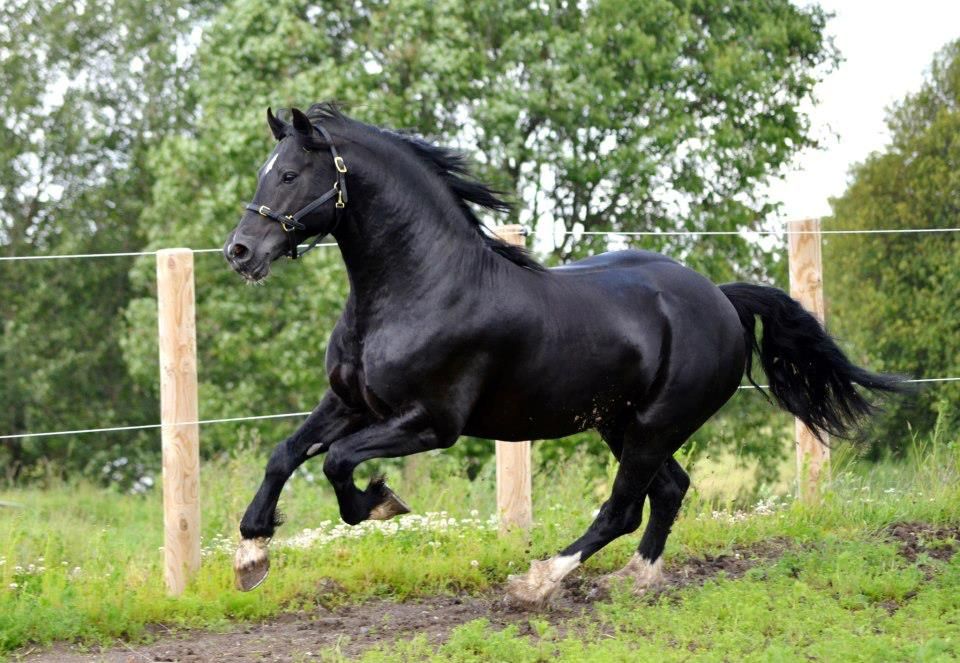
The Welsh C horse belongs to the English Welsh pony, which is divided into four different categories and the Welsh C is one of them.
The main differences can be seen in character traits and appearance.
Size: 137-155 cm
Weight: 300 – 400 kg
Origin: Great Britain
Lifespan: 20-30 years
Color: Fox, black, gray, bay with or without markings
Suitable as: Dressage, leisure, jumping
Origin and breed history
The Welsh C is descended from the Welsh breed. This can look back on a history of the origin of over 800 years.
It started in the Welsh hill country of Great Britain. Because it was at home in the hilly landscape, it was named Mountain Pony.
Crosses with Celtic ponies and the horses of Roman legionaries came about naturally. The result is today’s Welsh pony, which can be found in category A.
The Welsh C pony is a mix of mountain ponies and other noble breeds. This mainly includes thoroughbreds and Arabs.
Also, some Spanish noble breeds were crossed with the Welsh of category A, which can be found in Welsh C.
Crossbreeds with cold-blooded horses and Berbers are only available in category D, whereby the strong joint structure of the Welsh C horse breed often incorrectly suggests the mix with cold-blooded horses. This is not the case.
In 1901 the first independent breeding association for Welsh ponies and cop societies was brought into being. Within a year more than 200 mares were presented to the public as registered ponies.
Since 1931 the division into the different sections from A to D. The mare book was closed in 1960.
Today, Welsh C ponies are considered to be their own pure breed, which are bred without the influence of “foreign blood” / “foreign races”.
The purpose of breeding like the Welsh C pony was the idea of “creating” a robust riding pony that has the advantages of the original mountain pony, but exudes more visual elegance through the crossing with noble horse breeds and thus appears as a offers a fancy riding pony with wider talents than the Welsh workhorses.
We succeeded because there are hardly any horse shows for amateur riders and/or pony riding events that lack Welsh C ponies.
The appearance of the Welsh C pony
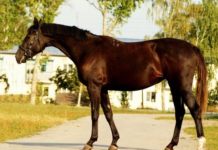
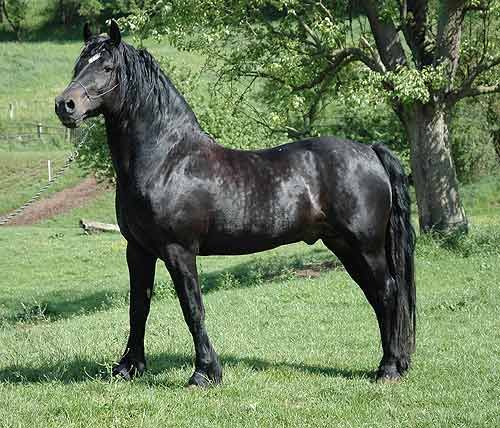
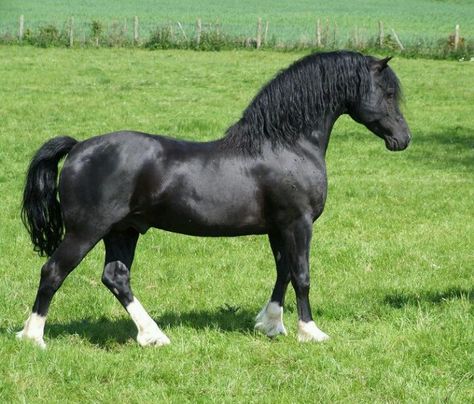
The Welsh C has a strong build and is muscular. In contrast to the other Welsh categories, the Welsh C Pony is characterized by a slimmer, more elegant overall look, although it is still impressive.
The slightly larger joint circumferences are striking when the Mountain Welsh part has established itself in breeding.
The front legs in particular usually indicate the thoroughbred and Arab mix when they are slim and well-formed. The Welsh C pony has a maximum height of 137 centimeters.
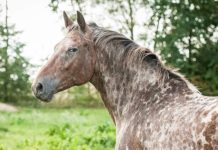
The head is elegantly shaped and shows clear traces of crossbreeding with Arabs. A broad forehead, the narrow bridge of the nose, and slightly raised nostrils give it a distinctive look. The eyes are strikingly large.
The base of the neck is ideal for creating a harmonious line between the withers and the highest point of the neck, which is an important criterion for showjumping and dressage in particular.
In addition, it has an appealing width, which offers enough space for a strong neck muscle build-up.
The withers are normal in shape and merge into the clearly shrunk back area. The sloping shoulders offer ideal conditions for an expansive gait.
The croup is melon-shaped and very typical of the Welsh C breed. The tail is set in the higher area and thus enables a proud, elegant keeping of the tail.
The front and rear legs of the Welsh C ponies have relatively short tubular legs and medium-sized pasterns. They are well-formed and slightly rounded.
A special characteristic that can also be found in other horse breeds, such as the Frisians, is the so-called Kötbehang. This is very long hair that falls over the pasterns and extends far into the hoof area of the Welsh C ponies.
All coat colors result from breeding, from black and gray to brown and fox.
Only piebalds are not available if it is a pure breed Welsh C. Badges on the head and limbs are ubiquitous.
Temperament and essence
The Welsh C pony presents itself with a friendly, very sociable, and good-natured character. It has a high level of motivation, is very docile, and eager to learn.
The Welsh C Pony is particularly distinguished by its courageous character and frugal manner. There is no trace of idiosyncrasy or aggression.
However, a Welsh C pony can be a bit stubborn, which corresponds to the nature of ponies in general.
Otherwise, the Welsh C Pony is characterized by reliability, composure, and enormous endurance, but is still not a bore because it can also show power when it is necessary, for example when jumping.
Husbandry and nutrition
Attitude
Due to the original crossing with Arabs and thoroughbreds, the Welsh C pony is very happy to move and has a certain demand for exercise – be it daily riding or extensive pasture walks. The latter should be made possible for him so that the muscular body can achieve maximum relaxation by romping around.
This is why a pasture area is absolutely necessary when keeping them in the barn. Especially in winter, when it is cold and the muscles harden more quickly, regular lunging is beneficial.
Nutrition
When it comes to food and nutrition, the Welsh C pony does not have any great demands. In theory, it is allowed to eat all suitable types of forage, from grasses to herbs to special silages and moist fodder.
It is only necessary to ensure that the amount of feed is adapted to the intensity of exercise or stress. Welsh C ponies need a lot more food during training.
Above all, it should contain protein so that muscle building is promoted.
However, caution must be maintained here, because too much protein and a corresponding excess of protein quickly lead to swollen tubular bones and fetlock joints.
Fresh grass also contains a lot of protein. Especially at the beginning of the grazing season in spring, there is an increased risk of excess protein.
Education and care
Upbringing
Welsh C ponies are relatively easy to educate and train due to their high willingness to learn and a quick grasp of things. They quickly internalize simple exercises for safe and harmonious interaction with people and turn them into very sociable and friendly companions.
Once they have gained confidence and know where they belong, they usually develop a strong focus on people. They will then be very happy to follow you wherever your path leads.
In terms of equestrianism, willingness to learn and willingness to perform is also advantageous characteristics. If a Welsh C pony is to be trained as a rider, it is advisable to leave this to the professional, because the Welch C pony learns and maintains mistakes just as well as correct commands.
Accordingly, it is difficult to correct mistakes again. As a purely recreational and beginner horse, it is characterized by a lot of patience and turns out to be a pony that can be trained to be a calm and strong-nerved friend.
The fur of a Welsh C pony is thicker and longer on the lower leg areas due to the droppings. Traditionally, the mane also remains long and the tail hair lush. In terms of maintenance, this also means more effort.
Maintenance
The long curtain needs to be combed regularly and ideally every day, especially after riding or walking pasture on wet and/or muddy ground.
Otherwise, knots and tangles quickly develop, which increases the risk of inflammation and eczema, especially in the fetlock.
Due to the very thick coat of fur, sports and competition ponies should be sheared in winter when they are training.
This reduces the risk of catching a cold with a cough, which forces you to take a long break from riding. In every other point, the care includes the same tasks as with any other horse.
This ranges from occasional showers, sweat, and mane wash to hoof care including hoof corrections by the blacksmith.
Health and Typical Diseases
Breed-typical diseases are not known in a Welsh C pony. By nature, it is considered to be very disease resistant with robust health.
Nevertheless, the Welsh C breed is more prone to certain diseases than many other horse breeds. This is mainly due to the special exterior (external physical characteristics).
The long fetlock hangings can lead to a scuffle faster, for example. This is a bacterial skin inflammation that forms in the fetlocks of Welsh C. The hind legs are predominantly affected.
This is due to the fact that moisture in the fetlock dries faster because it allows less / no air to get through the ankle curtains.
Skin irritation arises, which can develop into a scum, i.e. skin inflammation, as a result of bacteria from existing dirt or dirty water.
It is therefore important to always thoroughly dry damp/wet legs in the fetlock and hangings area of the Welsh C pony.
Due to the strong back muscles, a Welsh C pony needs a longer warm-up phase, especially in winter. If this is not the case, it is more prone to tension than horses with fewer back muscles, which can lead to lameness and unridability.
A lot of gymnastic exercises, such as pole training or cavalettis (low jumping poles), keep the muscles supple.
Life expectancy
Due to its good health and robustness, a Welch C Pony can reach an age of well over 20 years if it is well cared for and is kept in a species-appropriate manner.
However, the average age of Welsh C ponies, which are heavily used in competition sports, is significantly lower.
This is based on a higher risk of injury and above-average stress. While the average age of large horses from competitive sports is between seven and ten years, a highly demanded Welsh C pony still has an average age of around 13 years because the robustness benefits it.
With regard to life expectancy, the following applies accordingly: strong and permanent overexertion can significantly shorten the life of the tough Welsh C breed.
Buy Welsh C horse breed
There are various specialist magazines for riders and horse lovers, which also include Welsh C ponies in their sales sections. Breeders and keepers advertise here.
As a rule, you have the opportunity to take a look at the horses personally and, ideally, to try them out in terms of riding or driving technique, provided they are older, trained Welsh C ponies.
As an alternative, you can contact a Welsh C breeder directly. There are plenty of them. Breeders who are registered with the German Breeding Association will usually receive copies with papers and/or proof of their pedigree. These Welsh C ponies are correspondingly more expensive.
Buying a Welsh C pony at a horse market should be considered carefully. Here you usually do not have the opportunity to take a close look at the pony. You have to rely mostly on what the seller is telling you. Purchasing on site is therefore not recommended.
If it is a serious seller or possibly a breeder, he will not express any objections if you make an appointment with him to inspect the Welsh C pony more closely where it is housed.
This gives you an insight into the current housing conditions and allows you to better judge whether the pony of your choice comes from good hands or whether problems in handling or behavior are to be expected.
How much a Welsh C pony costs cannot be answered across the board. The price depends on various factors. Foals are already available for around $1,500. With excellent pedigree, however, they can quickly cost $6,000 or more. Pure driving horses are usually available between $800 and $1,400.
Pure leisure horses are offered for around $1,400 to $1,800. Dressage and showjumping horses or with good potential to become them are priced between $2,700 and $5,300.
Welsh C ponies that have already successfully competed in tournaments and have demonstrably won placements are traded for up to $11,000, seldom higher.
You shouldn’t forget that there are additional costs in addition to the purchase price. If you do not have your own stables and meadow areas, storage costs are due. Forage, farrier, accessories, and occasional vet visits are other examples that cost money. You should take that into account in any case.
Decision support
If you are looking for a child-friendly horse with pony dimensions that gives you a good feeling of security and reliability, and is also quite undemanding, good-natured, and peaceful to deal with, the Welsh C Pony is an ideal choice.
It offers you a lot of flexibility in use. Whether just for riding across fields and through forests, whether as a powerful and enduring competition and sport horse or for driving, it is suitable for every requirement.
The Welsh C breed also offers you some special plus points: its insensitivity to diseases, enormous willingness to learn, and strong physique, which can be worn by adults.
You should keep these factors in mind when deciding which breed of horse is best for you.