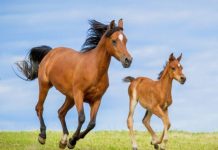
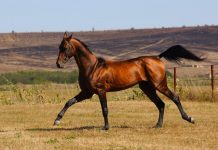
The Aegidienberger is a German horse breed that was only founded by a single breeder in the early 1980s.
The aim of this breeder was to combine southern ease and northern perseverance in a horse with a top-class tölt. You can find out how well he did this in the following article:
Breed description
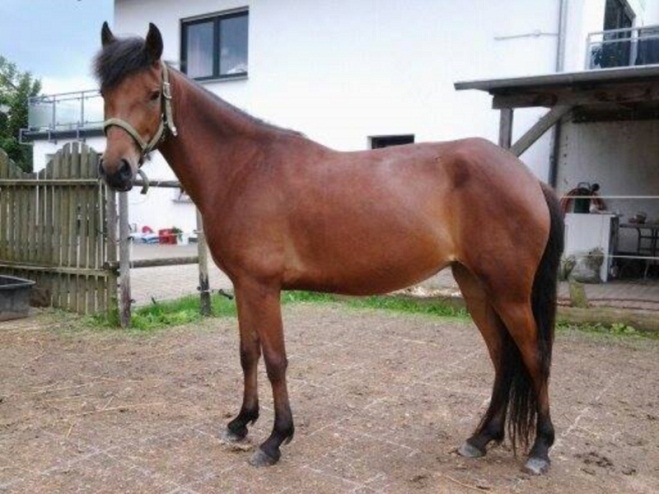
The Aegidienberger is a horse breed that was only bred at the end of the last century with a very specific goal: to make the popular Icelander bigger, more elegant, and more heat-resistant. The new horse should keep the great, comfortable tölt, but should also be easy to ride in the normal basic gaits.
The breeder succeeded in achieving this goal, the Aegidienberger already has quite a few fans among gaited horse riders. The Aegidienberger was named after his hometown, where he is still bred today.
Size: 143 – 152 cm
Weight: 600 – 700 kg
Origin: Germany
Lifespan: 25 – 35 years
Color: All colors
Suitable as: leisure
Origin and breed history
The idea of breeding the Aegidienberger goes back to the Icelandic breeder Walter Feldmann and has a lot to do with the enormous influence that the Icelandic horses have exerted on amateur riding in Germany.
The fact that these Icelandic horses were imported to Germany in the first place goes back to the initiative of a single person: the German writer and horse expert Ursula Bruns, who with her novel “Dick and Dalli and the Ponies” from 1952 was the template for the 1955 broadcast Immenhof films delivered.
The first Icelanders were brought to Germany for the shooting of these pony farm romances, which are still broadcast at regular intervals.
In the 1960s and 1970s, the little horses and their human fans revolutionized German equestrian sport: where previously rich people let their grooms help them on their noble steed, young people of all stripes now swung themselves into the saddle of their refreshingly ignoble small horses.
Up to now, there have been mainly elegant riding stables, in whose halls the children of officers and doctors learned to “drive, drive, drive”. Now wild, small open stables for weatherproof horses were built, whose owners enjoyed the rides on their Icelanders, who storm forward by themselves, also in wind and weather.
Soon there were the first Icelanders breeders and more and more Icelanders in Germany. The Icelander breeders soon noticed that the backs of the 1.40 m tall Icelanders were groaning heavily among plump, affluent Germans.
In addition, the heat tolerance of the small horses in the climatically friendly southern Germany reached its limits.
Icelander breeder Feldmann from the “Rhenish Nice” Bad Honnef had already set up his stud on the somewhat cooler Aegidienberg, but the fat people gained weight and for some Icelanders, it was still too hot in the summer.
In 1979, with the 1st World Climate Conference, climate change was officially recognized as a serious problem, and Feldmann began to develop an idea of heat-resistant, more resilient tölt horses.
Unsuccessful discussions with Friesian breeders followed until Feldmann saw Peruvian pasos while visiting the Peruvian Championships in Lima / Peru.
He was enthusiastic about the South American gaited horses, which showed a safe tölt, as Icelanders are known for their special willingness to perform and also for their special willingness to cooperate with the rider.
Feldmann, in cooperation with the Rhenish Horse Breeding Association and the University of Bonn, developed a breeding program for a new breed that was to combine the strengths of both breeds.
The first Aegidienbergers were born in the Aegidienberg stud at the beginning of the 1980s. In 1994 the Aegidienberger was officially recognized as a breed, today experts call the Aegidienberger one of the most attractive gaited horse breeds in the world.
The appearance of the Aegidienberger
The Aegidienberger looks more like the Icelander than the Paso Peruano because it is also bred with a higher genetic percentage of Icelanders.
It starts with an Icelander and a Paso, in the final Aegidienberger there are three-eighths of Paso blood and five-eighths of Icelandic horse blood, which is passed on in this way.
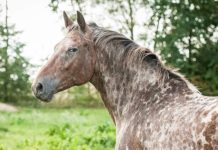
The Aegidienberger shows a fluffy mane that is absolutely typical for Icelandic people, alert, round eyes and pointed ears that are always in motion. The practical, strong, healthy physique is also largely taken over by the Icelander.
From the Paso Peruano, the Aegidienberger inherits about 10 cm more body height, a less thick winter coat, and a strong dash of nobility and elegance. The Paso wears z. B. Genes from the noble Berber in itself.
Together, this results in a good horse with a harmonious physique, which likes to carry the well-placed neck in a natural upright position, but can also be ridden “through the neck”.
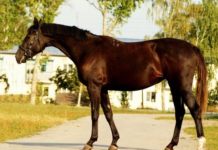
The head, shoulder, slightly sloping croup, and legs show strong bones and enough muscles where they belong, the back is stable and the drop hangings are less developed than in the Icelander.
The special thing about the Aegidienberger is his gaits: He masters all basic gaits and has a capacity for the demands of demanding dressage tasks.
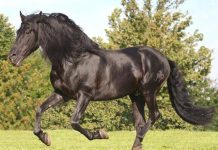
The Aegidienberger was mainly bred to transfer the special gait “tölt” to a larger horse. In this tolt he can still dash at great speed while you sit on his back like on a very comfortable sofa.
Here you can admire different horses in tölt, Paso Peruano, Icelanders, American Saddlebred, and Aegidienberger.
Temperament and essence
Both ancestors of the Aegidienberger are clear-headed and reliable horses, and this basis is absolutely right with the Aegidienberger mixture.
An Icelander is very self-confident and so keen on movement that he z. B. reacted stubbornly to braking attempts.
Temperament is present but usually stays within a reasonable framework (although the Icelander is quite capable of his own thoughts and can then show a real fire).
The Paso Peruano, on the other hand, always reacts very attentively to his rider and is therefore known to be particularly easy to ride. The Paso has a lot of temperament, a lot of action, and a lot of nobility, but likes to subordinate all of this to his rider without discussion.
The Aegidienberger is the perfect mix of both moods: Due to the gentle nature of the Paso, the Aegidienberger was “built-in” a particularly good rideability, and overall he is a particularly friendly and sociable horse that does not lack character.
Husbandry and nutrition
During the rearing period at the stud, Aegidienbergers are housed and kept in a species-appropriate manner:
– a lot of movement
– lots of fresh air
– a lot of social contacts
You can inquire about the details of the keeping of the Aegidienberger on the stud or what you have to consider in the type of keeping you have planned with regard to the Aegidienberger at gaedingar-group.de/gpz.
Nutrition
The Aegidienberger is probably even easier to feed than the Icelander, because the Paso also makes hardly any demands on its food, but appears even less demanding (“more polite”) towards people. The prerequisite is, of course, that you find out what a good and species-appropriate horse diet looks like before buying a horse.
The same applies to the feeding of the Aegidienberger as to general husbandry: At the stud he receives good forage from pastures that have not been fertilized with artificial fertilizers and in summer freshly cut grass every day, possibly with hay.
You can stick to that, there are bound to be some dietary recommendations when you buy, and you can always ask for advice later.
Education and care
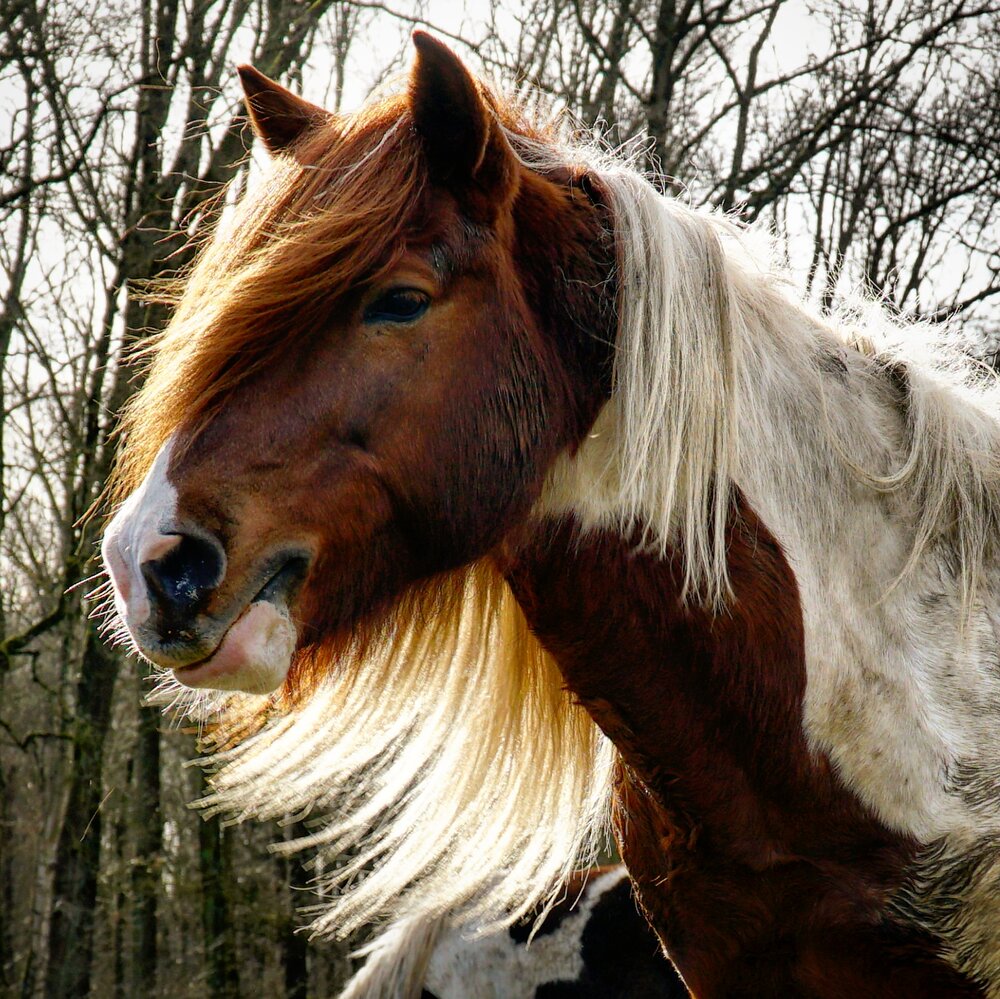
The Aegidienberger is only bred on one stud in Germany and receives a good, loving upbringing there. The stable upbringing of an Aegidienberger becomes very easy – you just have to get him used to you and his new environment.
In the equestrian training, you will certainly want to go in the direction of tölt (and possibly pass, the fifth gait for which many Aegidienbergers have good skills) if you buy an Aegidienberger.
Depending on how far you are in this direction yourself and whether you want to limit yourself to the leisure area or want to introduce your Aegidienberger to gaited horse tests, you need a gaited horse trainer.
At the Gaited Horse Center Aegidienberg, there are some trainers with the relevant knowledge, but FN-licensed trainers for gaited riding and other trainers with other qualifications can also be found on this website of the International Gaited Horse Association.
A little warning about tölt: fourth gear is not for riders who do not feel comfortable on the horse at high speeds. A horse with a strong tölt usually easily hangs out from a full-speed warmblood.
Maintenance
The Aegidienberger is just as easy to look after as an Icelander. Or even lighter because it doesn’t develop such a thick coat in winter.
Here, too, the prerequisite is that you thoroughly inform yourself before buying the horse about everything that goes into taking good care of a horse.
Health and Typical Diseases
Icelanders occasionally suffer from so-called sweet itch, an allergic reaction to the bites of unknown insects in Iceland (today not only imported Icelanders but also other horses, as in humans, allergies are increasing more and more).
You can inquire directly at the Aegidienberg Gaited Horse Center at Gestüt Lindenhof, gaedingar-group.de/gpz/verkaufspferd, whether the Aegidienberger descendants of Icelanders are more affected than other horses.
This sweet itch occurs mainly in horses freshly imported from Iceland, Icelander and Aegidienberger breeder Feldmann has been dealing with freshly imported Icelanders since 1964.
As early as 1965, Feldmann began working with veterinarians on a harmless product that should care for the skin and coat and support the horse’s self-healing powers: www.sommerekzem.com.
Otherwise, small horses like the Aegidienberger are usually more robust than large horses and usually have to deal with muscle tension, osteoarthritis, and the like much later in life (or not at all).
Life expectancy
The average life expectancy of the Aegidienberger cannot yet be precisely estimated statistically, because the first “pure” Aegidienberger were only born in the mid-1990s.
They are still alive and can probably be ridden in full for a few more years before the real pension starts with a little bit of relief.
The Icelander, who is responsible for most of the genes of the Aegidienberger, is definitely one of the long-lived horse breeds and often lives well over 30 years old.
The Paso Peruano, which completes the mix in the new Aegidienberger breed, is also known as a late-maturing horse with a long life expectancy.
Buy Aegidienberger horse breed
You can buy Aegidienberger directly from the breeder, in the Aegidienberg Gaited Horse Center at Gestüt Lindenhof in Bad Honnef / Aegidienberg. Or you just drop by the “Aegidienberger Tag”, which takes place every year on October 3rd.
If there is no Aegidienberger for sale there, you can ask the IGFA Interest Group and Förderverein für Aegidienberger Pferde e.V or the International Gaited Horse Association whether they can arrange contacts for you. At igv-online.de you can also find the contacts that lead you to the IGFA.
Decision support
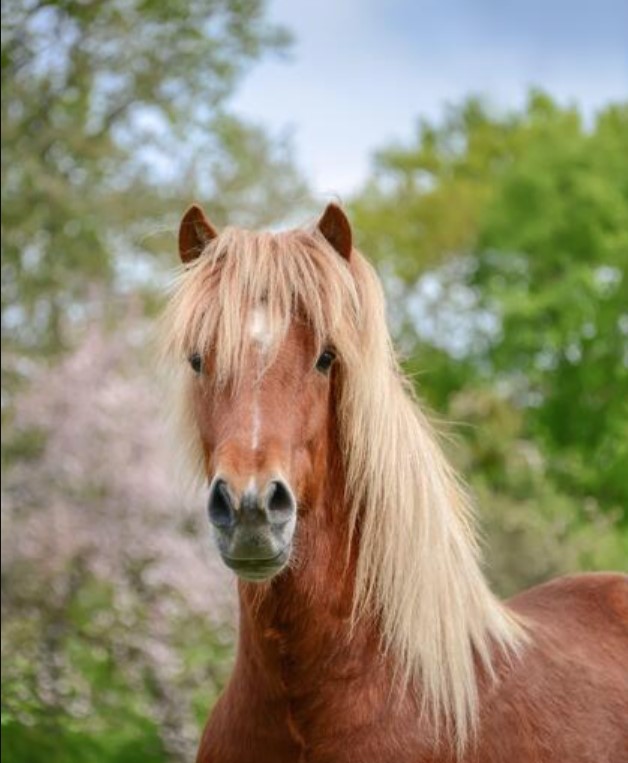
If it is really supposed to be a horse as a pet, most people think of a “completely normal horse”, that is, a horse from one of the many warmblood breeds.
Why actually? Once you have done a rapid tölt on an Icelander, you are usually very quickly more open to this “other form” of riding.
This is exactly why the Icelanders are very well known and in great demand, while the relatively new Aegidienberger has so far been traded as a kind of insider tip among connoisseurs.
If you can warm up to the “riding of freedom” and have enough nature around you, the Aegidienberger is a more than exciting alternative.