The communication of our beloved four-legged friends is based on an interaction of the facial expressions and gestures of the dog. Dogs use their entire bodies to communicate their feelings and needs to other dogs and their owners. In order for us to understand our dogs better, it is important to be able to recognize and interpret the different signals of the animal, i.e. the body language of the dog. This strengthens the bond between dog and owner and problems can also be worked on more effectively. In this article, you will learn how to correctly interpret your dog’s body language.
What is the dog’s body language like?
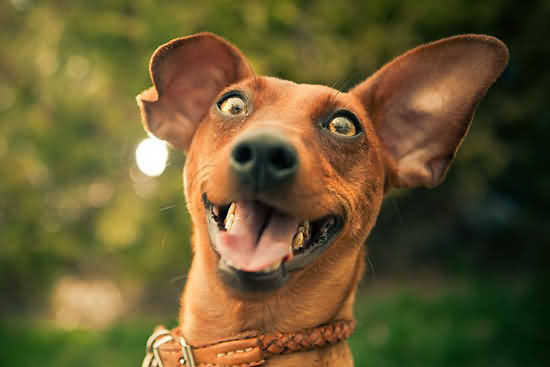
Our dogs communicate with their entire body. To interpret the dog’s signals correctly. Therefore, attention must be paid to the animal’s overall posture and the current situation in which the dog shows it. The individual points that the owner should pay attention to are: the dog’s facial expressions, body tension, head position, the position of the ears, the position of the tail, acoustic signals, and use of space. When communicating, the dog uses all its expressive possibilities to send a clear picture to the outside world. Some signals happen unconsciously and others very consciously.
It is important to know that the different possibilities of expression are divided into different levels, so there is the level of acoustic signals, facial expressions, gestures, and posture. Communication can sometimes be easy for us humans to read, such as strong fear, which the dog expresses with a tucked tail, a crouched and arched back, ears laid back, and a panicked and mostly hectic look. We humans hardly notice other expressions or interpret them incorrectly. For example, jumping up when the owner comes home is interpreted by many people as a joy to see them again, although in most cases it is a scolding from the dog who wants to discipline the person because she was gone without his control.
What is a dog’s body language?
Dog body language is an interplay of different levels of communication signals that tell the outside world what the dog wants to express.
Body language in dog behavior consists of these levels
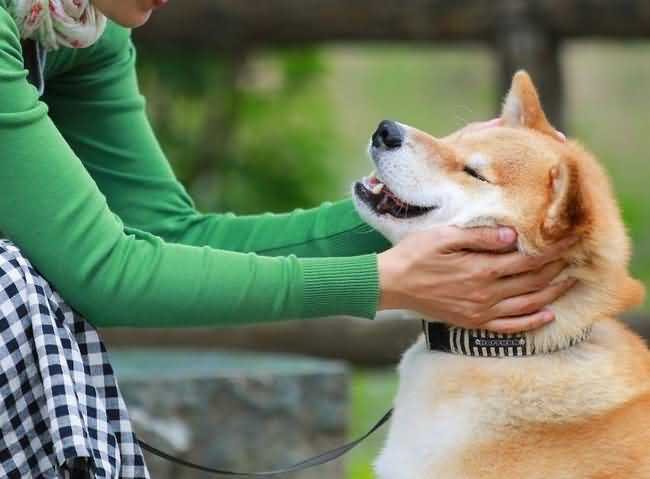
The communication of the dogs can be very small and the owner always has to consider the current situation in which the dog shows the behavior. It is important to know and be able to interpret the different levels of the dog’s body language. The communication of dogs almost always takes place with their whole body and all possibilities of expression, but we are talking about communication on different levels.
The first level of communication is the sending of acoustic signals. This includes every vocalization of the dog such as barking, howling, whining, howling, and growling. These acoustic signals are mostly used when the dog wants to communicate over a longer distance. As a result, communication even works without visual contact with the other animal or human. In the pack, this level of communication is used very often. Dogs often use acoustic signals when communicating between dogs and humans, since they have learned that most humans react to them. A classic example is barking. Before a dog barks, it has already played out a number of other signals as long as the communication partner is insight. Nevertheless, people usually only react to the loud barking of the dog and not to the previous signals.
Another level of communication is gestures. This includes the movements of the tail and its position, as well as the ears. These optical signals are easy to see for other dogs from a distance, so they are mostly used when dogs run towards each other. The signals are clear and can also be easily recognized by us humans. Reading the dog’s facial expressions is already more difficult for many people, while the dog communicates with a very fine and clear facial expression. The eyes and lips in particular are used for communication between dogs and also for humans. Facial expressions are particularly important when there is direct contact with the dog.
The last level is the posture, which is often the hardest to assess for people and especially for people who are inexperienced with dogs. When it comes to posture, the dog communicates through its posture and body tension. In this way, he can convey to his opponent whether he is defensive, nervous, relaxed, self-confident, or even dominant. For dogs, this is a very important method of communication and very accurately expresses the position of dogs among themselves.
There is still the level of fragrances. However, since this is imperceptible to us humans, we will omit it from this guide. With scent trails, dogs mainly leave messages for later conspecifics who follow the same path.
How to interpret your dog’s body language
After the owner knows how his dog communicates, he still has to learn what the signals mean and what his dog wants to express. The situation in which the dog shows the behavior and the interaction of the individual signals is always important. However, we can identify each signal and explain what it means.
What does the body language reveal?

The body language reveals whether the dog reacts like the dog to its counterpart or a situation. Usually, she shows joy, balance, excitement, fear, dominance, or aggression.
Dog facial expressions – what are they expressing?
When the dog looks, the owner can easily see how it is appearing towards other dogs. Looking away always signals peacefulness and has a de-escalating function in quarrels. The dog demonstratively turns its head and gaze to the side and shows that it wants a peaceful solution. A stare, with the head lowered threateningly, is a direct threat and signals dominance. The dog usually wants to intimidate the other person and hopes that the other person will react in a correspondingly de-escalating manner and avert his gaze. A direct look without lowering the head usually indicates a self-confident and often imposing appearance of the dog.
The facial expressions also include the communication of the dog with the lips, the corners of the mouth, and of course the teeth. The interaction of the individual games is very important. If the corners of the mouth are pulled back when the snout is closed, this shows submissiveness and can also stand for insecurity. However, if the teeth are visible, it is a clear threat from the dog and means “Don’t come any closer, or I will use my teeth”. If the dog walks loosely with a slightly open mouth, this signals relaxation and well-being. However, he should not lick his nose or pant excessively – both are signs of stress and insecurity. Yawning is also an act that is skipped and is often used due to insecurity, in stressful situations, or for appeasement.
Interpret the position of the ears correctly
Of course, there are differences in the ears due to the anatomy of the different dog breeds. However, there are some classic ear positions that all dog breeds use to communicate. Thus, forward-facing ears represent alertness, curiosity, and a confident demeanor, while backward-facing and even flat-set ears represent subservience and fear. A slight turn of the ears reveals very well whether the dog is hearing something exciting and might want to run in that direction.
Hunting dog owners who pay very close attention to the dog’s head and ears can recognize hunting behavior early on and call their dogs back much better before the stimulus for the dog takes over.
Hair on the back of the neck and back of the dog

The dog’s neck and back fur is also a means of expression. The dog raises its fur to fluff up and appear visually larger and therefore more impressive. Standing up the fur represents a threat, which is also accompanied by insecurity, which is why it also wants to appear larger and more threatening to its counterpart.
Correctly interpret the position of the rod

The dog’s tail is one of the strongest means of expression. This can represent a wide variety of emotions and, with a little practice, is also easy for us to read.
If the tail swings loosely and calmly, the dog is currently friendly, or excited if the tail is wagged faster. It must be remembered that excitement does not always have to have a positive connotation. A dachshund will also wag its tail very excitedly when digging up an animal burrow and will not be friendly towards the animal. A rigidly erected tail is much clearer. This stands for attention, for example when the dog has discovered a known conspecific or is just being called by its owner. It’s always a confident gesture, but it doesn’t convey aggressiveness. Unlike when the erected rod trembles slightly at the tip. This means annoyance or represents a threat. If the tail is clamped between the hind legs, this is a very clear sign of fear and subservience.
In dogs that have an amputated tail or a stumpy tail from birth, the dog’s expression in this area is significantly limited, but the dog will still attempt to communicate with the stub. The owner in this case needs to pay more attention to the rest of the body language.
How does the dog understand my body language?
In the course of domestication, the dog has learned to interpret our body language, and we can accommodate our four-legged friends by communicating clearly.
Dog body language misunderstandings
There are always misunderstandings in communication between humans and dogs, but the behavior of dogs towards each other is often misinterpreted. This is very often because people do not trust a small dog to start a fight with a large dog, for example, or they misinterpret the dog’s signals. Anyone who deals intensively with their dog’s communication will quickly notice that they have better control of situations and can lead their dog more safely. This will also make the dog feel more understood and orientate itself more reliably towards humans.
How do dogs communicate with other dogs?
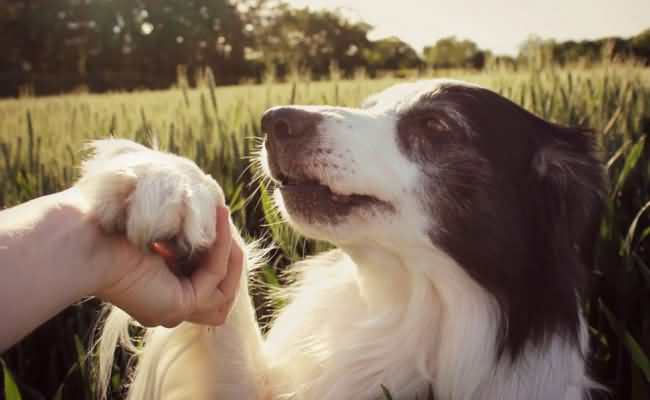
Dogs communicate with each other via facial expressions, posture, tail position, snout, and via scent traces and eye contact.