Dental care is also important for dogs. Some dog breeds are even more susceptible to tartar, tooth decay, and the like, and the dog owners have to check and care for their teeth particularly intensively. Like humans, four-legged friends can develop tartar, inflammation of the gums, tooth decay, and the resulting loss of teeth. Broken teeth often have to be removed from the animals under anesthetic. This is of course a risk for every four-legged friend and should be avoided. With the right oral hygiene and high-quality dog toothpaste, many health problems in the dog’s mouth can be avoided. You can find out everything about dog toothpaste in this article.
What is dog toothpaste?
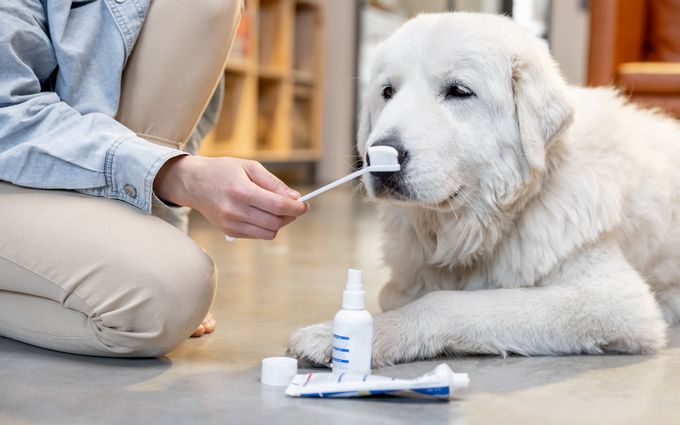
Dog toothpaste is very similar to regular human toothpaste. It can have a creamy consistency, but is also sold in gel or spray form. However, a dog toothpaste usually has a slightly different taste than our toothpaste. It is tailored to the preferences of four-legged friends with a special meaty taste. Some taste like liverwurst, ham or sausage. But there is also dog toothpaste with a minty aroma. For dogs, however, this mint taste is much milder. It is important that the dog toothpaste tastes attractive to the four-legged friend. The dog should be happy to accept the toothpaste. Otherwise it will be a daily struggle.
What toothpaste can you use for dogs?
Only dog toothpaste should be used for dogs. Toothpaste for humans is not suitable for dogs as it is far too spicy. When it comes to toothbrushes, you should only use models that were specifically made for dogs.
What is dog toothpaste used for?
The dog toothpaste also has the task of cleaning the teeth of the animals. Plaque is removed with the toothpaste. Some dog toothpaste also ensures that the animals breathe a little better. If the dog already has tartar, a dog toothpaste that is specially designed for removing tartar should be used. There are also toothpastes for dogs that are anti-inflammatory. The dog toothpaste is therefore used for ideal dental hygiene in four-legged friends. Dental hygiene in dogs is extremely important, as bad teeth can also lead to enormous problems in animals.
Dog owners often wonder why their dogs are no longer eating properly. It is often due to an inflammation or even an abscess in the mouth or gums. This inflammation can be caused by tartar and bad, decayed teeth. This can be avoided by brushing your teeth regularly. This can save the dog a lot of pain. It also has a positive effect on the dog owner, because dental treatment at the vet is always an expensive undertaking. For some animals, this is also not without danger, as it almost always has to be carried out under anesthesia.
Once the dog’s teeth cannot be saved, they must be pulled. Dogs then have to live with the missing teeth, because there is no third set of teeth for dogs.
In addition, dog toothpaste helps against bad breath in four-legged friends, as the dog usually has fresher-smelling breath thanks to it.
How much does dog toothpaste cost?
The price range for dog toothpaste is very wide. Dog toothpaste is already available in stores for a few dollars. But there are also toothpastes for dogs that are significantly more expensive.
Who is dog toothpaste suitable for?
Dog toothpaste is suitable for any dog of any age. If it is a dog that suffers from severe allergies, it is advisable to check the ingredients. As a rule, however, dog toothpaste is well tolerated by every four-legged friend.
Where can I buy dog toothpaste and how much does it cost?

Today dog toothpaste is sold very frequently as a dental care product. It is available from any well-stocked feed store or pet shop, as well as from the veterinarian or dog groomer. Of course, dog toothpaste can also be ordered online. There are also numerous cosmetic companies that also offer toothpaste for animals. These can be special shops for aloe vera or sea salt products, CBD hemp oils or coconut oils, or shops for herbal products. When researching dog toothpaste, a huge selection can be discovered.
The prices are just as multifaceted. Dog toothpaste can be bought in a price range from $2 to $25. Here it always depends on the ingredients of the products and of course the brand and brand.
Make dog toothpaste yourself
If there is no suitable dog toothpaste available in stores, you can also make it yourself at home quickly and easily from just a few ingredients. Products such as coconut oil or hemp oil are simply mixed with baking soda. About 3 tablespoons of baking soda are added to 1/4 liter of coconut oil. Optionally, a teaspoon of sea salt can be incorporated. Everything is ground with a bunch of mint or parsley, or pureed in the food processor. If the dog does not take well to this toothpaste, it can be flavored with some grained beef broth. A little canned liverwurst can also ensure that the dog likes the toothpaste.
The toothpaste should have a creamy consistency. It should be kept in an airtight container and refrigerated. The homemade toothpaste must be used within two weeks. Commercial dog toothpaste usually has a long shelf life because it also contains preservatives.
Which dog toothpaste is good?
It is important that the dog toothpaste is well accepted by the four-legged friend. The best and most expensive dog toothpaste is useless if the dog doesn’t accept it. Just try which toothpaste your dog likes and use it. Tip: Dogs usually love meat-flavored toothpaste.
Types of toothpaste and the pros and cons
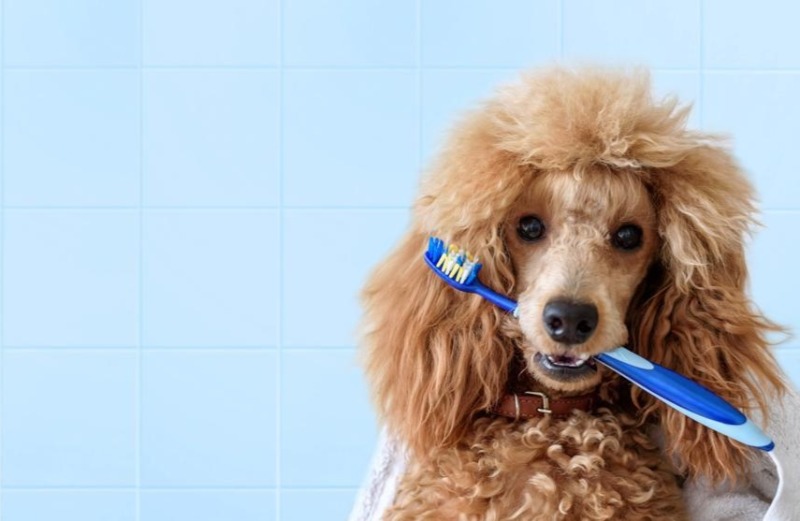
There is the dog toothpaste in tubes as toothpaste or gel. It is very easy to use and can be applied to the toothbrush or the toothbrush finger cot. There is also dog toothpaste in spray form. This can be sprayed directly onto the teeth. This is very practical if the dog does not want to get used to brushing its teeth. However, the spray also has the disadvantage that many dogs do not like the hissing of the spray and also the splashing. In addition, this spray can also be licked off again quickly.
There are also toothpaste and mouthwash combinations that are poured into drinking water and absorbed while drinking from the bowl. Here, however, it is difficult to check whether the dog is really taking in enough of it. The water is usually changed more often. Even if there are several dogs in the pack, it is not possible to determine exactly which four-legged friend drank how much of the mouthwash. However, the mouthwash has the advantage that the animals usually get a very pleasant scent from their mouths – bad breath is thus avoided.
No matter what toothpaste or method is used, the dog will always need some time to get used to brushing and using the toothpaste. It is best to try all methods and stick to the one that your four-legged friend likes best.
What is different about dog toothpaste than for humans?
Dog toothpaste contains special enzymes that are said to have a particular effect on the animals’ salivation. This inhibits the formation of tartar. Tartar is the most common cause of inflammation and eczema in the dog’s mouth. In addition, the toothpastes for dogs are less spicy and less minty. But these are mixed with an artificial aroma of sausage or meat.
These are alternatives to toothpaste for dogs
With some dogs, however, it can actually be the case that brushing their teeth doesn’t work at all. The chances of it working are higher the earlier you start training. If a dog gets to know how to brush its teeth as a puppy, it will never have a problem with it even when it is old. But there are also four-legged friends who are not so compatible. Before the dog owner can lose a finger while brushing their teeth, brushing their teeth should be reconsidered.
Nevertheless, dental care should not be neglected in these animals either. Fortunately, there are still some alternatives that are just as good for the dog’s teeth. The most popular are dental care sticks or chewing sticks for dental care. These so-called Denta-Sticks are offered by many dog food manufacturers. These sticks can help remove plaque and light tartar. At the same time, however, attention must be paid to first-class quality. Many of these dental care sticks are nothing more than treats and therefore have too many calories. Some even contain too much sugar. So, in turn, they are bad for your teeth.
Many also swear by coffee wood as a chewing stick. This is very suitable and a great alternative to brushing your teeth. Sugar cane or lemongrass are natural toothbrushes. These tropical plants are particularly suitable for small dogs because they are not too hard. Buffalo skin or ox drag is also given to clean the teeth and the spaces between the teeth. Not all dogs tolerate this. You also have to be careful, because chewing objects made of white, heavily treated cowhide, for example, are rather bad for dogs. These are sold under Raw Hide Products and really should not be used.
There are also toy alternatives like KONG or other brands that also serve to clean teeth. There are many differences in quality here. Only materials should be used from which the four-legged friends cannot bite off small pieces and swallow them.
How long do I have to brush my dog’s teeth?

Brushing your dog’s teeth can be kept relatively short. It is important that it becomes a daily ritual. It would be best if you always brush your four-legged friend’s teeth in the evening before going to bed. It is sufficient if brushing your teeth only takes two to three minutes. No longer is necessary.
How to brush your dog’s teeth – step-by-step instructions
The earlier you start brushing your teeth, the better it is. So it is advisable to start immediately with the puppy. In the first step, the toothbrush is introduced. Toothpaste should not be used at the beginning. Brushing your teeth is best integrated into a daily routine. It is performed at the same time every day. Start by having the dog sit next to you. The quadruped should open its mouth at the signal “teeth” or another selected signal.
At the beginning, the dog should only see the toothbrush. For the first few days after the signal, he should only open his mouth, allow himself to be touched and sit still. You can also touch the teeth with your finger. Don’t forget to give the dog plenty of praise and rewards afterwards. As soon as this works well, the toothbrush is inserted, still without toothpaste. You can now scrub some teeth with it.
Now the toothpaste itself is introduced. The best thing to do is dab some toothpaste on your finger and let the dog sniff it or lick your finger. Once he gets used to the taste, real toothbrush and toothpaste training begins. As with regular tooth brushing, the dog brushes from red to white, i.e. from the gums to the tip of the tooth.
Brushing your teeth should always be a part of your daily routine. You need to find out if the dog does better with a dog toothbrush or with the finger attachments. It is important that special dog toothbrushes and dog toothpaste are used. Toothbrushes for humans are too hard for the animals and toothpaste for humans is also not suitable because it is too sharp and does not meet the taste of the animals.
What is the best way to brush my dog’s teeth?
Get your dog used to this ritual step by step. As with your tooth brushing ritual, your dog is also brushed from red to white. The toothbrush moves away from the gums and towards the tip of the tooth.
Conclusion – brushing your teeth with dog toothpaste is important for care!
Dental care and oral hygiene are just as important for dogs as they are for us humans. Dogs with battered teeth can be in serious trouble. Inflammation, an abscess, or a fistula quickly develops due to a lack of dental care. Teeth can also brown and rot quickly. These chipped teeth also break off more quickly and lead to pain. Broken teeth must always be extracted by the vet. The risk of anesthesia should always be considered. Especially small dogs like Chihuahuas, Yorkshire Terriers, Frenchies or Pinschers, and Co. are very prone to bad teeth. In dogs with a short snout, anesthesia is usually much more dangerous.
In addition, dental treatments for dogs are always associated with high costs. Therefore, it only takes a little effort to get the dog used to the toothbrush and toothpaste.