





The greatest peculiarity of the Manx cat is something that is not there: the cat from the Isle of Man is born without a tail. But what she lacks on the outside, she makes up for on the inside with a loving temperament.
Appearance: Round and Compact
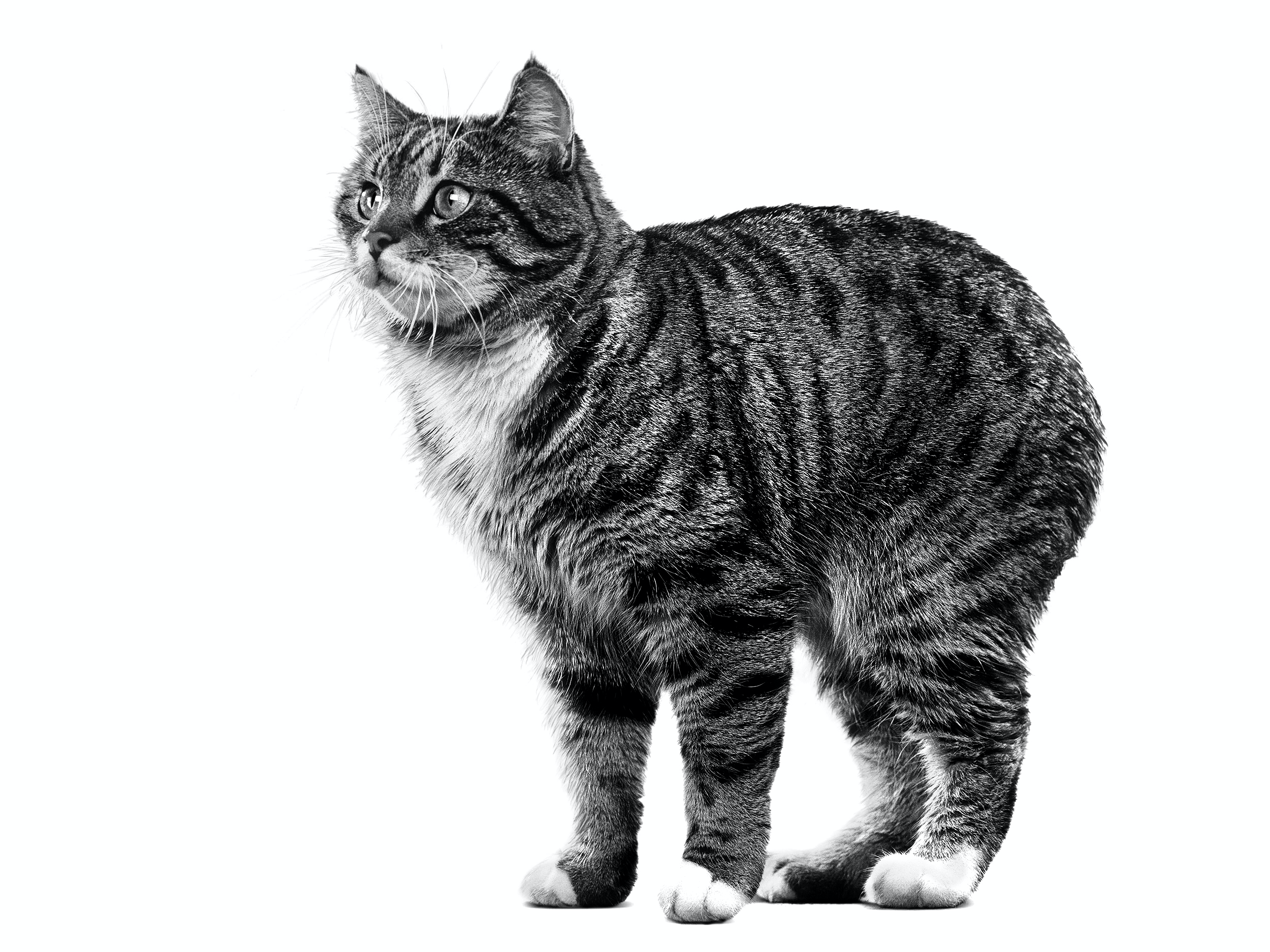
The characteristic of the Manx – or Manks – is their missing tail. This special feature is due to a spontaneous gene mutation, which is not the same in all Manx cats.
These variations occur in the Manx cat:
- Rumpy: completely tailless
- Stumpy: with a small stump tail
- Rumpy Riser: with a stubby tail that the cat can even lift if you stroke its back
- Longy / Tailed: with a normally developed tail
The stump tail of many Manx cats resembles the “flower” of the rabbit – and that is not the only thing that reminds of the long-eared: Since the front legs of the Manx are usually shorter than their rear legs, the cats often move around by hopping.
The physique of the small to a medium-sized cat is generally stocky. Their appearance is in the truest sense of the word around thing and is dominated by rounded shapes from head to toe. A short, outwardly arched back that is slightly higher than the shoulders is also typical.
The cats weigh around 3.5 kilograms, the male cats weigh an average of 5.5 kilograms. The short hair fur of the tailless is doubled, with the top hair shiny and slightly longer than the dense undercoat. Almost all coat colors and drawings are represented in the cat breed. By the way, the long-haired relative of the Manx is the Cymric cat.
Temperament: The Ideal Family Cat

Manx cats are friendly, good-natured, and calm animals. They tend to be noticeable with a low voice or ear-flattering coo instead of loud meowing.
Once they have gained confidence in a person, they become loyal companions and are reluctant to stay alone anyway. The Manx is open-minded towards young and old people, but also towards their conspecifics and other animal species. That is why it is considered the ideal family cat.
As a rule, she treats her environment calmly. But although the cat is balanced and very adaptable, it initially prefers to look at strangers from a safe distance. However, the ice can be gently broken with a cuddle unit or a new cat toy.
Care and Housing: Assisted Living for the Manx Cat
Due to their physique, the tailless cat is less agile than other cat breeds and is, therefore, best looked after in the apartment or house. Still, she loves to play and climb.
With a cat-safe balcony and steps to elevated places, you can give the cat enough exercise, including assistance. Because the Manx is always happy to be busy despite its calm demeanor.
You can also help your Manx with grooming. The thick coat should be brushed regularly, especially during the change of coat, so that it does not remain knotted and shiny. Otherwise, Manx cats are easy to care for.
Health: Robust with Limitations
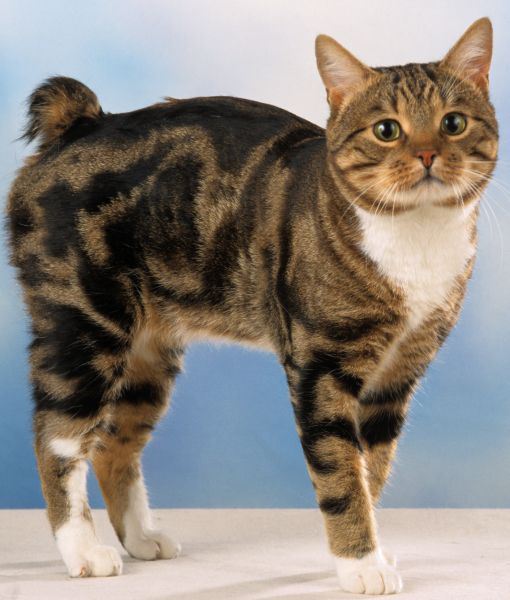
In Germany, the Manx cat is classified as a torture breed. Their genetics are not the only cause of the lack of the tail. It also leads to incorrect development of the spine and thus to impairment of health, balance, and climbing ability.
Arthritis as well as malformations and diseases of organs such as the bladder or the intestine can occur. Incidentally, the place where the tail would normally sit is very sensitive in the Manx cat: because there are many nerve endings here.
If the Manx is in good health, it has a good life expectancy of 15 years on average. Since she is prone to obesity, you should ensure a balanced diet and not overfeed so that the cat stays healthy for a long time.
Purchase: Best to Adopt Manx Cats
Perhaps the bobbing fur ball has captured your heart and you want to buy a Manx cat? It is true that keeping a Manx is generally allowed in Germany. However, due to the health restrictions caused by the cat’s physique, both breeding and exhibition of the tailless cat are prohibited.
Therefore there are no breeders in Germany. Only the USA, Great Britain, or Scandinavia still practice breeding.
The best way to provide a beautiful home for a Manx is to adopt it from the animal shelter. If you find what you are looking for here, you will get a loving and loyal companion. One prerequisite, however, is that you have no problems with frequent visits to the vet and the potential health effects of taillessness.
History of the Breed: From the Ark to the Island?

The Manx cat is considered to be one of the oldest cat breeds. The creative version of her story is that Noah is to blame for the cat’s taillessness. Just as he closed the doors of the ark, she was the last to escape onto the ship – but her tail got stuck in the door.
In fact, the scientific explanation for the lack of the tail is a gene mutation. The cat originally comes from the small Isle of Man in the Irish Sea, where it is believed to have arisen from predominantly British Shorthair cats through inbreeding within the closed cat population. However, it is unclear how the cats originally came to the island.
The Manx has been known for centuries, and it appeared at cat shows as early as the late 18th century. The first breeders’ associations were formed at the beginning of the 20th century in America and Great Britain, where the breeding focus is still today.
Are there other cats without a tail?
Like the Manx cat, the American bobtail and the Japanese stubby-tailed cat do not have a tail. While the still-young American cat breed was probably created similarly to the Manx, the Japanese Bobtail is the result of targeted breeding.
Conclusion: an All-Round Special Cat
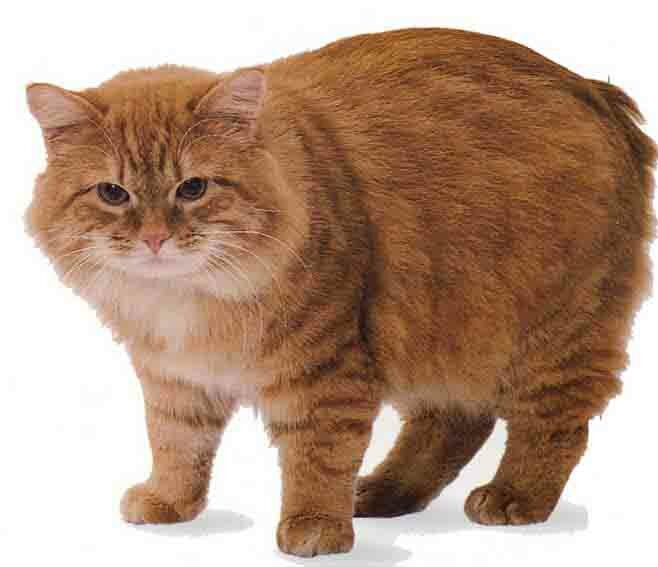
In Europe, tailless cats are very rare because their breeding is forbidden. Instead of supporting breeding abroad with a purchase, cat owners should offer a Manx from the animal shelter a new home. In return, they get an unmistakable and dear animal that will bring joy to the whole family.















