





Like a cross between house cats and pipe cats, the Chausie belongs to the hybrid breeds. It is supposed to combine the proud appearance of the wild cat with the loyal and human-oriented nature of the house cat. The rare Chausie with the pronounced cheekbones has retained the urge for movement and freedom of her wild ancestors to this day.
The Appearance of the Chausie
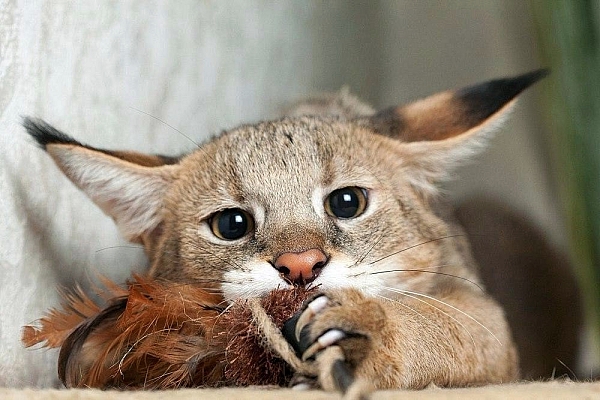
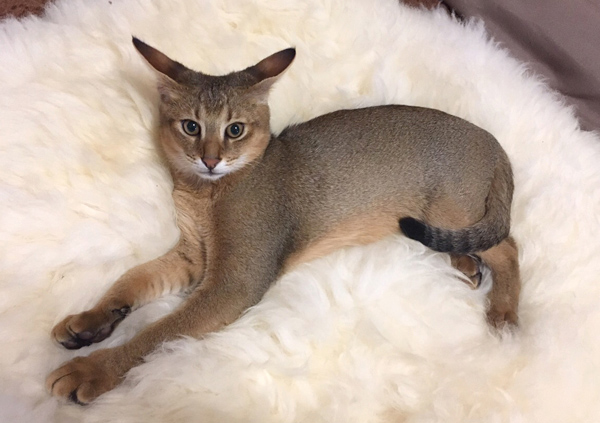
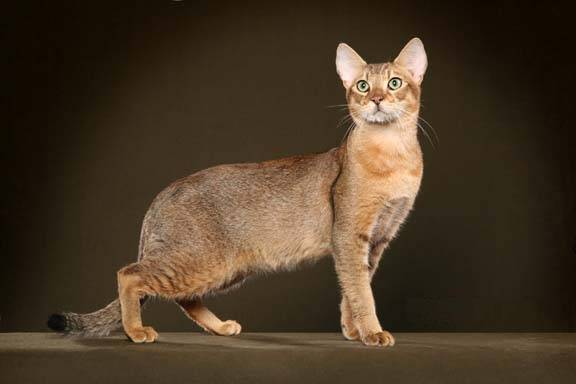
Chausie’s wild genes have left their mark on the diet and behavior of this exotic cat. However, they are most evident when looking at their external appearance. Just like its direct ancestor, the Egyptian pipe cat, the Chausie has an extremely athletic body. Her long legs – with the hind legs a little longer – than the front legs – reveal what a good runner and excellent high jumper this pedigree cat is. Her wedge-shaped head with pronounced cheekbones and widely spaced eyes also look exotic. Her strong chin and rounded ears with distinctive tufts of hair are reminiscent of a lynx.
Fur and Color Variants
In contrast to the lynx and also in contrast to other hybrid cats, such as the Savannah cat or the caracal cat, the Chausie does not have any noticeable markings. Their short to medium-length fur is banded and usually brown or black, but can also be silvery. The color variants can be divided into the following three strokes:
- Black
- Brown ticked tabby
- Grizzled Ticked Tabby (silver-colored)
The belly and the distinctive chin of the Chausie are usually much lighter in color than the indigenous fur. Their walnut-shaped eyes usually stand out in a shade of gold or yellow, but they can also be hazel brown or light green.
Breed History
A Wild Cat on the Living Room Couch
People have long had a desire to tame big cats. One consequence was the breeding of so-called hybrid cats, which began in the 1960s, primarily in the USA. With the crossbreeding of wild and house cats, scientists and cat breeders hoped to combine the exotic appearance of the wild cat with the loyal and human-centered nature of the house cat. The demand for increasingly exotic cats that were supposed to bring a piece of wilderness into the living room at home has increased steadily since then. The Chausie, half of which has wild blood and has been officially recognized as a pedigree cat by the TICA (The International Cat Association) since 1995, made a name for itself in the course of this trend. Outside of its home of breeding, the USA, the Chausie is still a rare cat for lovers.
A Cat Lover That Has Its Price
First of all: Anyone interested in Chausie as a pet must be aware that hybrid cats have their price due to the difficult and rare breeding. A thoroughbred Chausie from a serious and responsible breeder costs between 7,500 and 10,000 dollars, depending on the generation and the proportion of wild blood. Anyone who digs so deep into their pockets should of course be convinced that this pedigree cat is the right one. But what exactly is a Chausie? How much wilderness is there really in it and what demands does the house cat make of its future owner?
Temperament
The Affectionate Temperament with a Great Thirst for Freedom
Despite their wild appearance, the Chausie is an extremely affectionate and cuddly cat who likes to be around people. Every now and then, however, she is gripped by her hunting fever. On extensive exploratory tours, she then goes on mice and bird hunting and often brings her people home with a small “gift” in the form of a prey animal. So there is still a lot of wildcat in the friendly and open-minded house cat, which future owners should be aware of. The spirited and curious cat can suffer from nothing less than boredom and being alone. Sufficient occupation with cat toys, a scratching post, and, of course, plenty of exercises is essential for “taming” this wild cat. Keeping several cats also suits their desire for variety and entertainment very much.
How Well Does the Chausie Get on with Children?
Unlike many other house cats, who like to retreat to a quiet corner when there is too much hustle and bustle in the house, Chausie likes to be the focus. It gets along well with children – after all, this pedigree cat is just as playful as it is. However, their love of children should not be overused, because if something does not suit Chausie, the self-confident and spirited cat can show its claws from time to time. Children should let the active wildcat enjoy its freedom and respect its urge to go outside in order to devote itself to its greatest passion, hunting. After all, the intelligent Chausie knows best what she wants. Once she has satisfied her urge to move, she then likes to lie down on the living room couch again and show her loving and cuddly side.
The Attitude of a Chausie
Such a spirited and active cat should under no circumstances be “locked up” in an apartment. Out of love for their pet and out of consideration for their natural instincts, owners should allow their Chausie to run freely on a regular basis. A cat flap in the door that the cat can use to get in and out of its own accord is certainly the best solution. A pure flat position is out of the question for the Chausie – unless you set up a large outdoor enclosure in which the sporty fur nose can climb, jump and run as they please. If you want to prevent the cat from leaving the outdoor enclosure, it must be well secured, because a Chausie can easily jump two meters and higher from a standing position. Before building such complex security measures, you should, however, think about whether the Chausie is really the right cat for you. After all, hunting is in the blood of this hybrid cat with wild proportions and should not be suppressed.
Health and Recommended Vaccinations
However, if you keep your Chausie outdoors in a species-appropriate manner, you should ensure appropriate vaccination protection (against rabies and leukosis) as well as preventive measures against parasite infestation. There are special collars or products that effectively combat parasite infestation. Ask your vet for advice and also attend the annual check-up appointments. Cats tend to keep illnesses and ailments to themselves for a long time. Regular examinations by a specialist can help to identify and treat possible diseases in good time. Fortunately, diseases typical of the breed are hardly known in the Chausie, but this breed of cat is not immune to common cat diseases such as diseases of the upper respiratory tract or gastrointestinal infections. The cat should be vaccinated against cat flu and disease.
How Much Care Does the Chausie Need?
In addition to the necessary visits to the vet for preventive care or to refresh your vaccination protection, the care of the Chausie is very manageable. Like all short-haired cats, this cat also takes care of its fur more or less on its own. Combing your hair once a week to remove dead hair is therefore absolutely sufficient. In order to identify possible abnormalities in good time, you should also check the paws, claws, teeth, and skin of your Chausie regularly. With good care and species-appropriate husbandry, the robust and resilient velvet paws can live up to 16 years.
Proper Nutrition for Hybrid Cats
Proper nutrition is of course part of keeping your pet in a species-appropriate manner and keeping it healthy. With such an original hybrid breed as the Chausie, whose direct ancestors are wildcats, the demands on the food are somewhat more demanding than with an ordinary house cat. Many owners of hybrid breeds report that their cats cannot tolerate industrially produced cat food and are therefore switching to raw feeding (BARF). However, BARFing cats require good specialist knowledge in order to really optimally meet the nutritional needs of the animal through the food. If this type of feeding is too complicated for you, you should look around for a high-quality feed with a high meat content (rich in protein), fresh fruit and vegetables, and natural oils. The proportion of grain in the feed should be as low as possible or completely omitted due to possible intolerances with the Chausie. Many hybrid breeds that are allowed to hunt in their free-range supplement their food with mice or small birds. These factors should be taken into account when determining the right amount.
Breeding Problems of Hybrid Cats
However, the attractive wild animal look of the Chausie has its price. The mating of domestic cats with wild cats is unfortunately not without problems and is particularly controversial among animal rights activists. The main reason for the criticism and the question of whether a cross is morally justifiable is the fact that the gestation periods for domestic and wild cats differ greatly. While domestic cats have a gestation period of 63 to 65 days, wild cats are usually pregnant much longer, around 76 to 78 days. The consequence of this discrepancy is that there are many premature births, miscarriages, and stillbirths, especially in the first generation (F1). Also, most first-generation males are sterile. In the following generations (F2 and F3) too, difficult births and caesarean sections occur again and again. Breeding such hybrid breeds is extremely difficult and should therefore only be reserved for experts. In some countries, such as Switzerland, matings between wild cats and domestic cats are even prohibited according to the current animal welfare ordinance. In other countries, a permit is required for keeping wildcat hybrids up to and including the fourth generation (F4).
Is the Chausie the Right Cat for You?
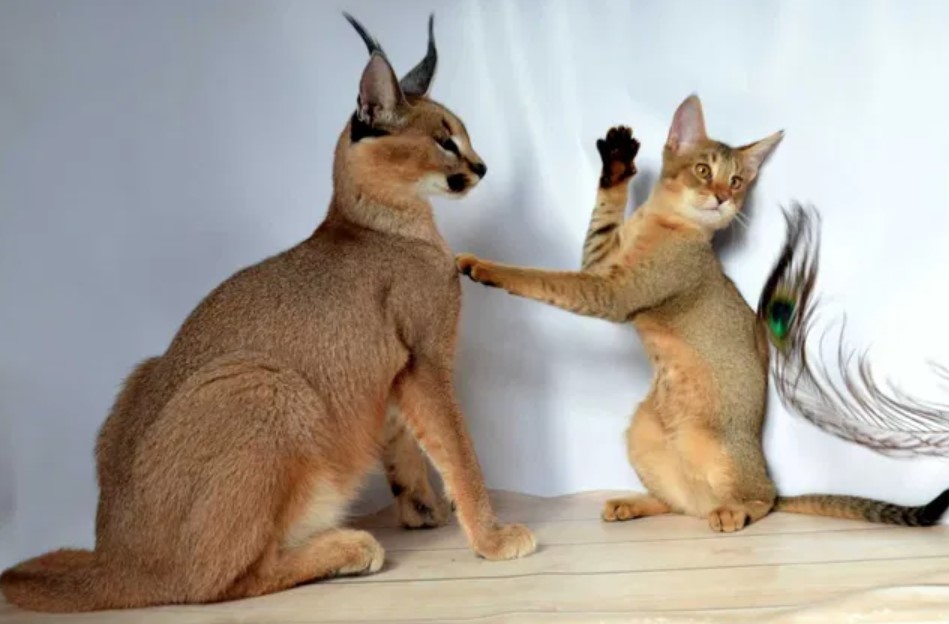
If you are thinking of buying a real Chausie, you should inform yourself thoroughly in advance about the breeding and keeping requirements of this exotic cat breed. Every owner has to assume a certain amount of expertise in hybrid breeds and the related responsibility. A lack of knowledge or the purchase of a “cheap bargain” from a dubious breeder unfortunately often have sad consequences for this cat. Particularly in the USA, where the trend towards exotic cats has been going on for some time, a sharp increase in hybrid breeds in animal shelters has been observed in recent years. It is not uncommon for a wrong attitude in the Chausie to lead to conspicuous behavior disorders and overwhelmed owners.
So before a Chausie moves in with you, you should make sure that the cat can meet its natural needs for freedom and movement with you. You should also ensure that the Chausie does not get bored. Sufficient play opportunities, possibly a fellow as a playmate, and above all spending time with their people is essential for harmonious coexistence. Because just like the movement, Chausie loves her family. Anyone who manages to keep this special breed in a species-appropriate manner will definitely be rewarded with a lifelong loyal and amazingly cuddly cat.















