





The Bombay cat is a short-haired house cat that is still very rarely represented. Especially in Europe, the cat breed is rarely held. As rare as it is, it is also fascinating. The Bombay cat is like a little black panther for the home. If you are fascinated by the elegant big cats and would like to have one in the version of the mini tiger on the sofa with you, the Bombay cat might be the right choice for you. Because it looks like a dangerously beautiful little panther, but it is a cuddly house cat. Cats of this breed are described as extremely pleasant in coexistence.
History and Breeding
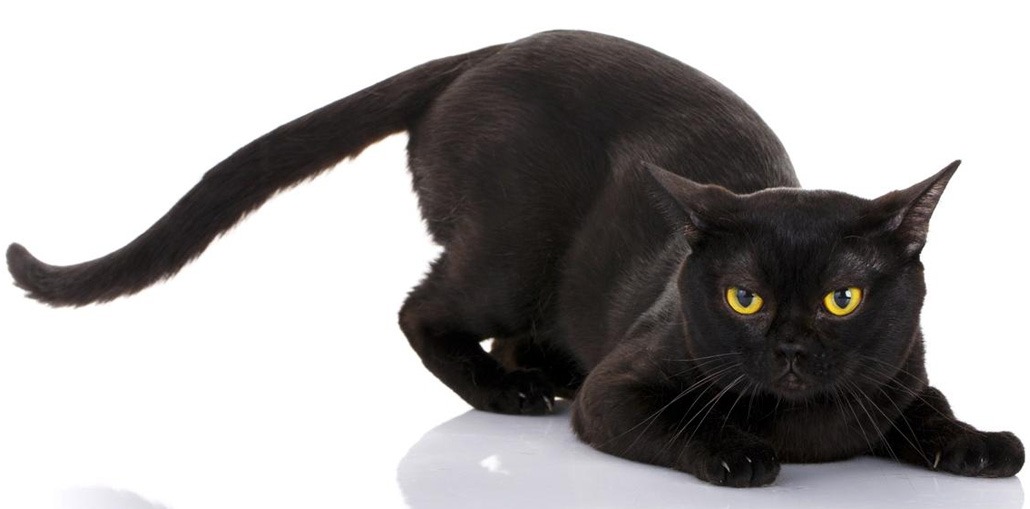
In the 1950s, Louisville, Kentucky-based cat breeder Nikki Horner wanted to breed a “room panther”. She crossed – initially unsuccessfully – black cats of the American Shorthair breed with dark brown Burmese cats. It was not until 1965 that Mrs. Horner succeeded in breeding a cat with deep black fur and copper eyes by repeated backcrossing towards Burma. That was the hour of birth of the black-haired beauty with the friendly character – which the breeder named after the Indian port city of Bombay (now Mumbai). First, however, Mrs. Horner realized that Bombay was not immediately accepted. It was not until 1976 that the Bombay cat was awarded championship status by the “Cat Fancier’s Association” – and three years later by the “International Cat Association”.
Appearance
The purebred Bombay cat is characterized by its black, very shiny, and tight-fitting fur. It has no white spots whatsoever. The “Cat Fancier’s Association” has set large, round, copper-colored eyes as the breed standard. If the cat’s eye color fades with age, the cat can still be a beauty – but according to strict breed standards, it is not a Bombay cat. Because the eye color “copper” is very difficult to achieve, many Bombay cats have golden, golden yellow, or deep yellow eyes. These, too, are generally accepted as a Bombay cats. However, copper is the most sought-after eye color for cats of this breed.
The expressive eyes of this distinctive beauty are rather far apart. The ears of this black-haired beauty, which tend to be small, are rounded, set wide apart, and tilted slightly forward. The head of the Bombay cat is quite broad and rounded due to the influence of the American Shorthair. Their snout is relatively short. At the transition to the forehead, the nose has a clearly visible curve. The tip of the nose is a little rounded. The nasal mirror and the rims of the eyes are black.
According to the breed standards, only one coat color is allowed. According to this, the coat of the breed typical Bombay cat should be jet black from the tip of the hair to the root of the hair.
According to the interpretation of some breeders, a Bombay cat is only a Bombay if its fur is jet black according to the breed standards and its pedigree no longer shows Burmese. However, this is extremely rare. Although kittens of this breed sometimes have rust-brown shades, these disappear in the adult conspecifics.
The coat of the Bombay cat is short, lies close to the body, and is very silky. It has almost no undercoat. In terms of stature, the Bombay is medium-sized and muscular, and sinewy. Measured by the small size of its compact body, the cute panther weighs a little more than you might think at first glance with its graceful appearance. Cats of this breed weigh around four kilograms, male cats can weigh around five kilograms. The legs and tail of the Bombay cat are medium in length.
Bombay Cat Temperament
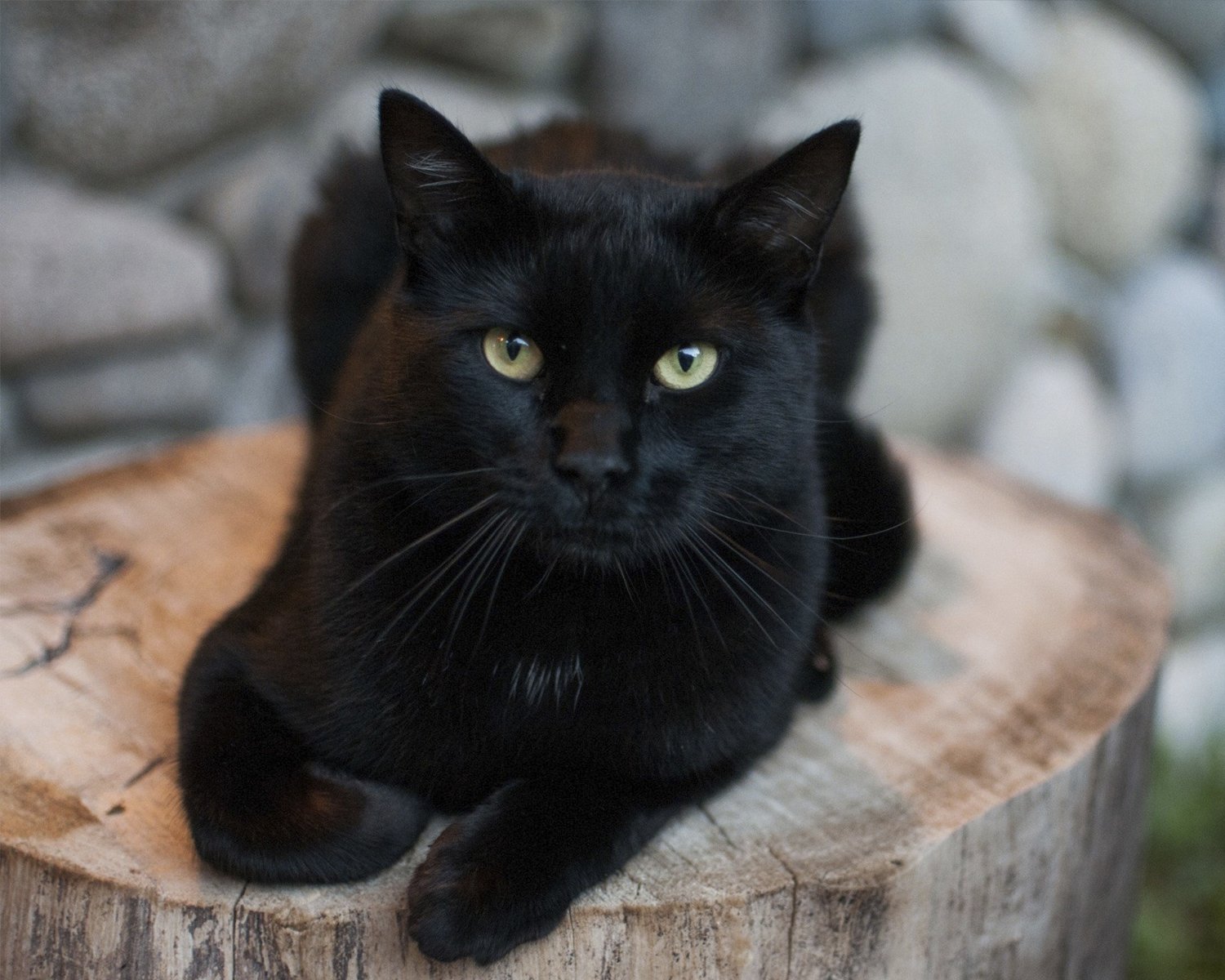
Bombay is sensitive, intelligent, playful, very cuddly, affectionate, cuddly, and related to her people. Because her relationship with her human roommates is so strong, she doesn’t like to be left alone for hours. This human-centered chick appreciates family ties or seeks the attention of her owner and sometimes follows him every step of the way. She is also happy to show him where her bowl is. And after her human roommate has filled it with food, she likes to lie down on his lap because she is looking for him to be close. She wants to be a full family member and takes an active part in family affairs. As a family cat, it is generally extremely suitable. Such a life corresponds more to her nature than that at the side of a single person.
For all its affection and suppleness, the Bombay cat also has a lively disposition and loves to play. However, it is not quite as wild and active as some cats of other breeds. Nevertheless, it is important that the owner lives up to their pronounced play instinct. Entertaining his feline friend with a cat toy such as a catfishing rod will bring a lot of joy to this cat and she will enjoy receiving human attention in this way. The human roommate of the cat will also have fun playing with his little black panther.
Bombay likes to surround itself with heat sources. Make sure your roommate kitty has a warm spot to retreat to whenever she wants. She will definitely feel at home on a heater or window bed because of the pleasant warmth. Cats of this breed are also very welcome to use a cat blanket to provide warmth. The Bombay cat is well suited for keeping an apartment but needs a lot of attention and attention from their humans in order to feel really comfortable. The human roommate of this sofa version of the panther should also be able to dedicate this time to her. The Bombay cat will thank him with lots of intense petting. By nature, this breed of cats is very tolerant and compatible and therefore gets on well with other cats, dogs, and children. These traits make the black-haired house panther a very valued, if still seldom represented, pet. Vocally she expresses herself rather quietly and at the same time pleasantly melodic.
Bombay Cat Diet
The Bombay cat can be prone to weight gain. Especially in indoor cats, there is a tendency for this breed to become overweight. From this point of view, too, it is important to play actively with your roommate kitty. You should also monitor your weight and pay attention to a few aspects of your diet. For example, the carbohydrate content in cat food should not be too high. This leads to the fact that cats accumulate too much fat. High-quality cat food and an individually adapted amount of food are important.
Care Tips
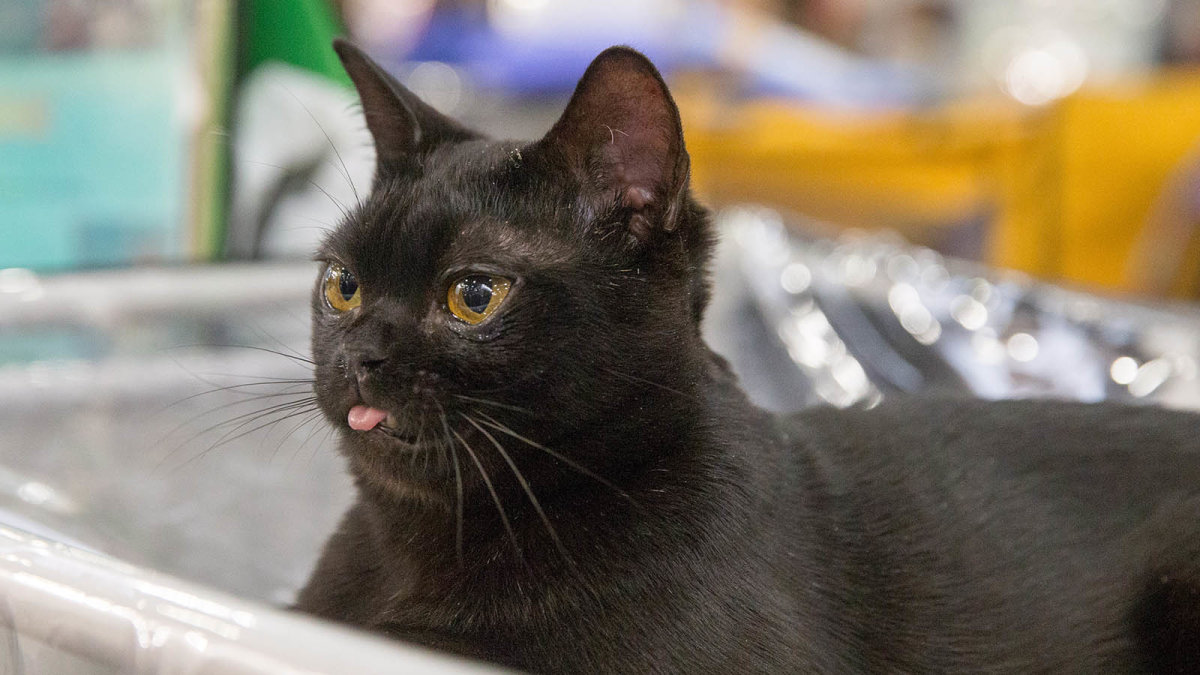
Basically, cats of this breed are easy-care fur creatures. The fur of the rare pedigree cat, which is ideally pitch black and very shiny, can be kept in a well-groomed condition with little effort. To maintain the shine, it is sufficient to rub it lightly with a leather cloth on a regular basis. You can also use a brush to maintain the coat’s characteristic shine. Of course, a balanced diet with high-quality cat food also has an influence on the healthy shine of the coat. The Bombay needs a scratching post or scratching board for its claw care and as a way of marking its territory olfactorily. It also stretches her well-developed muscles.
To ensure that your beloved cat stays healthy, you should see them at regular intervals to see your trusted veterinarian.
Basically, the Bombay cat is not very susceptible to disease. From time to time, however, hereditary diseases such as hypertrophic cardiomyopathy (HCM) occur. This is a hereditary disease of the heart muscles. If you notice abnormalities such as shortness of breath or even a fainting spell in the Bombay cat, you should consult a veterinarian immediately. Unfortunately, the first stages of this disease are usually so inconspicuous that they may go unnoticed by the owners of Bombay. So that such a disease does not arise in the first place, it is important to have a positive influence on the general state of health of the cat through proper nutrition and other health-promoting aspects.
Because of their tendency to catch colds, you should make sure that the Bombay cat is protected from drafts and has a warm place to retreat to. On average, the Bombay cat reaches a relatively old age of 17 to 20 years.
Choosing the Right Breeder
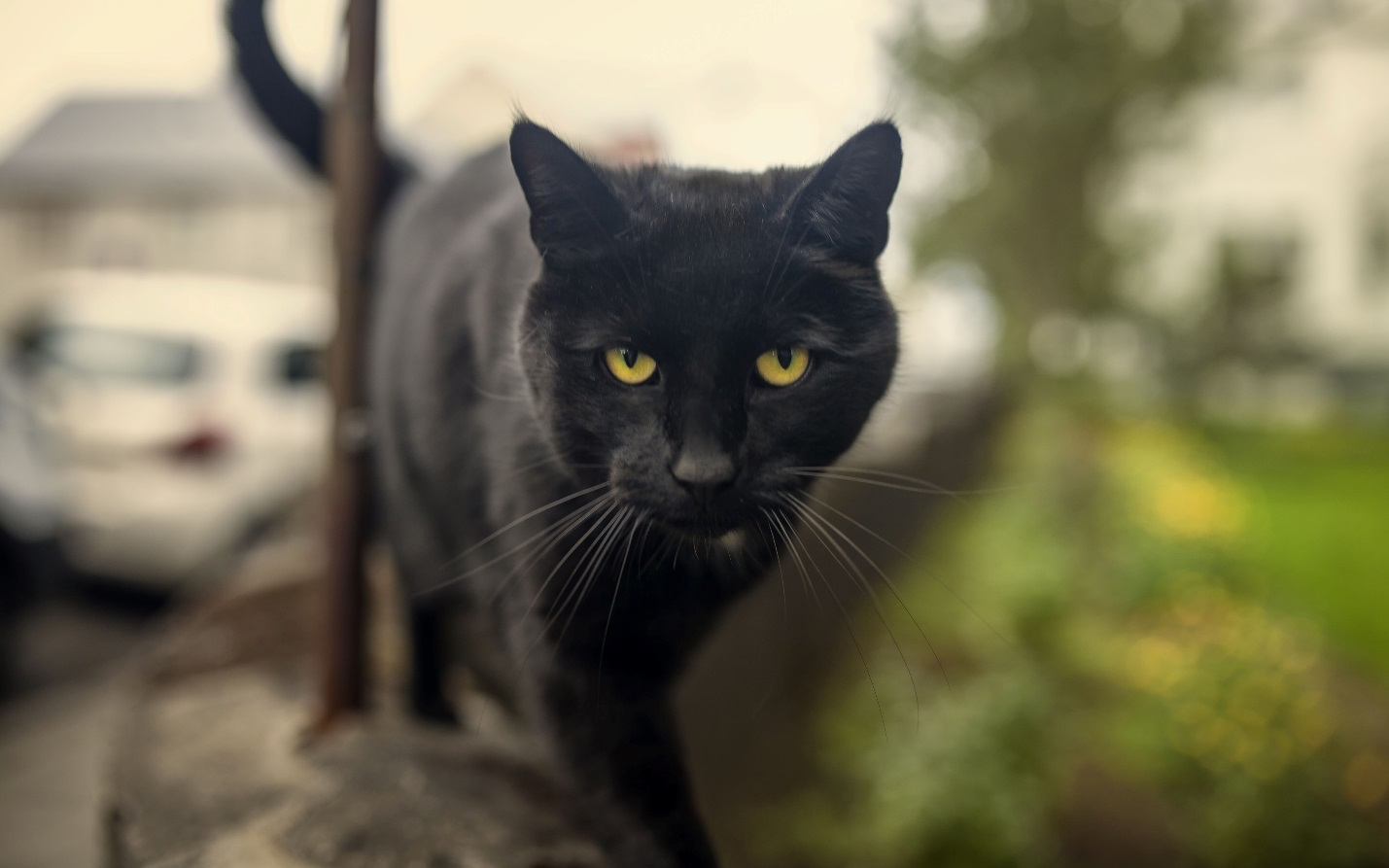
There are a few black sheep among the breeders of this black beauty. These are noticeable, for example, because they offer “black Bombay cats without a pedigree” or alleged “Bombay hybrids” in online advertising markets. However, you should avoid such supposed bargains.
The pure-bred Bombay is still a rarity worldwide, but especially in Europe. So the number of reputable breeders who breed this breed of cats is small. You can recognize a reputable breeder by the fact that he is a member of a registered cat association. A trusted breeder can also provide you with the cat’s pedigree, which can be used to trace feline ancestors. The pedigree is the only reliable evidence that the little panther is really a purebred Bombay cat. In addition, a trustworthy breeder does not give the cats into the hands of new owners too early, but only around the 12th week of life. The animals should already be vaccinated, dewormed, neutered, and chipped and have up-to-date papers including a health certificate when they come to a new home.
Some breeders also take on a lifelong sponsorship for the animals that come from their breeding. This means that if for whatever reason, you can no longer take care of your roommate kitty, you can give the animal back to the breeder at any time and regardless of what age it has already reached, provided that he can offer. If the cat can no longer integrate cat, he will at least be happy to help with the referral to trustworthy new owners.
We think that the living room version of the black panther is absolutely to fall in love with – and we wish all those who decide to live in the company of this affectionate family cat a lot of joy!















