





American shorthair and longhair cats are familiar to most cat lovers. But what kind of breed is the American Wirehair? The animals, often referred to as the “American wire-haired cat”, are very rare in America and hardly to be found in Europe. Still, the American Wirehair is a very interesting cat that, like many other cat breeds, came about as a result of a random mutation. Find out more about the wire-haired cats from New York State here!
Cat Breed
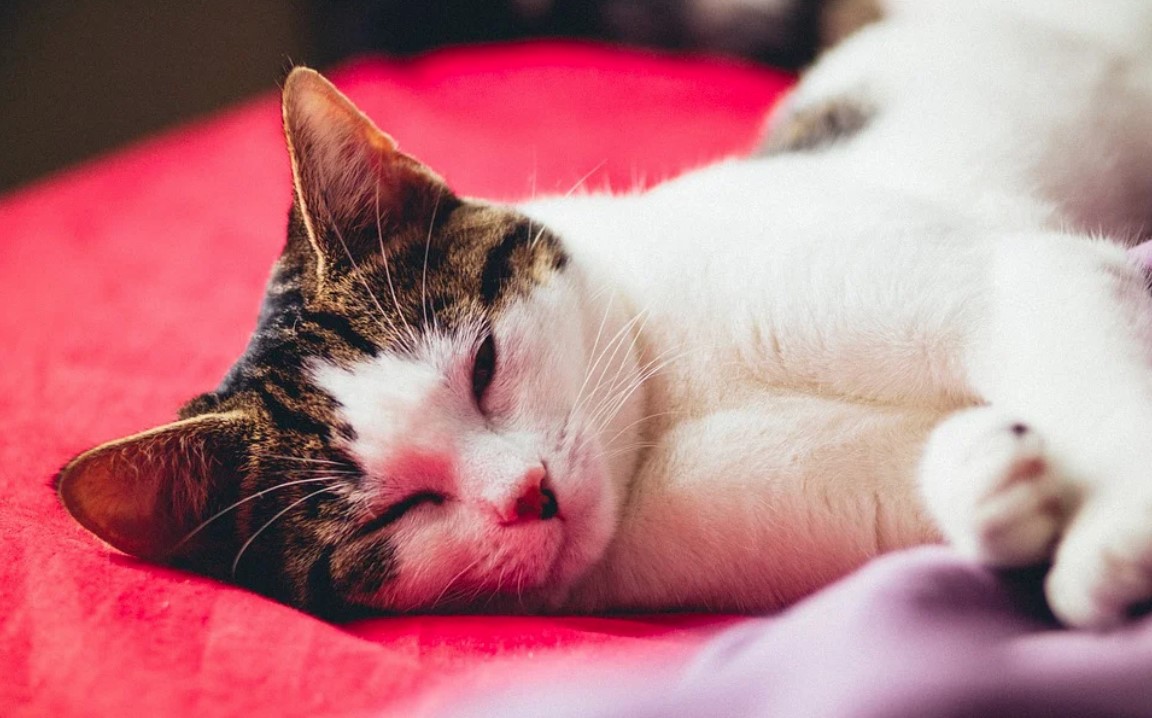
You may have already noticed: The shorthair cats with their wiry fur are similar in appearance and character to the American or European shorthair cats. The only difference seems to be the special coat of the American Wirehair cat. Or?
In fact, the breed is due to a spontaneous mutation discovered in New York State in the 1960s. The litter of a shorthair cat caught the eye because of the kitten’s special coat. The only survivor of the litter, a red and white tabby male, won the attention of breeder Joan O’Shea because of his unusual fur. He bought the cat and named it “Council Rock Adam of Hi-Fi”. Through crossings with American Shorthair cats, a separate breed was soon established. A few years passed before it was recognized by the Cat Fanciers Association – in 1978 the breed was accepted as the American Shorthair type. So far there are only a few breeders of American Wirehair in the USA, the breed is almost unknown in Europe. In order to preserve genetic diversity and to avoid the development of hereditary diseases, the American Wirehair is still crossed with the American Shorthair cat. Since the gene for the wiry coat is inherited dominantly, it prevails in about half of the kittens. Depending on their predisposition, the cats’ fur curls immediately after birth or only after four to six months. This depends, among other things, on the individual coat condition. The crossing of two American Wirehaires usually results in kittens whose special coat properties stand out. These kittens often show wiry mustache hair right after birth!
American Wirehair Cat Appearance
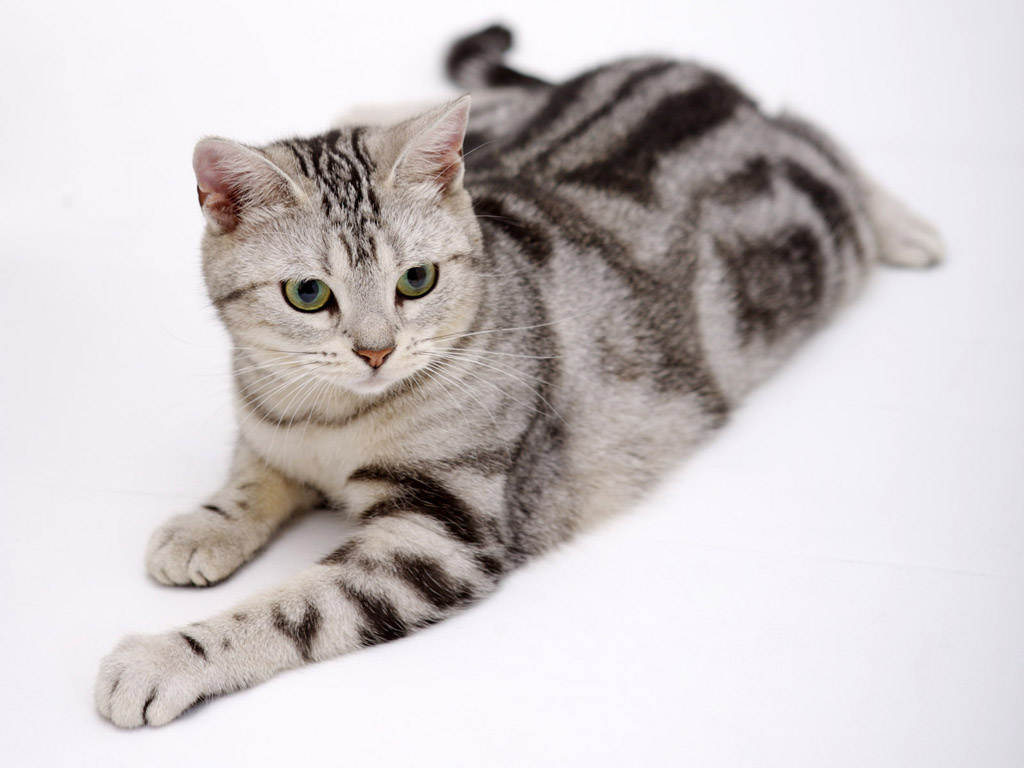
American Wirehair’s trademark is its eponymous coat structure. The wiry fur of the animals was created by a coincidental mutation that is dominantly inherited. It ensures a particularly thick, coarse coat. The reason is a unique coat structure: the individual hair is bent and curled at the ends. The mustache hair of the American wire-haired cat also looks “kinked” to a certain extent. The special coat structure makes the American wire-haired cat look a bit sleepy and disheveled, at the same time it contributes to the cuddly appearance of the breed!
Nevertheless: Even among American wire-haired cats, there are differences in the condition of the fur. The gene is inherited dominantly. The stronger the system, the more the eponymous property asserts itself.
The Wirehair gene can be traced back to a random mutation that occurred in New York State, America in the 1960s. Mutations are not uncommon in the cat world. Nevertheless, it is absolutely atypical that the mutation for rough fur appeared apparently only once in the history of breeding in America! The dominantly inherited gene ensures that the system is passed on to all offspring and prevails there in the form of a wiry fur.
Because of their shared history, the American Wirehair has a similar physique to the American Shorthair cat. She is strong and muscular, has a strong chest and medium-length, well-muscled legs. The cheekbones are set high, the muzzle concise. Attentive, wide-open, and often bright yellow eyes are reminiscent of their relative, the American Shorthair. Like the shorthair, the wire-haired cat comes in all colors. In some animals, wire hair is established immediately after birth, in others only from around the fourth month of life – until then, kittens appear like short-haired cats.
Possible coat colors of the American Wirehair cat are as follows:
- White: American wire-haired cats of the color white can have yellow or blue eyes – but unevenly colored eyes are also allowed.
- Black: The black fur of an American Wirehair should be evenly colored without gray prickly hair. The nose and pads of the paws are also black, and the eyes are often gold.
- Blue: The genetic dilution of the coat color black is called “blue”. The nose and pads of the paws are often blue, and the eyes are shining gold.
- Red: Red American Wirehair is preferred like their conspecifics of the American Shorthair breed without white content.
- Cream: The dilution of the color red is called “cream”. The color appears beige.
- Two-tone: As with the American Shorthair breed, two-tone American Wirehair are also permitted for breeding. These often have a white base color with black, blue, red, or beige spots.
- Chinchilla: The color “chinchilla” is very noticeable: the hair itself is banded in two colors. If it is white and only the tip is black, the color of the cat is called “chinchilla”. If the individual hair has a red tip, one speaks of a “red chinchilla”. Many cats of this color have a frame around the eyes and nose. American Shorthair of the color Chinchilla often have noticeably shining green eyes – since the American Wirehair cat is often crossed with the American Shorthair, this characteristic also occurs here.
- Shaded: As with the color chinchilla, American wire-haired cats of the color “shaded” also have banded, two-tone hair. In contrast to the chinchilla color, the individual hair has a higher proportion of black. This color also occurs with a red-colored tip and is referred to here as “red shaded”.
- Smoke: The color “Smoke” also shows a banding of the individual hair. In the case of smoke, however, the black component predominates, only the lowest part of the hair is colored white. This means that the partial white color is only noticeable when the fur is divided. Variants are “Blue Smoke” and “Red Smoke”, with these shades of color the hair shows a blue or red color. Some cats even have banding with black, red, and blue! The animals appear three-colored, a close examination of the individual hair reveals a white undercoat.
- Tabby: tiger cats – who doesn’t love them? In the American Wirehair, tabby animals are called “tabby”. But mackerel is not the same as mackerel! The Mackarel tabby coloring shows a tight, well-defined mark, often with an eel line and stripes on the legs and tail.
- According to the breeding regulations, the ticket tabby often only shows a drawing on the head, neck, legs, and tail. An animal with cream-colored or red spots is referred to as a “patched tabby”.
- Calico: Who doesn’t know them, the three-colored “lucky cats”? In English usage and so also in American Shorthair and American Wirehair breeding, these cats are called “Calico”. White represents the predominant part of the coat color, this is supplemented by spots of black, red, their thinning, and sometimes even tabby markings.
The colors chocolate and cinnamon and their dilutions are not permitted.
American Wirehair Temperament
The American wire-haired cat is an uncomplicated, fun-loving cat. She is tolerant and is well suited to life in a family – she gets along well with children and also likes to make friends with fellow cats and other cats.
The sturdy breed likes to play for their lives. This is where the legacy of the American Shorthair prevails! There are calmer wire-haired cats, but as a rule, the cats love to hunt outdoors in addition to playing with humans. The American Wirehair is so well suited for free running, with sufficient opportunities for playing and climbing, such as with the help of a scratching post, but it will also be happy if you keep it alone. Those who are often out of the house should offer their American Wirehair interactive toys. But even intelligent toys are no substitute for a feline conspecific. The American wire-haired cat is very social. Especially when the kitty is alone for most of the day, you should think about a second cat – ideally before your American wire-haired cat moves to you!
Health and Care
Despite its unusual fur dress, the American Wirehair is easy to care for. The wiry fur does not require any special treatment. Brushing once a week is usually enough to minimize the amount of hair swallowed. During the coat change period, you can also offer your wire-haired cat grass or malt paste. Hair swallowed during grooming is eliminated naturally!
The annual check-up appointment with the vet is of course also a must for the American Wirehair. Your trusted veterinarian will take a close look at your cat, listen to the lungs and heart, and take a look inside. Here you can also find out about necessary vaccinations or vermin prophylaxis.
American Wirehair Diet
Like all cats, the American Wirehair will benefit from a diet high in high-quality protein. Cats are naturally carnivores, as they can only utilize carbohydrates to a limited extent. Unfortunately, many low-quality food worries use vegetable by-products as fillers. In dry food, vegetable components make the production of firm croquettes easier.
When buying feed, keep your eyes open – if in doubt, take a look at the label! According to the European Feed Regulation, the ingredients in cat food are sorted according to their proportions. Meat should therefore be at the top of the list of ingredients. But cats not only need lean meat, but they also need high-quality offal. These can, but do not have to be, grouped together as “animal by-products”. More and more feed manufacturers are therefore choosing the open declaration, which precisely lists the offal. This way you can be sure that the food for your American wire-haired cat contains many healthy ingredients and only a few indefinable ingredients such as greaves, hair, and horn. You can find more information on the subject in our article on “How do I recognize good quality cat food?”
More and more cat owners are also enthusiastic about raw feeding or self-cooking. In order for your cat to get enough nutrients and protein, thorough training is a must. Fortunately, there are now many guides on the subject of “BARF”! Feed manufacturers and shops have also picked up on the trend and offer raw meat, supplements, and often even pre-portioned raw portions.
Breed
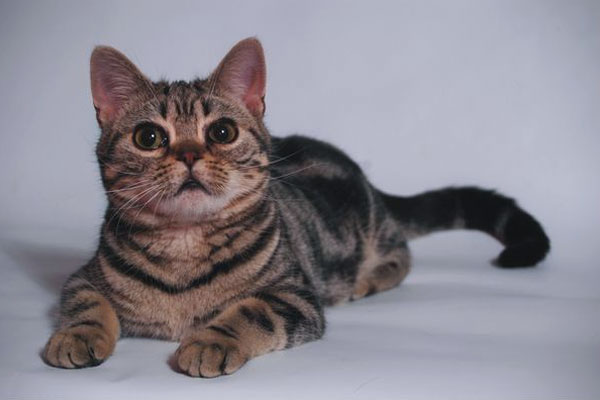
The American wire-haired cat is mainly bred in the USA. But even here it is relatively rare. So is it any wonder that the American wire-haired cat is a rarity in Europe? Anyone interested in this breed should therefore contact the American breed associations directly. The American Wirehair, for example, is recognized by the Cat Fanciers Association. They can help you find responsible breeders here!
Because at American Wirehair, too, the following applies: Professional breeders belong to a breeding association. This ensures that the animals are bred to meet the respective breeding standards. Breeders who take responsibility for their animals and their offspring also value a species-appropriate environment, cat-friendly food, and regular health care for parents and kittens. The latter are allowed to grow up with the family for at least twelve weeks. In this imprinting phase, they learn everything important to grow into healthy, balanced cats! Cat breeding is an expensive hobby, so of course, all of this comes at a price. Depending on the parentage, an American Wirehair can cost several hundred euros. Here the prices are similar to those of other pedigree animals.
If you want to save money, you shouldn’t get ripped off by so-called multipliers, who offer “pedigree cats at a low price”. Despite the bargain price, the focus here is on profit. Species-appropriate cat food, health care, or even a break for cat mothers is often not available here. The alleged “breeder” also does not belong to a breeding association. This of course saves money in the form of exhibition and membership fees. At the same time, however, the association’s controls with regard to breed standards and husbandry conditions are bypassed. The alleged bargain can cost you dearly so quickly because hereditary diseases and malnutrition are not uncommon here.
If you don’t want to dig too deep into your pocket for your dream cat when you buy it, you should consider visiting the local animal welfare office. Countless cats of every age, character, and appearance are looking for a new home here. Some were given to the shelter by their previous owners, others were found straying or found themselves in animal welfare after the death of their human. You are guaranteed to find the perfect cat for your family here!















