Boxer dogs are one of the most affectionate, intelligent, and expressive dog breeds. While many dog lovers enjoy their playful antics and boundless energy, fewer truly understand the secret language boxers use to communicate. Like all domestic dogs, boxers speak volumes with their bodies, vocalizations, and subtle signals—far beyond simple barks or tail wags.
In this comprehensive guide, we’ll explore how boxer dogs communicate, what their behavior really means, and how owners can interpret and respond to these cues. You’ll also find links to trustworthy sources that provide deeper insights into canine communication and behavior.
1. Introduction: Why Understanding Your Boxer Matters
Boxers are exuberant, loyal companions with a rich behavioral repertoire. Though they may appear boisterous and bold on the outside, every movement and sound they make carries meaning. Understanding this “secret language” helps build trust, reduces misunderstandings, and strengthens the human‑dog bond.
Dogs, including boxers, do not primarily communicate through language like humans. Instead, they rely on body language, vocalizations, scent, and subtle gestures to express emotions and intentions to both humans and other animals. According to research on dog communication, dogs use a combination of visual, auditory, and olfactory signals to convey information, and these signals are essential for both conspecific (dog‑to‑dog) and heterospecific (dog‑to‑human) interaction. Wikipedia
2. The Boxer Breed: A Quick Behavioral Overview
Boxers are a distinctive dog breed originally developed in Germany in the late 19th century. Known for their strong builds and alert expressions, boxers were historically used as working dogs, including roles in hunting and as police or military companions. Jak Bono+1
Despite their powerful physique, these dogs are masters of emotional expression. They combine intelligence, playfulness, and sensitivity—all of which influence how they communicate.
Key Boxer Personality Traits
-
Energetic and playful
-
Loyal and devoted
-
Highly expressive
-
Sensitive to tone and body language
Boxers have been described as having a rich set of expressions—even likened to primates in the variety and clarity of their facial expressions and emotions. Wikipedia
3. How Boxers Communicate Through Body Language
Body language is the foundation of canine communication. Most dogs, including boxers, rely more on visual signals than verbal ones. Actually, dogs communicate more through their body than with their voice, with signals ranging from posture and tail position to eyes and ear movements. Loyola Marymount University
Let’s break down the major components of canine body language as it applies to boxers:
3.1 Tail Signals
A wagging tail doesn’t always mean a happy dog. Tail movement can indicate excitement, fear, stress, or even dominance. What’s most important is context—position, speed, and direction of the wag all matter. For example:
-
High, rapid wagging – confident or excited
-
Low or tucked tail – fearful or submissive
-
Tail held neutral with relaxed body – calm and content American Kennel Club+1
3.2 Ear Posture
Though boxer ears may be cropped or naturally floppy, ear movement still plays a role:
-
Forward or raised ears – alert, curious, or confident
-
Flattened ears – submission or anxiety Wikipedia
3.3 Eyes and Facial Expression
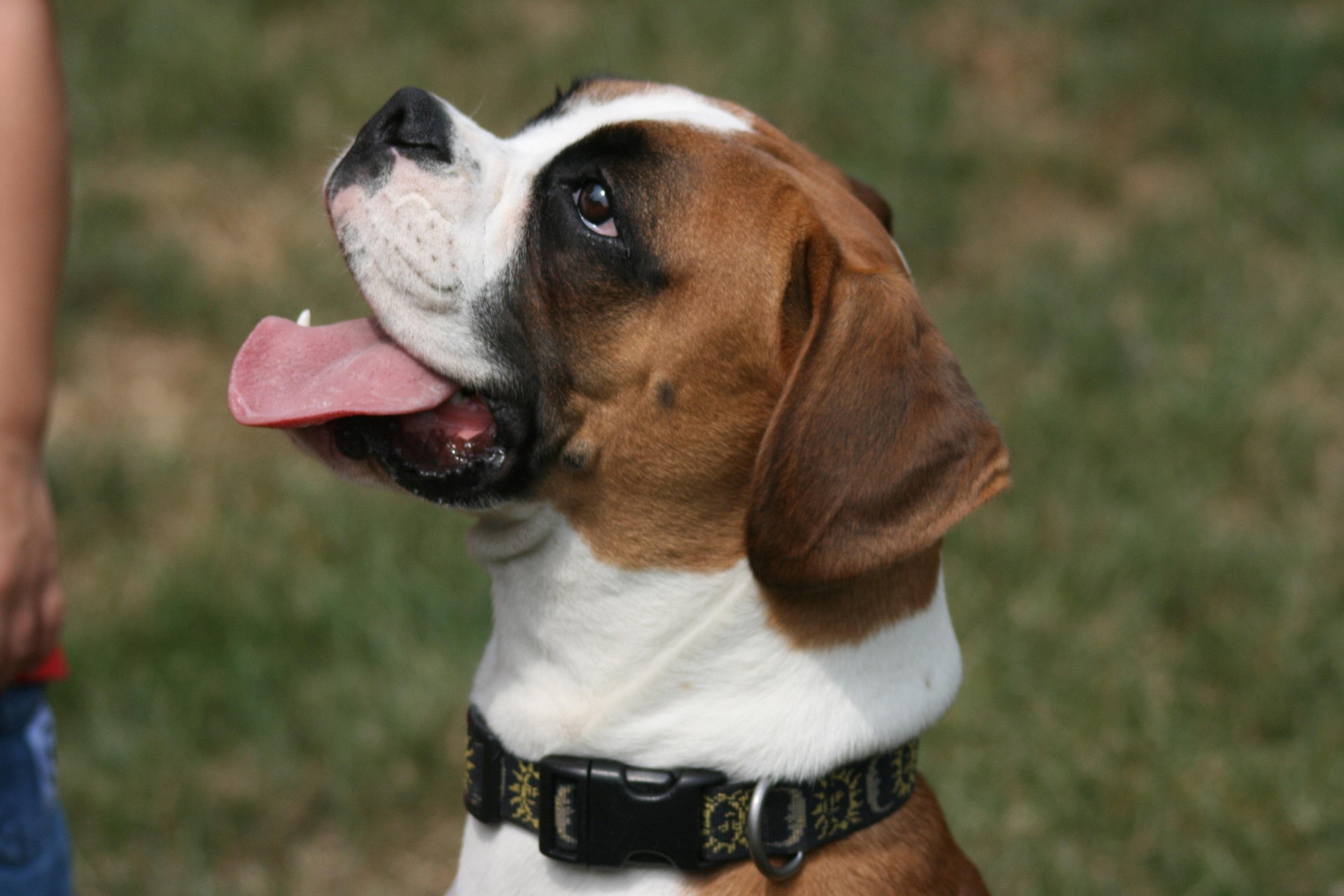
Dogs convey emotional states through eye contact and expression. Boxers are especially expressive:
-
Hard staring – warning or aggression
-
Soft gaze, relaxed eyes – contentment or trust
-
Avoiding eye contact – submission or fear Wikipedia
3.4 Posture and Body Movement
The way a boxer holds its body tells a story:
-
Play bow – invitation to play
-
Stiff, raised posture – alert or confrontational
-
Loose, relaxed stance – comfort and ease Tufts University
3.5 Mouth and Lips
Dogs use their mouths to express emotions:
-
Relaxed, open mouth – playful, content
-
Lip lifting or showing teeth – warning or stress
-
Lip licking or yawning (unrelated to hunger or tiredness) – appeasement or conflict avoidance Vca
4. Boxer Vocalizations: More Than Just Barking
Vocal communication is another layer in the boxer’s language repertoire.
While certain barks may simply be attention‑seeking, dogs also growl, whine, whimper, or even scream in specific contexts.
Common Boxer Vocal Signals:
-
Short, rapid barks – attention or excitement
-
Low growl – warning or resource guarding
-
Soft whine – need for attention or anxiety
-
Playful grunts/“talking” sounds – positive social interaction
Any single vocalization needs interpretation with body language to truly understand context and intention. For example, a growl with relaxed posture may be playful; while a growl with stiff body and direct eye contact could signal discomfort or threat.
5. Scent and Olfactory Signals
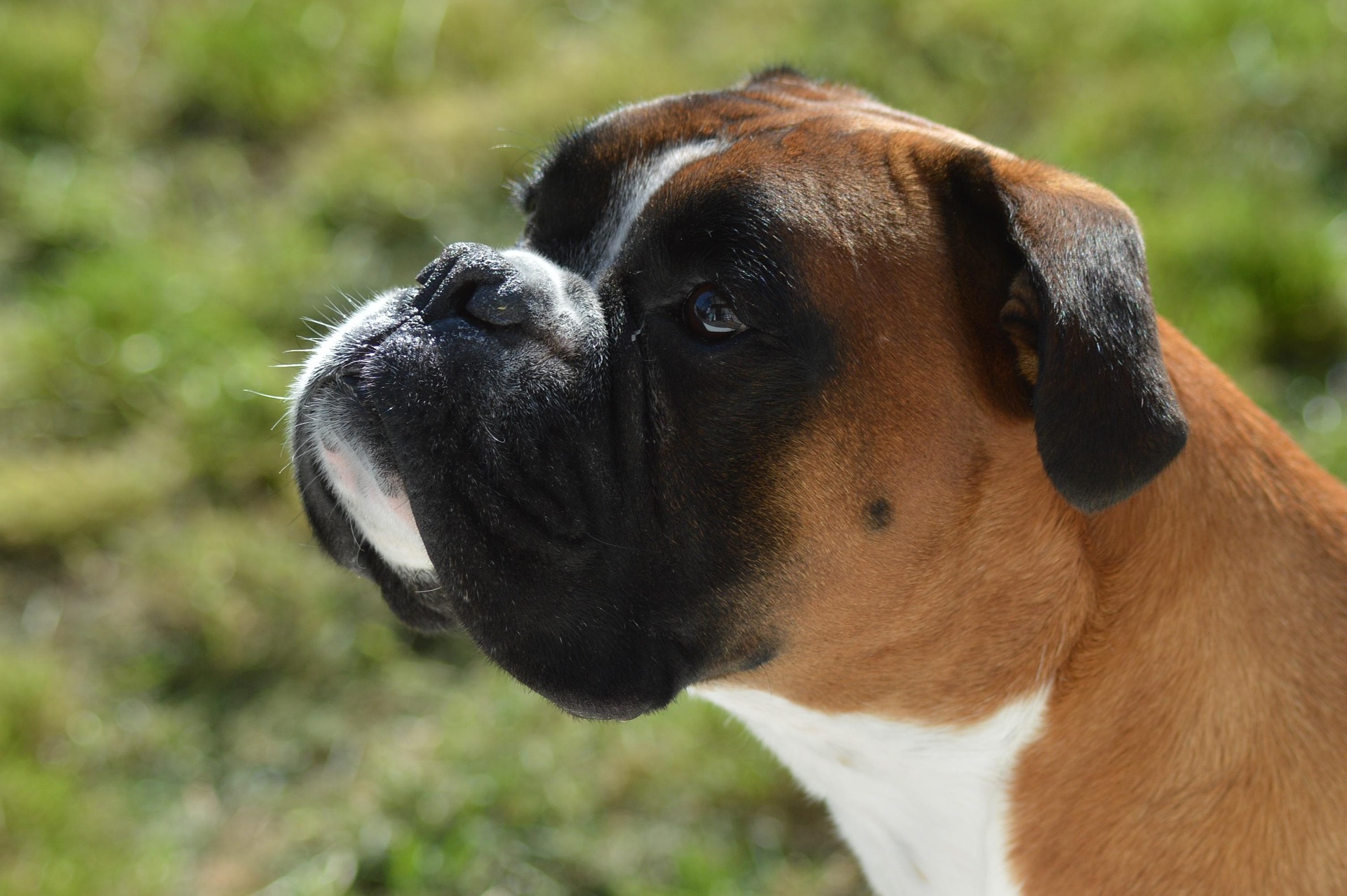
Dogs don’t just “smell”—they communicate through scent. Scent cues provide information about territory, identity, emotional state, and sexual availability.
Boxers, like other dogs, use urine marking and scent from glands around paws and face to leave social messages.
While scientific literature mostly focuses on free‑ranging dogs, it shows how scent plays a role in social dynamics. arXiv
6. Calming Signals: The Hidden Subtleties
In the canine world, there are special signals called calming or appeasement signals. These are subtle behaviors dogs use to reduce tension in themselves or others:
-
Turning head away
-
Lip licking not related to food
-
Slow body posture changes
-
Softening eye contact Wikipedia
Recognizing calming signals in your boxer can help prevent stressful situations from escalating.
7. Boxer‑Specific Behavioral Patterns
Boxer breed traits also influence how they express themselves:
7.1 Playfulness and “Boxing” Behavior
Boxers are known for their playful style—including the classic “boxing” stance on hind legs, pawing at playmates. This behavior is part of their energetic play vocabulary and is typical of their breed temperament. Grokipedia
7.2 Human‑Focused Communication
Compared with many breeds, boxers are particularly adept at reading human cues. Dogs, in general, can perceive human facial expressions and vocal emotions. They use this to adjust their own behavior based on human emotion and intention. ScienceDirect
8. How Context Shapes Meaning
A wagging tail does not mean the same thing in every situation. For example:
-
A high, stiff wag with direct stare may indicate a challenge or alert.
-
A relaxed tail wag combined with loose body posture likely signals friendliness.
This example underscores why you always need to interpret multiple signals together rather than just one isolated sign. American Kennel Club
9. Boxers and Emotional Intelligence
Studies on canine cognition show dogs can recognize human emotional expressions and adjust their behavior accordingly. This ability is key to the deep bond boxers often form with their human families. PMC
This means boxers don’t just react to your words—they watch your face, posture, and emotional tone.
10. Common Misinterpretations and Mistakes
Untrained observers often misread dog behavior, sometimes with dangerous results. For example:
-
Misinterpreting stress yawns as fatigue
-
Assuming all tail wags signal friendliness
-
Ignoring calming signals
These misreadings can lead to frustration or even defensive dog behavior.
Learning to read dog cues accurately enhances safety, training success, and trust between you and your boxer. Tufts University
11. Reading Boxer Behavior in Different Contexts
11.1 Play and Social Interaction
A play bow—front legs down, rear up—is dogs’ universal let’s have fun! stance. Watch for loose bodies and relaxed facial expressions for positive social engagement.
11.2 Training and Obedience
Understanding your boxer’s emotional state during training helps you choose appropriate reinforcement techniques that encourage positive learning. Dogs that show confident body language and openness often learn new cues more readily.
11.3 Stress and Anxiety
Recognizing early signs of anxiety, such as lip licking, avoidance of eye contact, or lowered posture, allows you to adjust the environment or training to reduce stress.
12. Tips for Improving Communication With Your Boxer
Here are best practices for strengthening nonverbal communication between you and your dog:
✔ Observe as a whole
Evaluating tail wagging without posture or ear position can lead to misinterpretation. Tufts University
✔ Respect calming signals
If your boxer turns away or licks lips during play, consider slowing down or giving space. Wikipedia
✔ Learn breed‑specific cues
Boxers’ expressive faces and playful body language often contain breed‑unique signals. Grokipedia
✔ Provide socialization and training early
Early exposure to people, other dogs, and situations enhances communication and reduces fear responses. Merck Veterinary Manual
13. Why This Matters: The Boxer‑Human Bond
Decoding your boxer’s secret language isn’t just about preventing problems—it’s about nurturing a rich, connected relationship. Dogs and humans share a remarkable bond forged across thousands of years of domestication. Part of that bond is the dog’s capacity to understand human emotions and respond functionally to them. PMC
14. Additional Resources

Here are excellent places to continue learning about dog communication and behavior:
✔ AKC: How to Read Dog Body Language – expert tips and examples. American Kennel Club
✔ Dog Communication (Wikipedia) – overview of dog signals. Wikipedia
✔ Canine Calming Signals – theory and examples of appeasement signals. Wikipedia
✔ Tufts University Dog Communication Guide – practical visual signals explanation. Tufts University
Conclusion: Listening With Your Eyes
Understanding the secret language of boxer dogs means observing carefully, learning the signs, and responding with patience and empathy. Boxers challenge us to look beyond words and appreciate the rich nonverbal world of canine communication. With practice, you’ll not only interpret what your boxer is saying—you’ll feel what they mean.