English Bull Terriers are one of the most unique and charismatic dog breeds in the world. With their distinctive egg‑shaped heads, muscular bodies, and clown‑like personalities, they’re unmistakable among companion breeds. But beyond looks, these dogs have intelligent, curious, and energetic minds that need to be engaged just as much as their bodies. Because of this — and based on expert guidance — mental stimulation is not just a “nice‑to‑have” for Bull Terriers; it’s a fundamental part of their well‑being.
This article explores why mental stimulation is essential for English Bull Terriers, how lack of it can affect their behavior and health, and practical ways to give your dog the enrichment it needs.
We’ll cover:
-
What Mental Stimulation Means for Dogs
-
Why Bull Terriers Need It More Than Many Breeds
-
Scientific Evidence on Canine Cognitive Needs
-
Behavioral Problems Linked to Under‑Stimulation
-
Daily Activities That Support Mental Health
-
Training Techniques That Build Intelligence and Compliance
-
Puzzle Toys and Interactive Games
-
Social Enrichment and Play
-
Advanced Stimulation: Dog Sports and Challenges
-
Balancing Physical and Mental Exercise
-
Signs Your Bull Terrier Needs More Mental Engagement
-
Conclusion
-
Sources for Further Reading
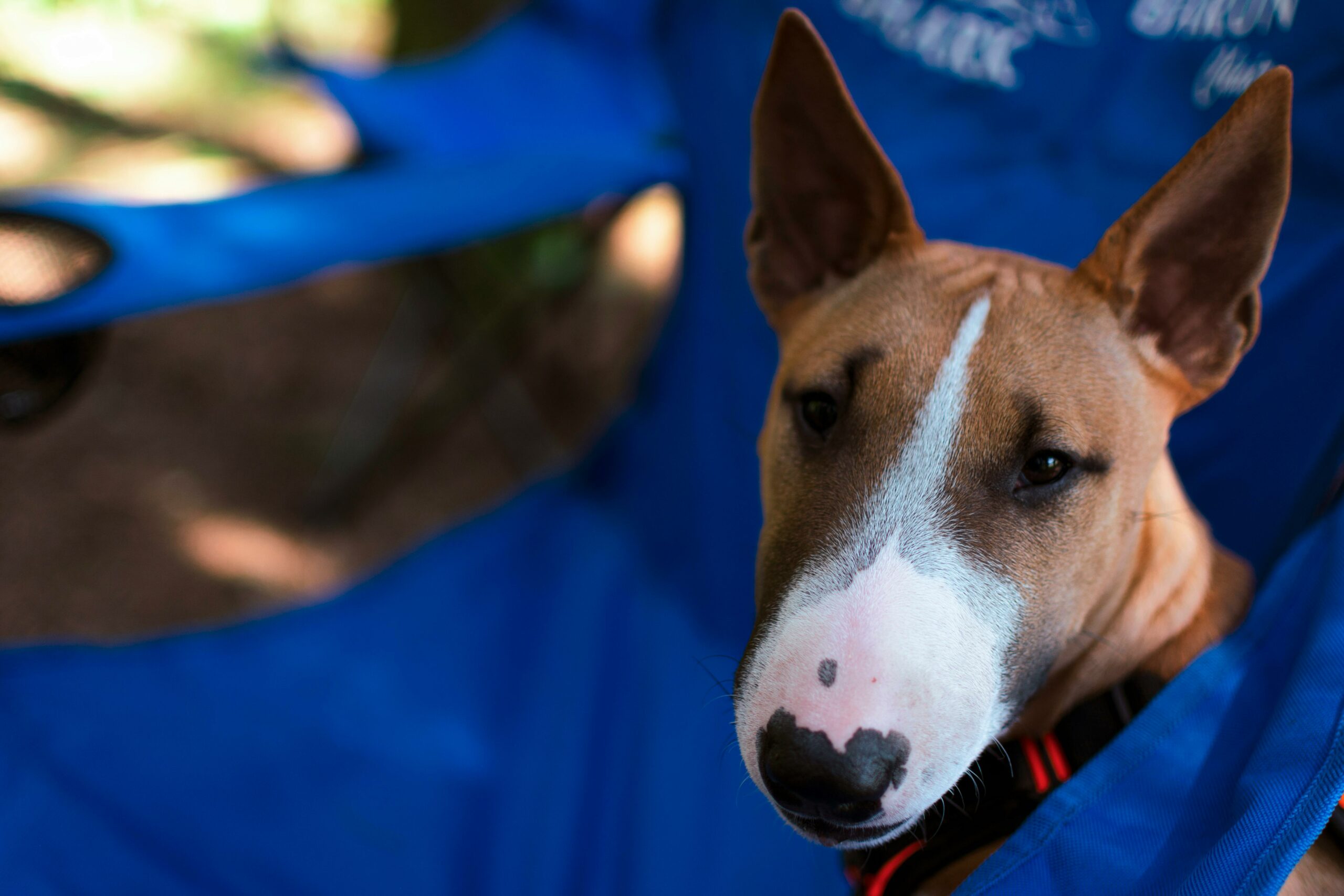
1. What Mental Stimulation Means for Dogs
In simple terms, mental stimulation refers to activities that challenge a dog’s brain — problem‑solving, decision‑making, learning, adapting to new experiences, and processing information. For humans, this might be equivalent to solving puzzles, reading, or learning a new skill. For dogs, it includes:
-
Learning new commands
-
Exploring new environments
-
Engaging with toys that require thought
-
Interacting with people and other animals
-
Scent discrimination games
Mental activity keeps a dog’s mind active, curious, and adaptable. A stimulated dog is more content and less likely to develop anxiety or destructive habits.
According to the American Kennel Club (AKC), “mental exercise can be just as tiring (if not more) than physical exercise for dogs.” https://www.akc.org/expert‑advice/lifestyle/mental‑stimulation‑for‑dogs/
2. Why English Bull Terriers Need Mental Stimulation More Than Many Breeds
Bull Terriers are intelligent, curious, and dynamic dogs. While all dogs benefit from mental enrichment, this breed shows particular signs of need due to several key traits:
2.1 High Intelligence
Bull Terriers have quick minds and can easily become bored if not challenged. Intelligence means they crave novelty and problem‑solving opportunities beyond basic obedience. https://dogtime.com/dog‑breeds/bull‑terrier
2.2 Energetic Personalities
Bull Terriers have high energy levels — and when energy doesn’t find a constructive outlet, it often shows up in undesirable behaviors. Regular brain engagement helps redirect that energy constructively. https://www.petmd.com/dog/breeds/c_dg_bull_terrier
2.3 Independent Thinking
These dogs can be somewhat independent and creative in how they approach tasks. Without mental outlets, their energy can surface as stalling, testing boundaries, or pushy behavior.
2.4 Social Engagement Needs
Bull Terriers aren’t solitary dogs — they thrive on interaction. Mental engagement through social play, training, and shared activities provides emotional satisfaction along with cognitive exercise. https://www.thesprucepets.com/bull‑terrier‑profile‑1117947
Because of these traits, Bull Terriers aren’t well suited to a purely physical exercise routine — mental engagement must be part of the daily picture.
3. Scientific Evidence on Canine Cognitive Needs
Studies in animal behavior show that cognitive enrichment affects both behavior and brain health. Dogs with regular mental stimulation exhibit:
-
Improved focus and attention
-
Greater adaptability to new environments
-
Reduced anxiety and fear responses
-
Better performance in training and problem‑solving tasks
Research published in the journal Behavioural Processes indicates that mental enrichment improves learning outcomes and reduces signs of frustration in domestic dogs. https://www.sciencedirect.com/science/article/abs/pii/S0376635717303051
Similarly, animal behaviorists highlight that engaging a dog’s brain helps prevent cognitive decline as dogs age, much as mental exercise helps human brains stay sharp. https://www.ncbi.nlm.nih.gov/pmc/articles/PMC3999725/
These findings are not breed‑specific — but they are especially relevant for intelligent, energetic breeds like Bull Terriers whose personalities demand engagement.
4. Behavioral Problems Linked to Under‑Stimulation
A lack of mental stimulation is often at the root of unwanted behavior. In Bull Terriers, under‑engaged minds frequently lead to:
4.1 Destructive Chewing
If your Bull Terrier chews furniture, shoes, or household items, it may be a sign of boredom rather than aggression. Chewing is a natural behavior, and dogs will find objects to fulfill that instinct if nothing else is provided.
4.2 Excessive Barking
Boredom‑driven dogs often bark for attention or stimulation. This is especially true if they don’t receive enough mental engagement alongside physical activity.
4.3 Hyperactivity and Restlessness
Physical exercise can only go so far; without cognitive tasks, even a well‑walked Bull Terrier can still feel restless and unsettled.
4.4 Social Reactivity
Dogs without proper mental outlets may react impulsively to people or other animals because they lack better ways to channel emotion.
These types of behaviors are common among under‑stimulated dogs, not necessarily aggressive or misbehaving dogs.
Experts from the American Veterinary Society of Animal Behavior (AVSAB) note that “behavior problems often originate from unmet mental and emotional needs, not lack of discipline.” https://avsab.org/resources/fear‑free‑living/
5. Daily Activities That Support Mental Health
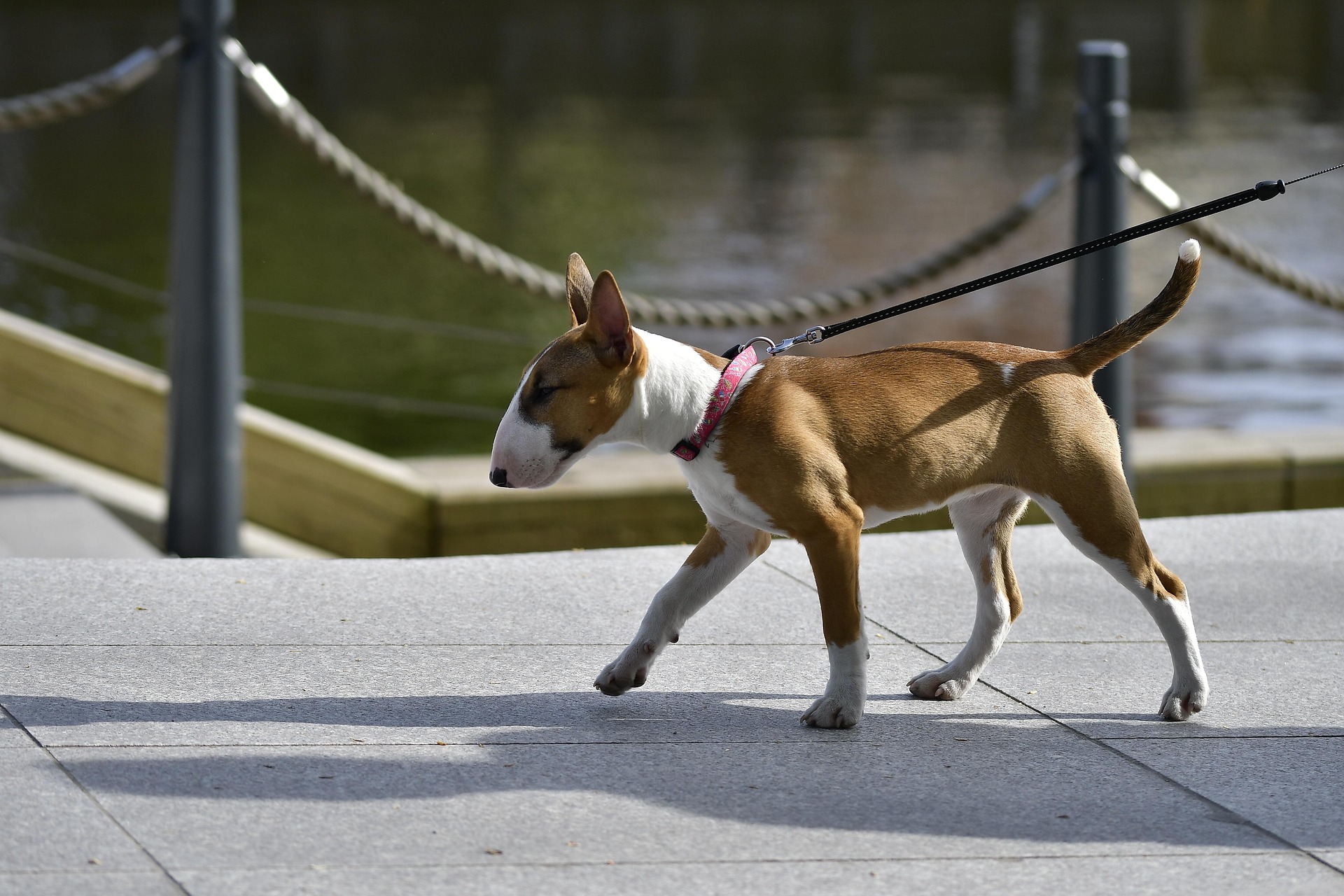
Mental stimulation should be a regular part of your English Bull Terrier’s routine. Here are ways to make it a daily habit:
5.1 Obedience Training
Even basic commands like sit, stay, come, and down require focused thought. Training sessions teach your dog to listen, think, and respond — all of which are mentally demanding.
Tip: Hold several short training sessions a day rather than a single long one to keep engagement high.
5.2 Practice Tricks and New Behaviors
Teaching progressive skills — like fetching specific items, spinning, or opening/closing doors (safely!) — challenges your dog to think creatively. https://www.akc.org/expert‑advice/training/10‑dog‑tricks/
Bull Terriers are intelligent and often enjoy learning tricks more complex than basic commands.
5.3 Scent Work
Dogs naturally use their noses to explore and understand the world. Training your Bull Terrier to find hidden treats or objects using smell engages parts of the brain that simple physical exercise does not.
Scent work is often used in professional working dog training because it taps into natural canine instincts and provides a rich mental workout. https://www.whole‑dog‑journal.com/training/scent‑work‑for‑dogs/
6. Training Techniques That Build Intelligence and Compliance
Successful mental stimulation isn’t random — it’s intentional training. Here are approaches that work especially well with Bull Terriers:
6.1 Positive Reinforcement
Bull Terriers respond best to reward‑based training — treats, praise, toys, and play — rather than harsh corrections.
Positive reinforcement not only teaches the behavior but also builds trust, confidence, and motivation. https://www.aspca.org/pet‑care/dog‑care/dog‑training‑positive‑reinforcement
6.2 Clicker Training
Clicker training uses a simple noise to mark correct behavior, followed by a reward. This technique helps dogs understand exactly what earned the reward and speeds learning.
Clicker training is especially effective with intelligent dogs like Bull Terriers. https://www.clickertraining.com/what‑is‑clicker‑training
6.3 Targeting Exercises
These involve training the dog to touch or follow a target (like a hand, ball, or stick). Targeting builds focus and offers a foundation for many other skills.
7. Puzzle Toys and Interactive Games
Puzzle toys and interactive feeders are among the most effective tools for mental stimulation. These toys require a dog to think and work to access food or treats.
7.1 Examples of Effective Puzzle Toys
-
Treat‑dispensing balls
-
Hidden‑compartment puzzles
-
Interactive board games for dogs
These tools slow down eating while engaging the brain, reducing boredom and increasing satisfaction.
A 2018 study published in Behavioural Processes found that puzzle toys help improve cognitive functioning and reduce stress in dogs. https://www.sciencedirect.com/science/article/abs/pii/S0376635717303051
Pro tip: Rotate puzzle toys frequently so your Bull Terrier doesn’t get bored with the same challenges.
8. Social Enrichment and Play
Mental engagement doesn’t have to be solitary or object‑based — social interaction itself is cognitively stimulating.
8.1 Play With Other Dogs
Safe, supervised playdates or dog park visits stimulate your Bull Terrier socially and mentally.
8.2 Cooperative Games With You
Games like tug‑of‑war (with rules), hide‑and‑seek, fetch, and chase all require your dog to think, anticipate, and respond.
8.3 Family Participation
Let all family members be involved in training and play. This variation keeps the dog mentally agile and aware of different human cues and play styles.
9. Advanced Stimulation: Dog Sports and Activity Challenges
For Bull Terriers that thrive on challenge, consider structured dog sports that engage both body and brain:
9.1 Agility
Bull Terriers can excel in agility, navigating obstacles with speed and precision — requiring split‑second decisions and focus.
9.2 Obedience Competitions
These events push dogs to obey reliable commands amid distractions — an advanced form of mental engagement. https://www.akc.org/sports/obedience/
9.3 Tracking and Search Work
Bull Terriers can be taught more advanced scent trails, similar to official tracking dog sports.
9.4 Rally
Rally combines obedience and agility — a sequential mental challenge that keeps dogs thinking while moving.
Participation in these activities isn’t just for competition — regular practice enriches your dog’s life and reinforces positive, focused behavior.
10. Balancing Physical and Mental Exercise
It’s important to balance physical activity with mental stimulation. A tired body is good — but a tired mind is often even more important for calm, well‑adjusted behavior.
For example:
-
A 30‑minute walk followed by 15 minutes of training and 10 minutes of puzzle play
-
A short agility session followed by scent work
-
A fetch session followed by trick learning
This mix helps prevent the “wired but tired” state that happens when dogs get only physical play.
11. Signs Your Bull Terrier Needs More Mental Engagement
Even with plenty of exercise, your Bull Terrier may show signs of mental under‑stimulation. Look for:
11.1 Repetitive Behaviors
Such as spinning, pacing, or fixation on objects.
11.2 Excessive Barking
Often a sign of boredom or frustration.
11.3 Inattention or Disinterest
Not engaging during play or training sessions could mean your dog is either bored or doesn’t understand the activity.
11.4 Destructive Habits
Chewing furniture or digging can be coping mechanisms for unmet cognitive needs.
If you see these behaviors, it’s time to increase or vary mental stimulation in your routine.
12. Conclusion: A Happier, Healthier Bull Terrier

English Bull Terriers are more than playful, quirky companions — they are intelligent, energetic, and cognitively curious animals. Ignoring their mental needs can lead to frustration and unwanted behaviors. But with the right approach — combining training, games, puzzles, social interaction, and structured activities — your Bull Terrier can live a full, enriched, and balanced life.
Mental stimulation isn’t optional for this breed — it’s key to their emotional health and overall well‑being.
Sources & Further Reading
Here are the authoritative references used in this article and recommended for deeper study:
-
AKC – Mental Stimulation for Dogs: Advice on the importance of cognitive engagement. https://www.akc.org/expert‑advice/lifestyle/mental‑stimulation‑for‑dogs/
-
The Spruce Pets – Bull Terrier Overview: Breed personality and exercise needs. https://www.thesprucepets.com/bull‑terrier‑profile‑1117947
-
PetMD – Bull Terrier Breed Profile: Health and behavioral traits important for enrichment. https://www.petmd.com/dog/breeds/c_dg_bull_terrier
-
Behavioural Processes – Scientific Study on Enrichment: Effects of puzzle toys and stimulation on canine behavior. https://www.sciencedirect.com/science/article/abs/pii/S0376635717303051
-
ASPCA – Positive Reinforcement Training: Understanding humane and effective training. https://www.aspca.org/pet‑care/dog‑care/dog‑training‑positive‑reinforcement
-
American Veterinary Society of Animal Behavior (AVSAB) – Behavior Guidance: Insight on mental health and behavior. https://avsab.org/resources/fear‑free‑living/
-
AKC Obedience Sports: Activities that provide cognitive challenges. https://www.akc.org/sports/obedience/