English Bull Terriers are unmistakable dogs — both in appearance and personality. With their unique head shape, boundless energy, and comedic temperament, they often prompt questions like: “Why is my Bull Terrier so quirky?” or “What is going on in that dog’s mind?”
If you’re raising a Bull Terrier, thinking of adopting one, or simply curious about this unforgettable breed, this guide will explain — in depth — how to understand, connect with, and successfully live with your Bull Terrier’s distinctive personality.
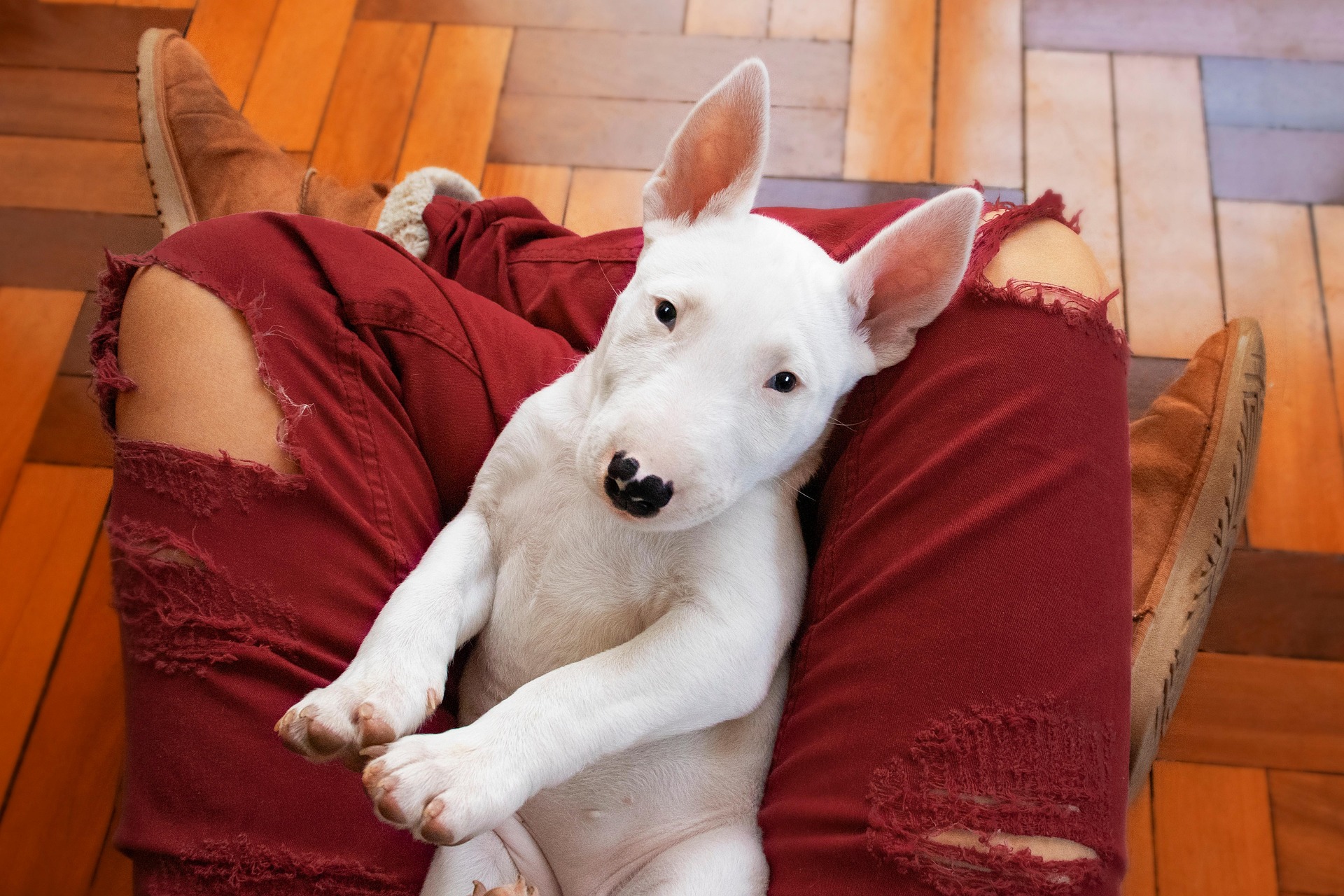
1. The Bull Terrier Personality: What Makes It Unique
English Bull Terriers are often described as playful, mischievous, energetic, and loyal — a blend of traits that can be both utterly charming and wonderfully confusing. Houndsy+1
1.1 Playful Clowns of the Dog World
One of the most frequently noted traits of Bull Terriers is their playful, “clownish” nature. They love to engage in games, wrestle with toys, and express joy in exaggerated ways that can feel almost human‑like. Bull Terriers have a youthful exuberance that often continues well into adulthood, entertaining owners for years. Houndsy
1.2 Loyal to Their Family
Bull Terriers form strong emotional bonds with their people. Whether it’s greeting you at the door, following you from room to room, or cuddling on the couch, this breed thrives on human connection. Their loyalty can make them excellent companions for families. Houndsy
1.3 Intelligent but Stubborn
Bull Terriers are intelligent dogs with creative problem‑solving abilities, but they also have a reputation for being stubborn. They might know what you’re asking, yet decide to do things their way. This mix of intelligence and independence is a defining aspect of their personality. The Furry Critter Network
2. Why Quirky Behavior Happens at a Deep Level
Understanding why your Bull Terrier behaves a certain way helps you interpret their quirks more accurately.
2.1 Energy and Excitability
Bull Terriers are energetic dogs that require plenty of physical and mental stimulation. If they don’t get enough activity, quirky behaviors like tail chasing, excessive barking, or furniture chewing can emerge — not out of mischief alone, but from boredom and lack of outlets for their energy. oz.dogs.net.au
2.2 Emotional Intelligence
Bull Terriers are surprisingly attuned to human emotions. Many owners report that their dogs seem to respond to moods — comforting a sad family member or becoming excited when someone is happy. This emotional awareness contributes to the bond between dog and owner. The Furry Critter Network
2.3 Never Alone, Never Bored
This breed doesn’t handle long periods of solitude well. As one Bull Terrier club guide points out, leaving a Bull Terrier alone for extended hours can result in destructive behaviors simply because the dog interprets isolation as stress and lack of engagement. btcmd.org
3. Common Personality Traits of Bull Terriers
Let’s break down the most distinctive personality features of Bull Terriers — traits that define their quirky charm.
3.1 Boundless Playfulness
Bull Terriers play intensely and joyfully. This can be hilarious — but also challenging if their energy isn’t properly directed. Regular interactive play helps channel this energy constructively. Houndsy
3.2 Strong Loyalty and Attachment
Bull Terriers often become “velcro dogs” — sticking close to their favorite humans. This attachment is rewarding, but requires balanced socialization to prevent over‑dependence. Nahf
3.3 Stubborn Independence
Their independence means they don’t always follow commands because they feel like it — not because they’re disobedient. This unique mindset is why positive reinforcement and patience are essential. Pack Love
3.4 Misinterpretation as Aggression
Bull Terriers are not naturally aggressive toward people, but territorial responses or excitement around other dogs can sometimes be mistaken for aggression. Socialization and training help reduce these misunderstandings. Nahf
3.5 Compulsive Behaviors Are Common
Some Bull Terriers exhibit behaviors like tail–chasing or “trancing” (a trance‑like wandering) when they’re bored or under‑stimulated. These are harmless quirks, but they indicate a need for more engagement. gooddog.com
4. How Early Socialization Shapes Behavior
Proper socialization is one of the strongest predictors of a well‑adjusted Bull Terrier. Starting early and consistently exposing your dog to positive experiences prevents fear, overstimulation, and undesired dominance behaviors.
4.1 Introduce Calmly and Gradually
Start by introducing your Bull Terrier to new situations in controlled, calm environments. This helps them associate new experiences with positive outcomes. 积玉工作室
4.2 Diverse People and Environments
Expose your Bull Terrier to different people, places, and sounds so they learn to adapt confidently rather than react nervously. 积玉工作室
4.3 Practice with Other Dogs
Planned playdates with well‑socialized dogs and prompt positive reinforcement during interactions helps build confidence and reduce misbehavior in public. 积玉工作室
4.4 Patience and Trust
Bull Terriers must be given time and encouragement to interpret new experiences at their own pace. Rushing socialization can backfire and create anxiety rather than comfort. 积玉工作室
5. Training Tips to Understand and Manage Behavior
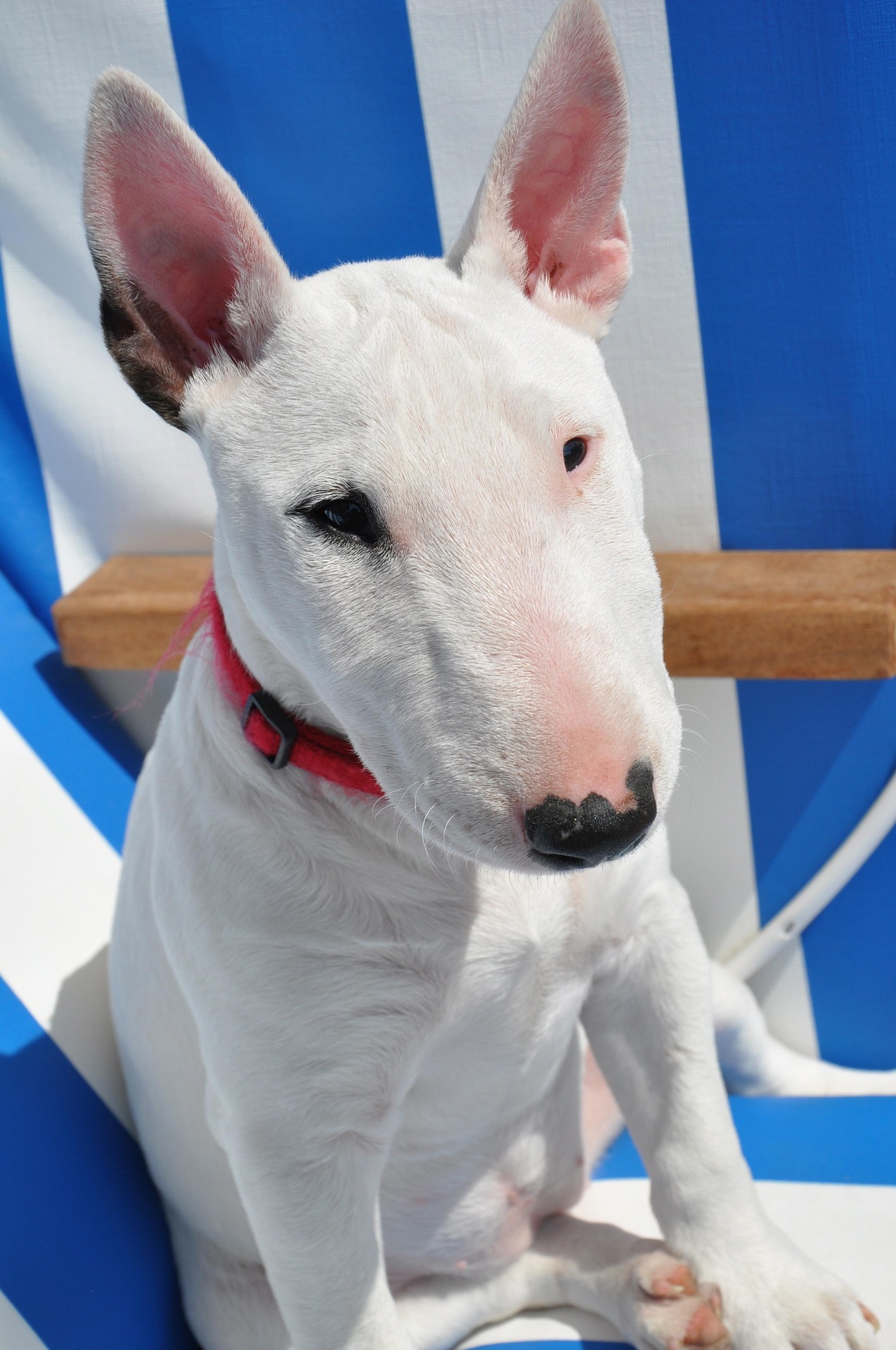
Bull Terriers respond best to training that acknowledges their personality, needs, and intelligence.
5.1 Use Positive Reinforcement
Bull Terriers thrive when rewarded for good behavior. Treats, praise, and play make training a positive experience that strengthens obedience and trust. Pack Love
5.2 Keep Training Short & Engaging
Training sessions that are too long or repetitive can quickly bore a Bull Terrier. Short, dynamic interactions keep them focused and willing. Pack Love
5.3 Balance Firmness with Encouragement
Consistency matters — Bull Terriers respect boundaries but rebel against forceful correction, which can increase stubborn and fearful behaviors. Pack Love
5.4 Turn Training Into Play
Games that incorporate commands like “sit,” “stay,” or “fetch” while rewarding success turn learning into entertainment — a win‑win for you and your dog.
6. Interpreting Quirky Behaviors
Understanding what your Bull Terrier is trying to communicate is essential for harmonious living.
6.1 Tail Chasing and Zoomies
Tail chasing often arises from excess energy or boredom. Instead of discouraging it directly, increase playtime and mental stimulation to prevent boredom. gooddog.com
6.2 Trancing or “Zoning Out”
Some Bull Terriers enter a trance‑like state, walking slowly with an expression that seems distant. This is harmless but signals that your dog is exploring its environment in a relaxed way. gooddog.com
6.3 Jumping Up with Excitement
Instead of punishment, teach alternative behaviors like “sit to greet.” Bull Terriers naturally express themselves verbally and physically when excited; guiding this energy is more effective than suppressing it.
6.4 Barking and Vocalization
Bull Terriers are moderate barkers. Excessive barking often reflects lack of engagement, so increasing exercise and social interaction helps manage this behavior. barklopedia.com
7. Fitness and Mental Engagement: The Key to Balance
Bull Terriers are high‑energy, intelligent breeds — and they need both physical and mental challenge.
7.1 Daily Exercise Is Essential
Daily walks, play sessions, and free running help release pent‑up energy. A typical requirement is at least 30–60 minutes of dedicated exercise, though many dogs need more based on age and personality. Houndsy
7.2 Brain Games and Puzzle Toys
Mental stimulation through puzzle toys, obedience games, or agility challenges satisfies their curious minds and reduces destructive behaviors.
7.3 Play Is Learning
Bull Terriers often learn best through play. Games that reward listening, patience, or problem‑solving improve behavior in a joyful way.
8. Household Harmony: Understanding Their Needs
Bull Terriers can adapt to many living environments, but certain principles help them thrive:
8.1 They Love Family Life
Bull Terriers do best when they feel part of a family unit and included in daily activities — whether in apartments or homes with yards. kotobook.pet
8.2 Respect Their Boundaries
Because they think independently, pushing them into uncomfortable situations without preparation can cause stress or resistance. Gentle introductions build trust.
8.3 Consistency Across the Household
Everyone in the family should apply consistent rules and commands so your Bull Terrier doesn’t receive mixed signals.
9. When to Seek Professional Help
Even well‑adjusted Bull Terriers may occasionally display behaviors that warrant professional guidance:
-
Persistent aggression or fear reactions
-
Difficulty socializing despite training
-
Anxiety, compulsive behaviors, or destructive chewing
A professional dog trainer or behaviorist can help you create a personalized plan tailored to your Bull Terrier’s temperament.
10. Conclusion: Understanding Leads to Connection

English Bull Terriers may exhibit quirky, high‑spirited, and sometimes puzzling behaviors, but their loyalty, intelligence, and joie de vivre make them deeply rewarding companions. With education, patience, consistency, and love, you can understand not just what your Bull Terrier does — but why they do it.
By respecting their unique personality traits, adapting training to their needs, and nurturing positive emotional connections, you build not just obedience, but a profound bond that few other breeds can inspire.
Sources & Further Reading
-
Bull Terrier temperament and care overview: Mypetzilla UK – Bull Terrier breed facts and behavior. mypetzilla.co.uk
-
Breed personality and traits breakdown: Bull Terrier Characteristics (NAHF). Nahf
-
Socialization tips for Bull Terriers: JiYu Bull Terrier Digest. 积玉工作室
-
Bulldog Terrier training and personality insights: PackLove training tips. Pack Love
-
Bull Terrier temperament scale and quirks: GoodDog.com breed profile. gooddog.com
-
General temperament traits and needs: Houndsy guide to personality. Houndsy
-
Breed care and compatibility: WoofyClub Bull Terrier profile. woofyclub.com