Cats without fur evoke a wide variety of reactions. But the Peterbald, a cat breed that is also available in a naked version, doesn’t care much: With its friendly nature, it effortlessly wraps cat lovers around the world around the paw.
Appearance
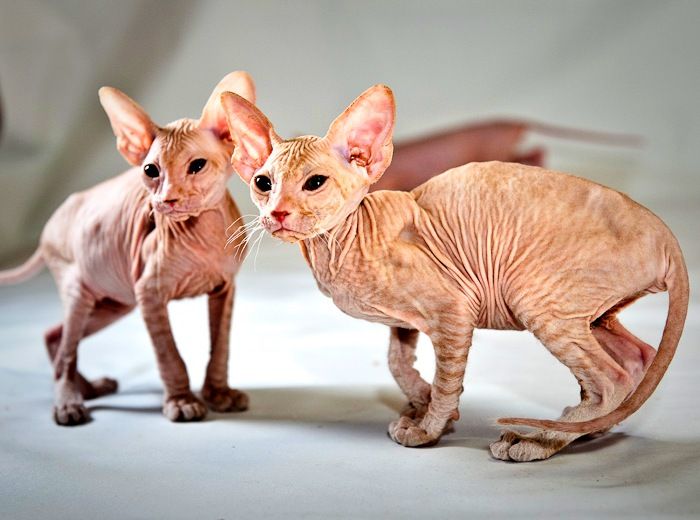
In addition to the exclusive fur, the Peterbald’s elegance is particularly striking: it stands on tall legs and has a slim, athletic body. As a medium-sized cat, it weighs between three and four kilograms. Like all oriental cats, the Peterbald has a long, triangular snout, flat cheekbones, and long, widely spaced ears. Their eyes are almond-shaped and large.
Why Isn’t the Peterbald Always Naked?
Although the St. Petersburg breed has the English word “soon” for “bald” in its name, the name is by no means a program. Because the Peterbalds are available in different fur variants:
- Hairless (naked, hairless): These animals are born naked. The skin is a bit like rubber when you stroke it. Warning: Naked Peterbalds have no whiskers or they have broken whiskers.
- With fluff: The fur of these cats is very thin and fine: only a light fluff of around one millimeter in length covers the body. The feeling of being stroked is a bit reminiscent of a horse’s snout.
- Velor fur: With about 3 mm long hair, these Peterbalds have slightly longer fur than the “fluff variant”. The cats feel velvety soft when stroked.
- Brush-like fur: The fur is short and frizzy, but very dense. Although these cats feel less velvety, this coat structure is quite popular. It is a unique selling point of the Don Sphynx and Peterbald breeds.
- Shorthair fur: There is also one: Cats without the gene for nudity wear normal fur, which is allowed in all colors.
History of Peterbald
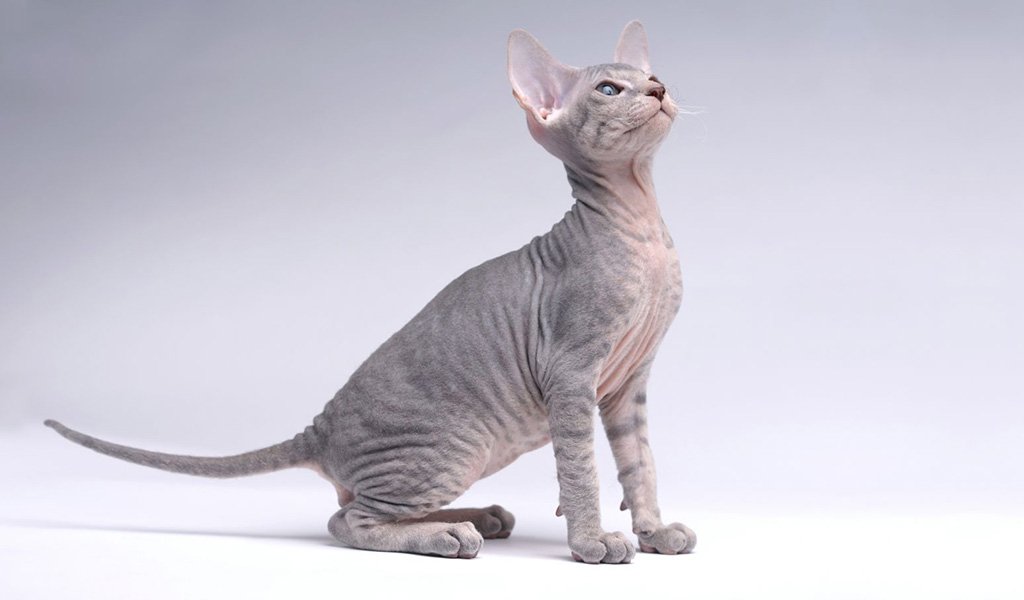
The most famous hairless cat is the Sphynx. But in Russia, a breed of cats called Peterbald has been winning the hearts of naked cat friends for two decades. The story of Peterbald begins in St. Petersburg in 1994. Here a scientist crossed a female Oriental Shorthair with a male Don Sphynx. The Don Sphynx is a Russian hairless cat that, despite its name, is not related to the more famous Sphynx breed. From two such matings, four Peterbalds emerged and thus the well-known founders of the new breed: Mandarin iz Murino, Muscat iz Murino, Nezhenka iz Murino, and Nocturne iz Murino. Just two years later, the Russian Cat Association SFF recognized the breed as an independent one. In 1997 the large umbrella organization TICA followed suit. The World Cat Federation only accepted the Peterbald as an independent breed in 2006. At the FiFé, the Peterbald is currently only “provisionally recognized”.
In order to expand the gene pool and to combine the desired appearance of a naked cat with the physique of oriental cat breeds, crossbreeds of Siamese and Burmese are allowed. Until 2005, breeders were allowed to cross with half-long-haired Javanese and Balinese in the Peterbald.
What is the Temperament of a Peterbald?
If you are considering moving a Peterbald in, you should prepare yourself for a bundle of energy: this velvet paw has bumblebees in its buttocks. If she has enough activity and space, she will spread a good mood. It usually gets along very well with other animals and other animals. The Peterbald is also popular with children, provided they are used to treating animals with respect. This velvet paw prefers to be near its owner, with whom it – typically oriental cat – likes to “speak” loudly. However, they are less “talkative” than, for example, the Siamese cat.
Tips About Keeping a Peterbald
The Optimal Living Environment
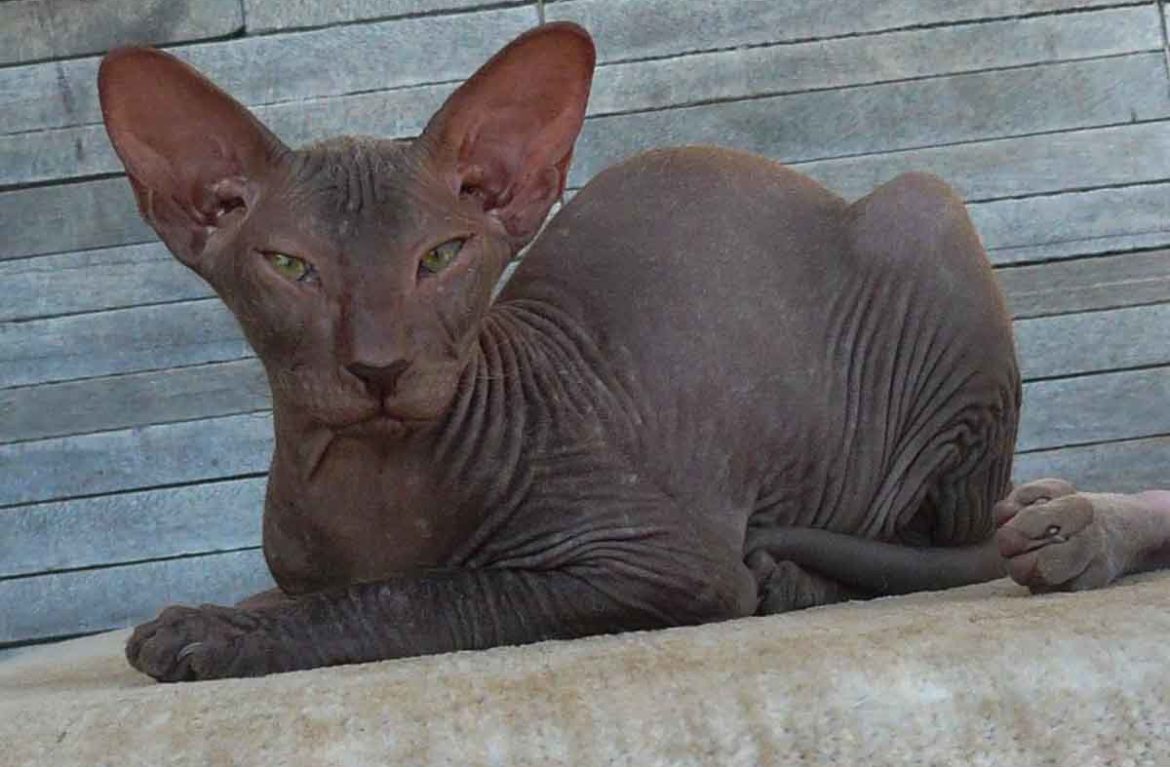
The Peterbald needs a lot of activity and space. One often reads that it is only suitable for housing. At least the variants with fur can enjoy the outdoors. Preferably in a secure garden, because they are very trusting. Even cats with lighter or no fur are happy when they can enjoy the fresh air – even if only on a balcony. If you only want to keep the Peterbald in your apartment, you should offer it plenty of space. With little tricks, you can enlarge an apartment for cats. For example, you can create a “catwalk” with scratching posts and boards on the wall and give your Peterbald more space to discover, run and observe. Like all well-socialized cats from a breeder, the Peterbald also needs conspecifics in order to feel completely comfortable. You should therefore always hold them in pairs at least.
In terms of temperament, the Peterbald is easy to socialize with other oriental cats. Fresh air fanatics should be aware that the comfort temperature of the breed in the bare or thinly-haired specimen is controversial. Some Peterbald owners recommend a room temperature of at least 22 degrees Celsius all day. This can be reflected in the heating bill in the winter months. Others are of the opinion that the Peterbald feels just as comfortable at 18 degrees Celsius.
What’s the Best Way to Feed a Peterbald?
With or without fur: As a cat, the Peterbald is a carnivore that needs protein-rich food. So give her food with a high percentage of animal proteins in the form of meat. Whether dry or wet food: Meat should be at the top of the list of ingredients. In terms of its composition, wet food is more like a cat’s natural prey and provides it with fluids. Dry food is well suited for filling intelligence toys, as a reward, or for search games. However, it is not advisable to offer the Peterbald unlimited dry food all day. If you baref your cat, i.e. want to feed it with raw meat, you should read carefully beforehand. Barf supplements tailored to the cat make this form of nutrition easier. If you want to treat your Peterbald to some raw meat every now and then, you can do so with a clear conscience: Up to 20 percent of the food can consist of raw meat without having to resort to supplements. However, avoid pork as it could contain the Aujeszky virus, which is dangerous to cats. The naked versions of the Peterbald in particular tend to burn more calories. Please note this with the daily rations, which can therefore be a little larger as long as the cat does not put on bacon.
Freeze-dried snacks or other – preferably sugar-free and grain-free – delicacies are suitable as treats. Provide your cat with enough fresh water. A drinking fountain encourages many cats to take in extra fluids.
Health and Care of the Peterbald

Reputable breeders have their breeding animals tested for common hereditary diseases so that the kittens are as likely to be healthy as possible. That is why, for example, they let the parent animals hear about the hereditary heart disease HCM every year up to the age of five. A genetic test for the eye disease progressive retinal atrophy (PRA) is now one of the standard tests. So the most important building block for a healthy Peterbald is to buy from a reputable breeder. However, one aspect remains problematic: the laws of some countries, including Germany, describe cats that are bred without whiskers as torture breeding – more on that later.
Whether naked or hairy: “Grooming” is very easy – even with the short hair variant, it is sufficient to stroke it with a massage glove from time to time. This is how you loosen dead hair and, at the same time, strengthen the bond with your cuddly tiger. With good care and health, the Peterbald can reach the age of 15 years and more.
Does It Harm the Cat Not to Have Fur?
Are cats with little or no fur more likely to catch a cold? Peterbalds are probably more sensitive to the cold. Particularly fair-skinned specimens must also be protected from high levels of sunlight. Otherwise, there is a risk of sunburn. Some Peterbalds with a patio in the garden or balcony like to get used to a “cat coat” that protects them from the cold. If you watch your Peterbald, you can quickly find out whether you are cold. In any case, the cat should have access to a warm place at all times.
Many see the lack of whiskers and thus an important sense of direction in completely bald Peterbald cats as critical. In some countries, including Germany, breeding cats without whiskers is prohibited. There it falls under the so-called “torture breeding paragraph”. Some court rulings related to the Sphynx cat have confirmed this. Regardless of the legal situation, it is doubtful whether a breed of cats that lacks such an important guide as the whiskers should be supported. If you are looking for a Peterbald, speak to the candidate breeder about their attitude towards the matter. Some breeders make it a point to breed Peterbalds with whiskers.
Is the Peterbald Suitable for Allergy Sufferers?
We now know: some Peterbald cats have fur. Neither they nor the bare variants are unreservedly suitable for allergy sufferers. Because these react to an enzyme in cat saliva. If there is a strong allergy, it can also occur in hairless cats. Because the cat spreads its saliva on the skin. If in doubt, speak to your general practitioner or dermatologist about your plan to move a cat.
Where Can I Find a Peterbald Cat?

The Peterbald is one of the rare cat breeds in Europe. If you are looking for a hairless cat, it will be easier to find a Sphynx. If body shape and character are more important, oriental cats like the Siamese or the oriental shorthair are a good alternative to the Peterbald. But the combination of an oriental cat and little fur is only available in the form of the Peterbald. However, you should take the time to find a reputable breeder. Some have waiting lists that you can sign up for if you are interested. When buying a kitten, choose a breeder who breeds with papers from a reputable association. Keep your distance from dubious classifieds. The Peterbald is a young breed whose exclusivity some people suspect for profit. For example, they sell crossbreeds of undocumented Sphynx cats with any Orientals as “Peterbald”.
Every reputable breeder belongs to one of the umbrella organizations mentioned in the first section and sells his cats with papers. Talk to the breeder about their disease prevention. Look forward to hearing a few questions about your living conditions and your experience with cats. This shows that he cares about the well-being of his protégés. The young animals come to you at around 13 weeks of age. They have papers and proof of vaccination with them. It is essential to keep the follow-up vaccinations.
If you would like to have an adult cat moved in from animal welfare, you will hardly find a Peterbald. Breeders rarely have to give up castrati that they no longer use for breeding. But it is more likely to come across older Sphynx cats or their mixes. Approach the search openly – this is how you will find a four-legged friend that suits you regardless of race labels!
We hope you enjoy your lively Peterbald!