“Auspicious temperament” – this name from her home country Thailand describes the Burma cat perfectly! The philanthropic Burmese are real chatterboxes and love to romp around for their lives.
Burmese Cat Breed
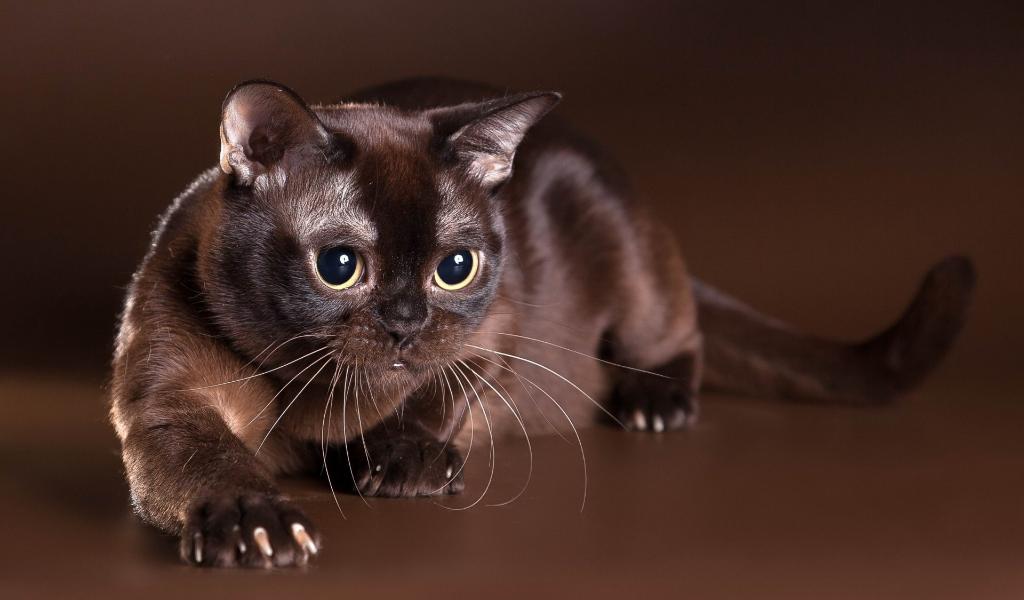
The possible breeding history of Burma in their home country of Burma, today’s Myanmar, has not been fully clarified. The cat was kept by monks as one of 16 temple cat breeds, and is still known today in Asia under its Thai name “Maeo Thong Daeng”. Rumor has it that Burma cats were part of the first British cat show in 1871. The “Chocolate Siamese” presented in the Crystal Palace were similar to the Burmese cat, which is popular in America today. It is not entirely clear whether it was actually a question of Burmese.
A US Navy doctor is said to have brought a Burmese cat from what was then Burma to San Francisco in the early 1930s. The animal resembled a light brown Siamese cat. A team of scientists and cat breeders soon came together to study the genetic makeup of “Wong Mau” in detail. They confirmed: The cat from distant Burma was not a dark Siamese, but belonged to a breed of its own. “Wong Mau” was mated to “Tai Mau”, a Siamese cat of the color Seal point. Another cross with Wong Maus’s son produced dark brown kittens – the progenitors of modern Burma breeding.
In 1936 the “Burmese” was recognized by the Cat Fanciers Association. Due to aggressive crossings with the Siamese, the status as an independent breed was revoked a decade later. It is thanks to a few cat breeders that we continued to work on the individual characteristics of Burma and a clear demarcation from Siamese breeding. The Burma cat has been recognized as an independent breed again since 1954. The American United Burmese Cat Fanciers (UBCF) also set up their own breed standard in 1958, which has remained unchanged since then. The 1950s also saw the birth of Burma breeding in Great Britain. There the breed was recognized by the United Kingdom’s Governing Council of the Cat Fancy (GCCF) in 1952.
Burmese breeding in Great Britain was based, among other things, on American Burma cats, but the breed standard today differs greatly from the American Burma cat type. The differences between the respective types go so far that in Burma cats of the “traditional” British type are not recognized in the USA, Australia, and New Zealand. But the crossing of American imports is not provided for in the British breeding standard.
The first Burma cats came to Germany from England, and in 1970 the first domestic Burma cat litter was born here. The spread of the Burmese cat in Europe began. Even today, native Burma cats in Europe are still strongly of the classic, British type. In New Zealand, Australia, and the USA the stronger American breeding standard continues to be followed. Burma cats were also involved in the development of other cat breeds, particularly the Tonkanese and Burmilla.
Appearance
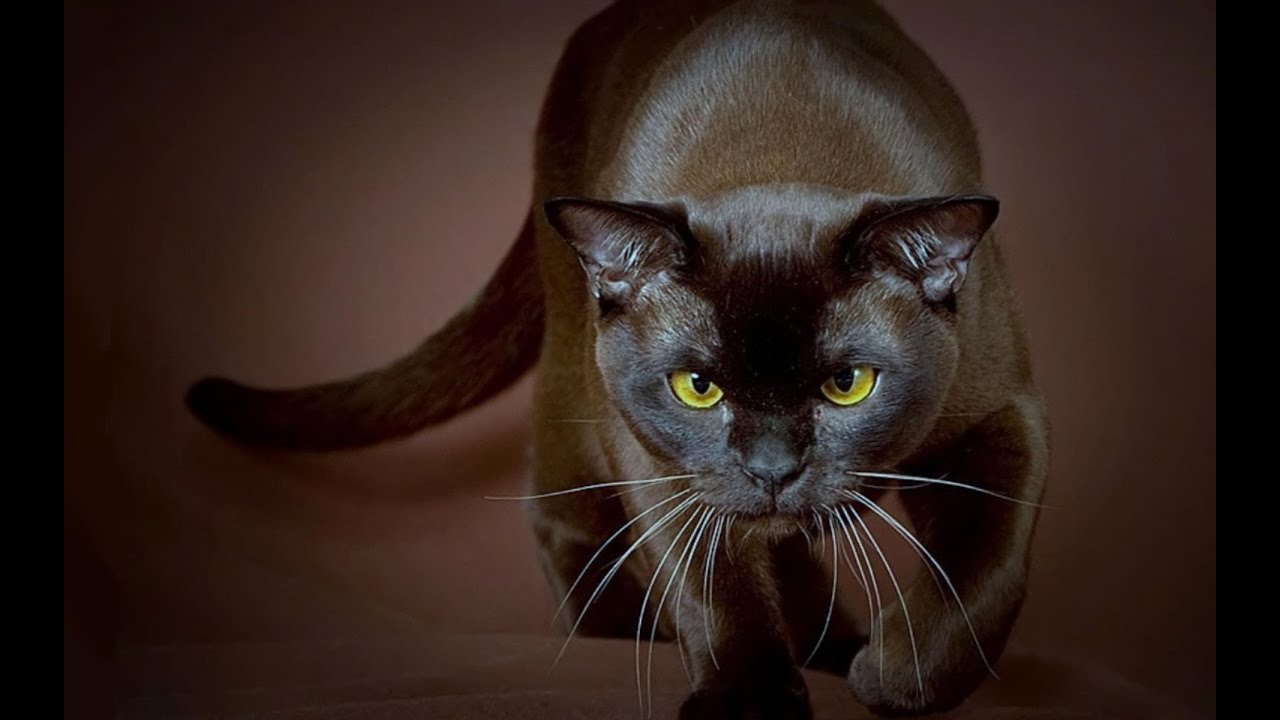
The Burmese cat, often called Burmese, is one of the oriental cat breeds. She comes from Burma, today’s Myanmar. Despite the similarity of names, it should not be confused with the long-haired Birman cat.
Due to a strong distinction between European Burma cats and those overseas, Burma is one of the few cat breeds with two different breeding standards. The American type of Burma cat is sturdy with a broad chest and head and a shorter snout. The European type, originally from Great Britain, favors a rather slim, athletic build. It is primarily widespread in Europe. Burmese cats of this type are small to medium-sized, queens weigh up to four kilograms, and males weigh up to six kilograms. The petite yet muscular animals are similar to Siamese cats of the old type but are not as slim as today’s Siamese. Burmese cats appear a bit more compact than their long-legged relatives from Siam – they have a broad chest and a straight back, which is supported by delicate legs and oval paws. The head of the Burmese cat has large, wide-open ears and eyes. Like ears set wide apart, they sit on a wedge-shaped head with a broad, rounded forehead. The large eyes shine from golden yellow to amber and are slightly almond-shaped.
Burma Cat Colors
Burma’s fur has a silky sheen. Adapted to the warm climate of Southeast Asia, it is particularly light and, thanks to only a small amount of undercoat, lies close to the body. The coat color of the Burmese cat should be solid without a pattern, but younger Burmese often have a slight tabby color. A slightly darker face mask is also not uncommon and desirable. Ten different colors are recognized: blue, chocolate, seal, and red and their dilutions, lilac and cream, as well as two-tone combinations such as chocolate tortie, blue tortie, seal tortie, and lilac tortie.
- Seal: Burmese cats of the seal color are captivating with their warm, dark brown coloring. The nose and pads are also dark in color.
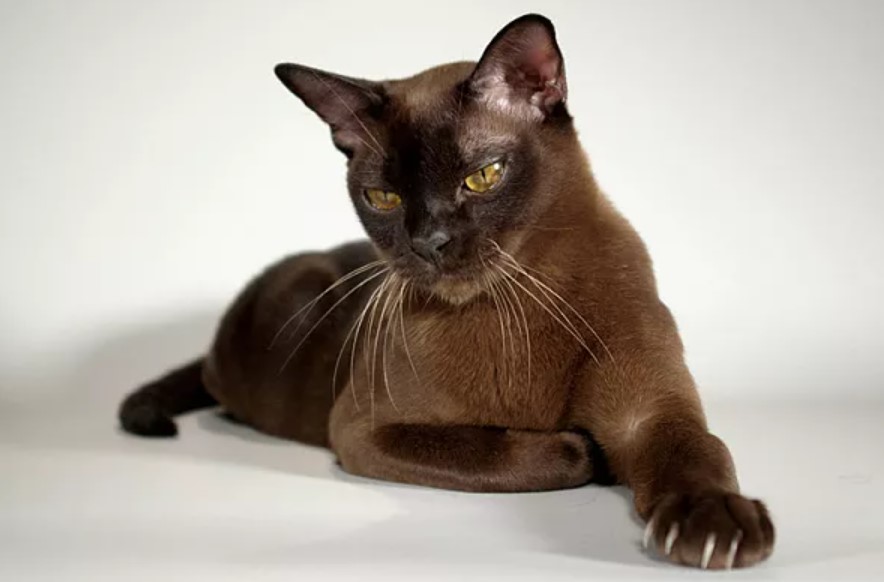
- Chocolate: The chocolate brown color of Burma is different from the seal color. The balls are colored cinnamon to chocolate brown.
- Blue: Burmese who are blue are particularly beautiful, appearing as blue-gray with a slight pewter shimmer. The nose and pads are also colored in this color.
- Lilac: The dilution of brown appears as dove gray with a slight pink tinge, which is also continued in the lavender-colored appearance of the nose and pads.
- Red: Red Burmese show warm, orange-red fur. With this coloration, the nose and pads are pink.
- Cream: The dilution of red shows up as a light beige. The nose and pads are pink, just like the red color.
The English term “tortie” describes three-colored cats, colloquially known as “tortoiseshell”. Due to the genetic characteristics of this coloration, all three-colored cats are female. Burma is also recognized in various tortie colors:
- Seal-Tortie: Burma Seal-Tortie has a red base color with warm, dark brown spots. The nose and pads can be brown, pink, or brown, with pink spots as well.
- Chocolate-Tortie: A chocolate-colored base color is complemented by beige spots. The nose and balls of the feet can appear chocolate brown or pink, and pink spots on a brown background are also permitted.
- Blue Tortie: The fur has the colors blue-gray and apricot, which can appear spotted or mixed. Pink or blue-gray and combinations of both colors are permitted for the ball of the foot and the nose mirror.
- Lilac tortie: Burmese cats in lilac tortie have a dove-gray basic color with apricot-colored, dark-beige spots and pink paw pads and nose mirror.
Depending on the breeding area, other colors are also common, in New Zealand, for example, there are also Burma cats in cinnamon, fawn, caramel, and apricot as well as silver variants. Tabby colors are also partially recognized.
Burma Cat Temperament
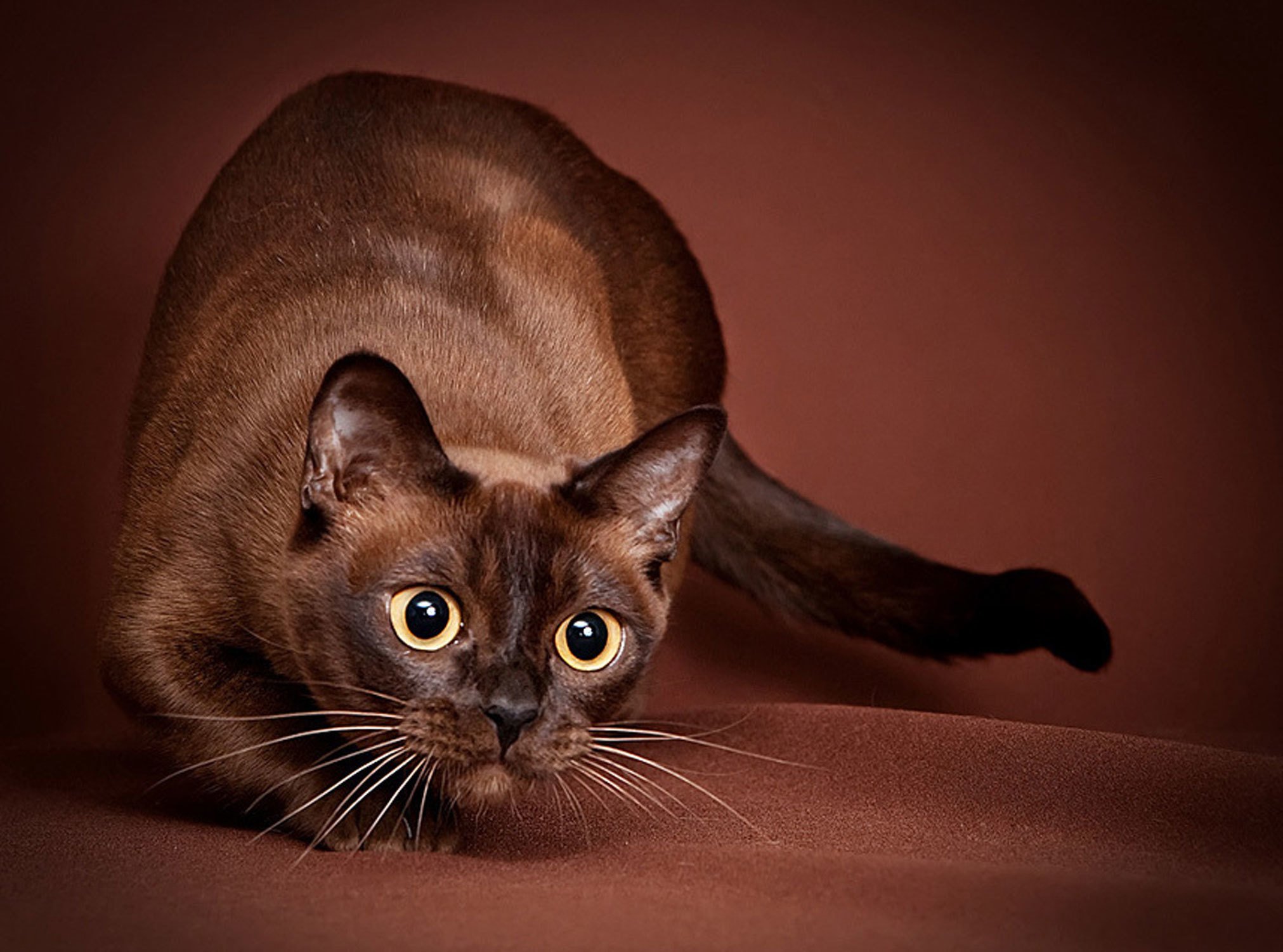
As an oriental breed of cats, Burmese are intelligent, curious, and spirited. The trusting cats fully join humans. They are very playful and also like to deal with younger family members – after all, Burmese stay agile into old age and love attention around the clock! They like to have conversations with “their” people. But even a large human family does not replace a conspecific. Burmese cats are reluctant to be alone, so I am not necessarily suitable for keeping as a lone cat.
The active animals want to be physically and mentally exhausted. Keeping them in an apartment is less suitable for active cats like Burma. If you want to give such an energy package a good and cat-friendly home, you should therefore offer it a secure garden or at least a secure cat balcony with many opportunities for climbing, playing, and observing. If there is a second cat in the family, the fun is twice as big!
Care and Attitude
Have you found your dream cat? Congratulations! The Burmese cat does not have any breed-specific requirements for animal welfare. As an active, playful cat breed, it loves variety and wants to be physically and mentally busy. To prevent your cat from climbing up the curtains and dancing on the table, a secure casserole is ideal in the cat-safe balcony or garden. Climbing and hiding places, as well as scratching posts, ensure that your Burma can let off steam.
Burmese cats are social animals. They fully join humans but are also happy to have cat company. This is especially true if you are employed or active yourself and do not spend the whole day at home. As an oriental breed, Burma cats are often more dominant, so socializing with a calmer, steady cat is often the easiest. Or look around at the breeder you trust for littermates who are familiar with each other and who can move into their new home together!
Diseases
An interesting study is from 2008. Scientists found that the American Burma cat breed has the lowest genetic variability of modern cat breeds. That means: Burmese cats of this type are relatively closely related to each other. For this reason, crossbreeds with cats of the Bombay and Tonkinese breeds are permitted in the USA. Breeding cats with little genetic variability carries the risk of involuntary inbreeding and frequent hereditary diseases. Still, there is good news for all Burmese cat lovers: the breed is statistically the longest-lived domesticated cat breed. On average, Burmese live around 17 years!
However, systematic cat breeding with only a small gene pool has its price. Burmese are often affected by the so-called “congenital vestibular syndrome”. This hereditary disease of the inner ear leads to a malformation of the localized organ of equilibrium. The result is balance disorders and numbness.
Diabetes mellitus is also more common in British-type Burma cats. Diabetes in cats is not curable, but thanks to good treatment options, it is no longer a death sentence!
Certain Burmese bloodlines show a preposition for a potassium deficiency in the blood which is technically known as hypokalemia. The disease is inherited recessively and is therefore often passed on covertly. If both parents have a predisposition to hypokalaemia, the young animal is affected. Depending on the severity, the disease can be harmless or fatal.
The frequent occurrence of endocardial fibroelastosis is also known. The disease, which is rather unknown in cats, is characterized by a thickening of the lining of the heart muscle and occurs only in young cats.
Burmese Cat Diet
That being said, long-lived breeds like Burma also benefit from high-quality cat food with high meat content. After all, they can only utilize carbohydrates to a limited extent, vegetable by-products put a strain on the drainage organs and can lead to diabetes and other diseases … To ensure that your Burma is completely healthy, you shouldn’t forget the annual check-up appointment at the vet. Here your cat will be checked from front to back and you can clarify any questions.
Cat Breed
The increased incidence of hereditary diseases can only be combated through well-thought-out, responsible breeding. Lovers of cat breeds should therefore inform themselves carefully about potential breeders before purchasing and not blindly trust dealers who offer “pedigree cats at a low price”. Pedigree cat breeding is not just about the breeding papers themselves. Yes, pedigree cats meet a certain standard – but the know-how and attitude of the individual breeder are much more important. Cat breeding is a complex affair and until the kittens are ready to move into their new home, the breeding family has a lot of work and costs to do. Apart from covering costs and membership in the cat breeding association, veterinary costs for mothers and kittens should be mentioned, including preventive medical check-ups, looking after the pregnant cat, vaccinations, and castration, and any necessary deworming. High-quality cat food is also a cost factor – especially when you don’t want to save on quality!
So that kittens learn everything important from their mothers and siblings and are thoroughly socialized, they should spend at least twelve weeks in the breeder’s household. During this time, the breeder is there for his animals around the clock. So he not only invests money in his animals but also takes responsibility for them. Is it therefore surprising that many breeders carefully scrutinize the buyers of their cats? After all, they want the best home for their kittens, which is why they are there to help new cat owners with advice and action even after the purchase contract has been signed. Of course, all of this has its price: a young Burma cat costs around $800. Some breeders also sell adult animals that have been withdrawn from breeding – often for a cheaper friendship price. As an alternative, a visit to the animal shelter is suitable: Here, many four-legged friends of all ages and races are waiting for a good new home!
We wish you a wonderful, long life with your little lucky cat!