The Bengal cat is a truly unique breed of cats. After all, she is a “house tiger”. The breeders of the breed rely on a bit of wildcat blood. Cat breeds like Bengal or Savannah are the newest craze in the breeding world! What is such a breed? What do you have to consider when keeping them? Our breed portrait provides answers.
Big cat hybrids were still to be found in European zoos at the beginning of the 19th century. What turned out to be impractical for the zoos was nevertheless transferred to the world of small cats. With more and more enthusiasm, cat breeds are developed from the mating of wild cat species with domestic cats. The best-known example is the Bengal. It was the result of a cross between a tame, black domestic cat and a wild Asian leopard cat. The result: a cat breed that impresses with its elongated physique and special coat color. Depending on how close they are to their wild relatives, they sometimes need an experienced hand.
History of the Bengal Cat
The origin of the Bengal breed comes from the USA. There the geneticist Jean Mill first tried to cross the Asian leopard cat with a domestic cat in 1963. Their goal: to create a tame house cat that impresses with the original appearance of its ancestors.
Jean Mill as the Founder of the Bengal Breed
The idea wasn’t new, however. As early as 1889, the British artist and journalist Harrison William Weir mentioned a cross between an Asian leopard cat and a domestic cat. The greatest influence on the Bengal breed and official founder of the breed is Jean Mill, then still known as Jean Sudgen. As early as 1946 she dealt with the topic of “crossbreeding” in a research paper. In the early 1960s, she put her knowledge into practice. She crossed domestic cats with Asian leopard cats. Direct crossings of wild cats and domestic cats are called “F1” animals. Another cross of an F1 animal with a house cat becomes an “F2” animal and so on. F1 and F2 cats often display wildcat behavior. Jean Mill crossed the F1 females with the sire again and thus obtained F2 cats. After another two to three generations, offspring and house cats showed similar behavior.
Due to the death of her husband, Jean Mill briefly interrupted their attempts at the crossing. She continued this in the 1970s when she was able to take over female hybrid animals from the scientist William Centerwall. He bred Asian leopard cats to domestic cats to test their immunity to feline leukemia. This was the starting signal for the modern breeding of the Bengal cat. The Bengal was officially recognized by the TICA (The International Cat Association) in 1983. In the beginning, other breeds such as the Abyssinian, Egyptian Mau, and American shorthair cats were crossed. This should refine the desired appearance of the Bengal. The Bengal is now purebred. However, only cats from the fourth generation (“F4”) may be shown at exhibitions. Only from this generation onwards are the animals considered to be “tame”. Then they resemble a domestic cat in character. The Bengal cat has since made numerous friends. It is now recognized by many umbrella organizations such as the CFA (Cat Fanciers’ Association).
Appearance
How Big is a Bengal Cat?
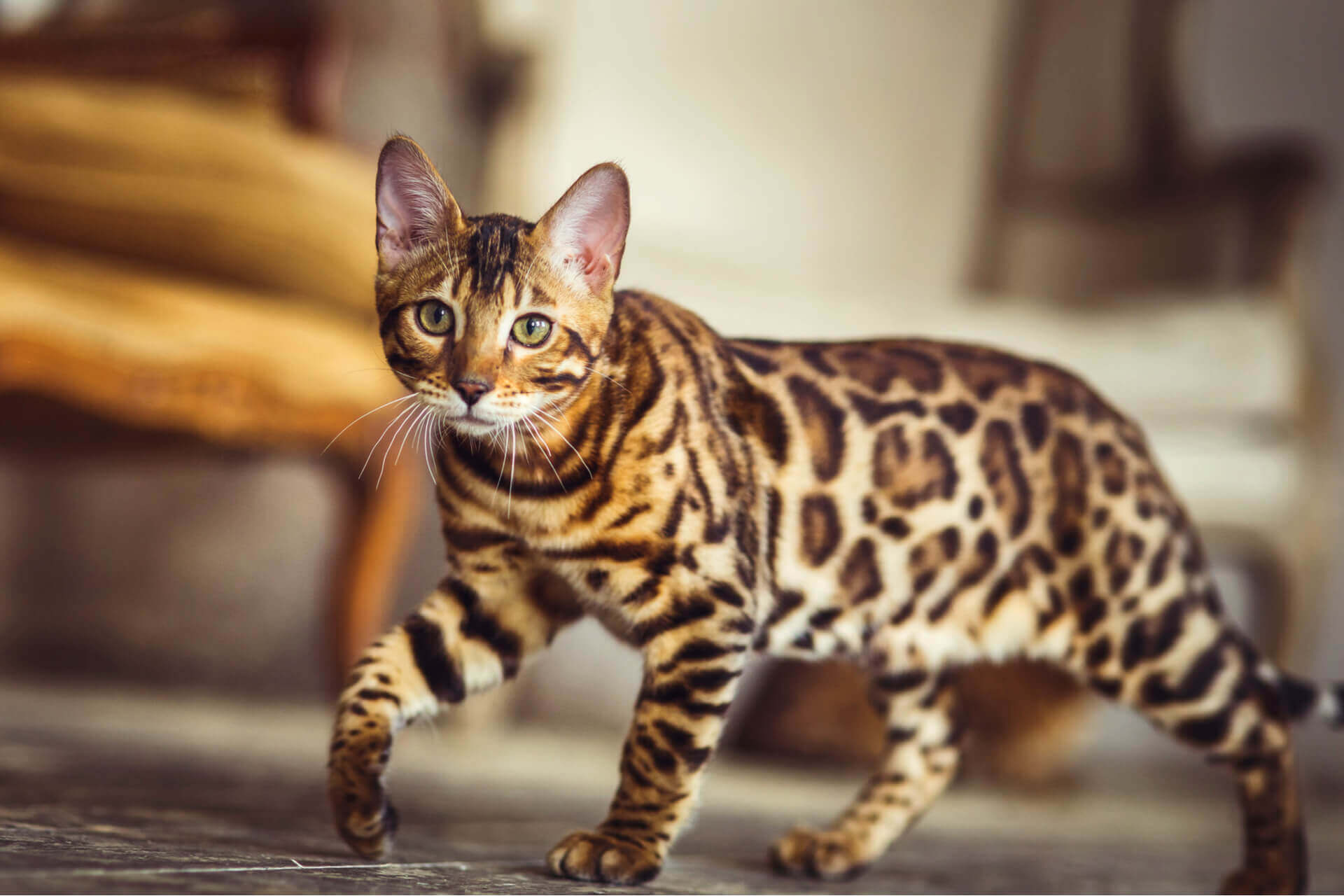
The sleek yet athletic animals weigh up to 6kg and are up to 30cm high. It is often assumed that a Bengal cat is big. However, the fur noses do not get noticeably larger than domestic cats. The Bengal’s body is very muscular and generally somewhat longer than that of domestic cats.
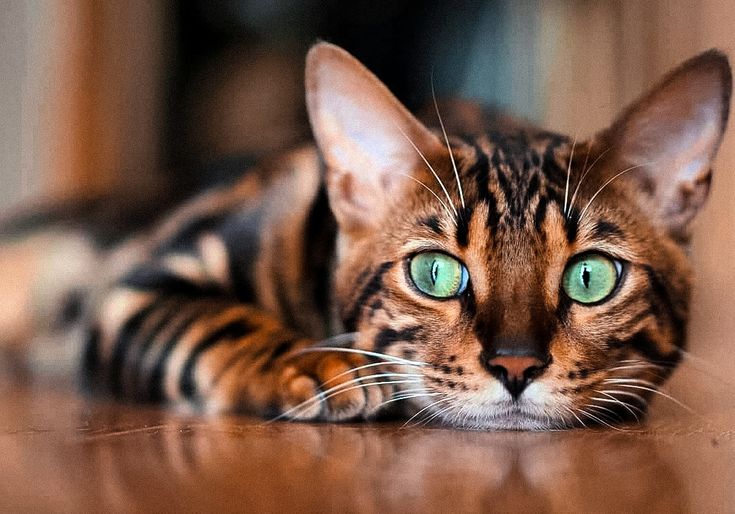
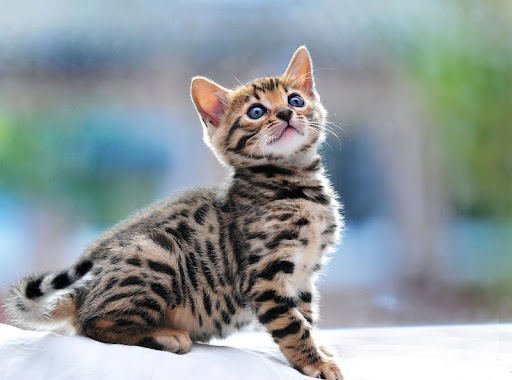
Your powerful body is supported by long, muscular legs. In relation to this, the Bengal’s head is rather small. It is dominated by high cheekbones and almond-shaped eyes. The big eyes of the Bengal are often green or blue in animals with the color “seal point”. The ears are small and rounded at the top, but have a broad base.
Bengal Cat Colors
The “wild” drawing of the Bengal is striking. With horizontally arranged spots, rosettes, and a lighter belly, it resembles its wild ancestors. The legs of most animals are still streaked but should have spots where possible. Bengal comes in the basic colors orange, golden, dark yellow, and sand-colored, often also with “glitter”.
The drawings “marbled” and “spotted” are recognized:
- Marbled: “Marbled” is reminiscent of the “brindle” drawing of other cat breeds. The drawing of the Bengal should remind as little as possible of that of a house cat.
- Spotted: The coat pattern “spotted” is expressly desired: “Spotted” Bengals resemble leopard cats with their large spots and spots. Two-colored dots (“rosetted”) are differentiated from single-colored dots.
The chin, chest, stomach, and inside of the legs should show basic colors from cream to white. They contrast with the coloring of the flanks and back. The eyes, lips, and nose are ideally framed by narrow, black lines.
Bengal Cat Temperament
From the fifth generation, Bengalis are officially considered house cats. Still, because of their wild heritage, they are active animals that have high temperaments. Bengal cats should therefore only be kept as pets from this generation! Breeding animals are also only allowed to be shown at exhibitions from the fourth generation onwards. According to the breed standard, Bengalis are trusting, attentive, curious, and friendly.
Active Fur Noses with a Preference for Water
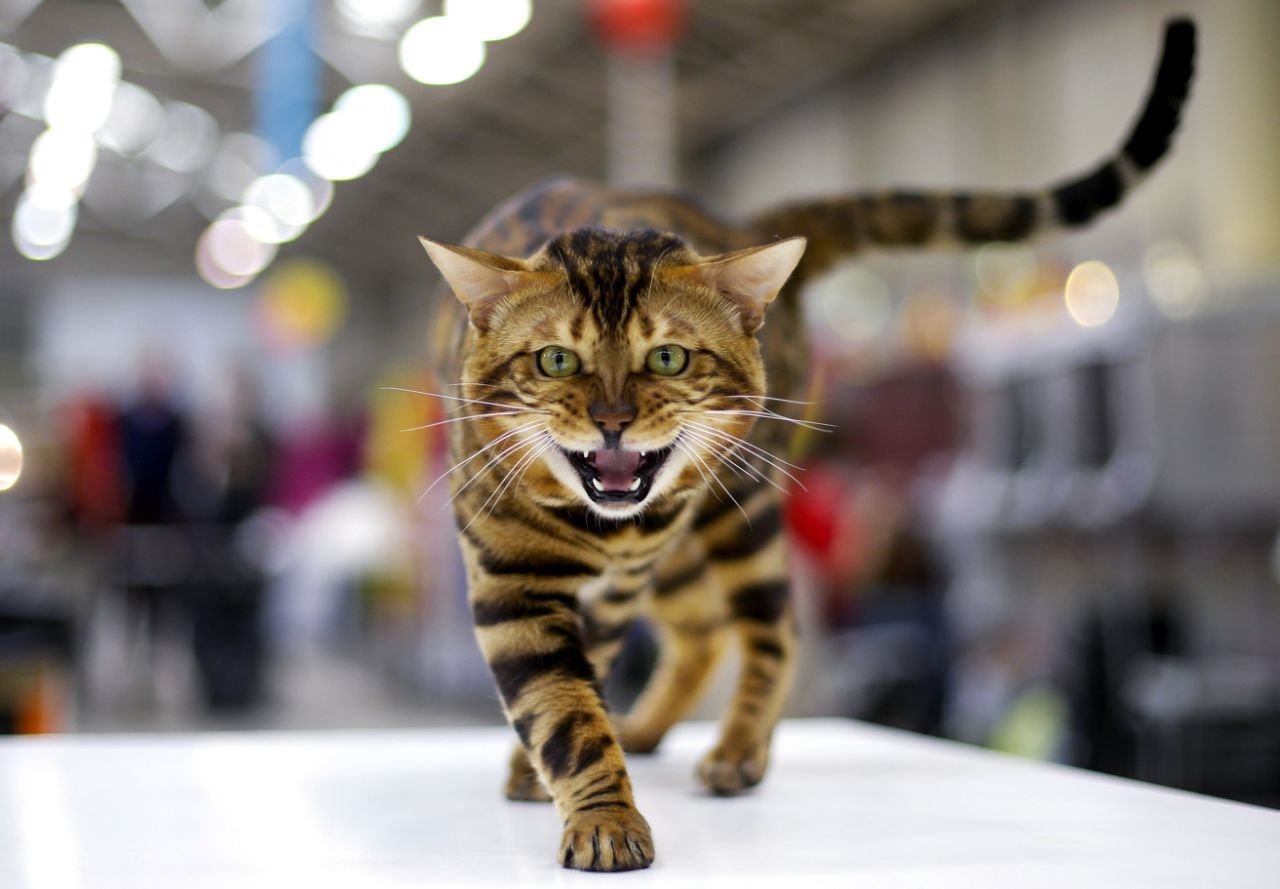
The Bengal is a cat that is definitely fun! She is considered clever and docile – so she needs a lot of attention. Bengal cat lovers often find that just cuddling and playing is not enough to keep them busy. Target training and working with the clicker are just as much a part of it as an environment that leaves no room for boredom. Bengal cats love to climb and are particularly fond of water. Secured freedom of movement ensures that the Bengal does not get bored and that she can live out her urge to move. A large, cat-safe garden is of course ideal. For quieter animals, a secured balcony with many opportunities for climbing is also suitable.
The Bengal is a confident, rather dominant, and active cat. Keeping cozy, restrained cats can therefore lead to problems. However, Bengal should never be kept alone. As a second cat, animals with a temperament similar to that of the Bengal come into question. Quieter cats such as Persians or British Shorthair cats are not suitable for this.
In a hybrid breed, the rearing of the individual animals is particularly important. Because the wild inheritance is particularly prevalent in cats where the wildcat blood is not too far behind in the family tree. Bengal of the first generation show, for example, strong wild animal characteristics. In addition, the keeping of Bengal generation one to four is much more demanding, like the animals, as wild cats, fall under the species protection law.
Only animals from the fifth generation are suitable as lover cats. Because from this point in time, Bengals no longer belong to the hybrid cats. Thus, they no longer fall under the species protection law and can be kept as house cats without special requirements. The following is important with all pedigree cats. Only get your cat from a reputable breeder who attaches great importance to the socialization and rearing of their young. It should also be by your side at the beginning of your life with your Bengal. Make an appointment to visit the breeder. So you can get an idea of the animals and their surroundings on site. The parent animals should be people-related and trusting.
Bengal Cat Breed
As already mentioned, Bengal cats of the first to fourth generation are subject to the species protection law. In Europe, certain requirements apply to protected species. The Federal Agency for Nature Conservation requires, among other things, an outdoor enclosure of at least 15m² for wildcats and their direct descendants.
From the fifth generation onwards, the Bengal character resembles that of other more active cat breeds without wild cat blood. The attitude then differs only slightly from the attitude of other cats. There should be a secure run or balcony. There are also opportunities to play, climb, scratch, and hide. The Bengal can deal with this according to their level of activity. Vary the environment and always offer it new stimuli.
A bowl of water on the balcony? A small pond in a secure run? Let your imagination run wild! After a few weeks with a Bengal, clicker training will no longer be a foreign word for you. Intelligence toys and mind games are widely accepted by the Bengal. Since Bengal cats love water, you can offer a flat, large bowl of water (outside in summer, in the bathroom in winter).
Keeping a Bengal can be challenging for cat lovers who are used to calmer breeds. Since the Bengal is an intelligent, docile breed, it is definitely fun to work with.
Bengal Cat Nutrition & Health
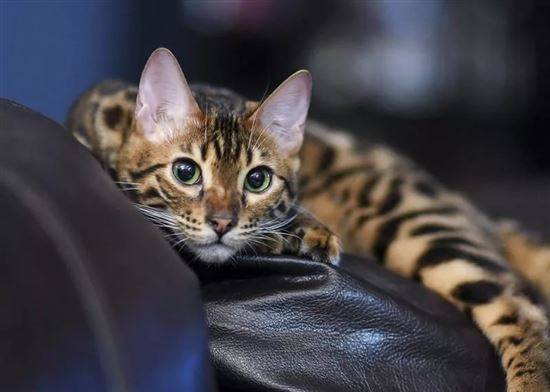
Bengali can be affected by some diseases typical of the breed. This includes progressive retinal atrophy (PRA-b). Due to the degeneration of the retina of the eye, PRA-b can lead to blindness in animals. This can happen during the first few years of life. Another hereditary disease is pyruvate kinase deficiency (PK-Def). The red blood cells are destroyed due to an enzyme deficiency, which leads to anemia. Both diseases can be detected by genetic testing.
Furthermore, Bengali can develop hypertrophic cardiomyopathy (HCM). It is a heart disease that causes the heart muscle to thicken. HCM can be diagnosed annually by means of cardiac ultrasound. Reputable breeders have their cats tested for hereditary diseases and exclude affected animals from breeding. This is yet another reason to turn to reputable breeders who put animal welfare first. You should keep your distance from dubious sellers who sell cats without papers. Because without papers there is no guarantee that the animals are healthy.
The best prevention for Bengal cats is species-appropriate food and the annual check-up at the vet. Many breeders of cats with wild ancestors feed them raw. This is because some Bengals are sensitive to industrial cat food and bacteria in the food. Basically, ready-made food in a can or bowl provides your Bengal cat with everything it needs! If you choose raw feeding, thorough training is essential. With the right supplements and natural supplements, you can ensure that you are feeding your cat healthily.
How to Find the Right Breeder
As you can see: the Bengal is an exciting breed of cats! Have you fallen in love with Bengal while reading? Now the question arises: where can you find such a special tiger?
How Do You Recognize a Reputable Breeder?
A reputable breeder will ensure that keeping a Bengal cat is really right for you! He establishes contact between the kittens and their future family as early as possible. He also accompanies his young animals to their new home. As a member of a breed club, he not only attaches importance to the fact that his cats correspond to the desired breed type. He also takes responsibility for the health of the animals. This also includes the health care of the parent animals, such as tests for genetic diseases. Veterinary supervision during pregnancy is also necessary. After the young animals are born, they are presented to the vet, examined, vaccinated, dewormed, and fed appropriately. Of course, all of this costs money – and is reflected in the purchase price of a Bengal. A Bengal cat often costs around a thousand euros. Animals intended for breeding are a lot more expensive. The breeders only cover the costs incurred at this price.
Keep Your Distance From Multipliers!
Even if the purchase price of a pedigree cat hurts, you should never switch to so-called “multipliers” that offer “pedigree cats without papers”! As a rule, savings are made here in the selection and provision of the parent animals. The kittens are rarely given the socialization and time to develop into healthy cats. Of course, this trust applies to both sides. So do not be appalled if the Bengal breeder has set special conditions for the delivery of his animals. This can be a castration or an attitude that guarantees safe freedom of movement. In addition, the following must be taken into account, especially with Bengali. Only valid papers can prove that the animals are not subject to conditions. If this proof cannot be provided, in the worst-case scenario, the cats will face confiscation by the authorities. Therefore, only turn to reputable breeders.
We hope you enjoy your Bengal!