The Balinese immediately catches the eye of friends of the Siamese and Burmese: just like the Siamese, the cat shows a conspicuous point mark, but its fur is half-length.
Balinese Cat Breed
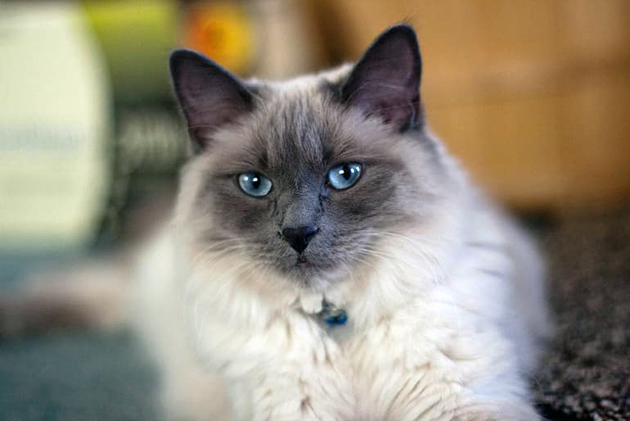
Despite its name, the Balinese cat does not come from Bali or Indonesia. The breed was created through breeding, not natural selection.
In fact, some Siamese cats imported from Thailand to the United States and England around 1800 carried the longhair gene. These animals, known as “long-haired Siamese”, were not used for breeding. In order not to falsify the breed standard of the breed, they were sold as pets or killed if no buyer could be found. The breed was first registered in 1928 and shown at cat shows. In the 1950s, American breeders finally discovered the potential of the breed and began to breed them specifically. “Long-haired Siamese” seemed too bulky for lovers of cats. The name “Balinese” was born – however, it does not indicate the geographical origin of the breed, but rather the graceful, graceful nature of the cats, comparable to the Balinese dancers.
In the 1960s and 1970s, only animals of the classic point colors seal, chocolate, blue, and lilac were allowed to breed with Balinese. At the same time, the Cat Fanciers Association named Balinese red, cream, tabby, and tortoiseshell as “Javanese”. This naming is still used today but often causes confusion.
The original type of Balinese cat also went through a change. Targeted breeding shifted the ideal of the Balinese from the traditional appearance to an increasingly slender physique with a triangular head and larger ears. Today the body of the Balinese is similar to that of the modern Siamese. The original type is only kept by a few breeders.
Appearance
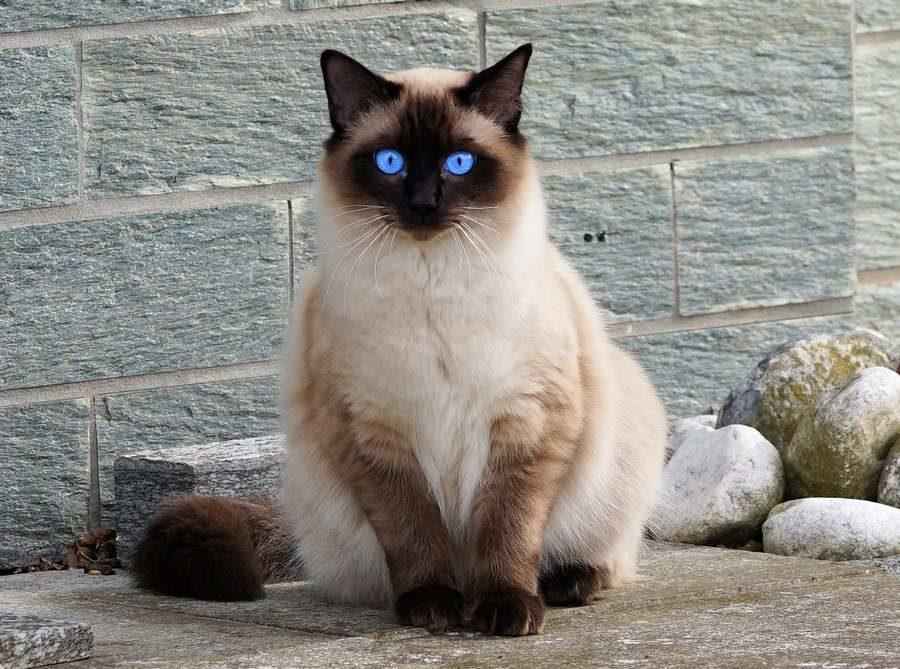
Balinese are muscular yet slender cats. The medium-sized animals weigh between three and four kilograms – male cats can weigh up to five kilograms. Balinese look like original Siamese cats, but their fur is long and especially bushy on the tail. The modern variant of the Balinese cat is very similar to the modern Siamese with an elongated body and triangular face.
Just like Birman cats and Siamese, Balinese cats belong to the so-called point cats. This striking color immediately catches the eye: the predominantly light fur is only darkly colored on the body tips such as the snout, legs, tail, and ears. The color is based on a mutation that leads to a deficient function of the enzyme tyrosinase and thus disrupts the production of the pigment melanin. This leads to so-called partial albinism and coloring of the “cold” parts of the body. According to the genetic basis, every coat color can also appear as a point color.
According to the European Breeding Association, the following colors are permitted for Balinese breeding:
- Seal-point: The black basic color prevails in the “cold” areas of the body.
- Blue-point: A black base color is diluted to “blue”. The badges appear dark gray.
- Chocolate-point: Balinese in the chocolate-point show a brown basic color, which, as is usual with point cats, asserts itself in the body tips.
- Lilac-point: The dilution of brown is referred to as “Lilac”. The almost light gray color is of course only visible in the point tips.
- Cinnamon-point: A cinnamon-red base color, only visible in the point tips.
- Red-Point: A Balinese cat with red Point-coloring is named a Red-Point.
- Fawn-point: The basic color in “cinnamon” is diluted to “fawn”. It is shown by a gray-beige coloring of the points.
- Creme-point: The name of red is called “creme” – Burma creme-point have cream-colored points.
- Foreign White: There are indeed Balinese who only show white fur without any point coloring! These are referred to in technical jargon as “Foreign White”.
The eyes of the Balinese cat are strikingly bright blue. They make the cat look alert and intelligent and indicate its talkative and active character.
Balinese Cat Allergy
Balinese are often sold as supposedly hypoallergenic cats. Unfortunately, science has not yet produced a cat breed that can be unreservedly recommended for those allergic to cat hair. A cat allergy is caused by the enzymes Fel d1 and Fel d4 contained in the saliva of the animals. In fact, the oral fluids of Balinese cats contain a relatively low concentration of these proteins.
Balinese Cat Temperament
The character of the Balinese is typical of oriental cat breeds: The animals are particularly active and talkative. They show themselves to be particularly people-related, they love the attention of their people and like to demand it loudly. The intelligent Balinese want to be kept busy – preferably around the clock! Intelligence toys and trick games are particularly popular, but the cats prefer to play with “their” human. Although they are one of the more dominant cat breeds, they are therefore suitable for families with children and other animals such as dogs. The main thing is that there is always something going on!
Attitude and Care
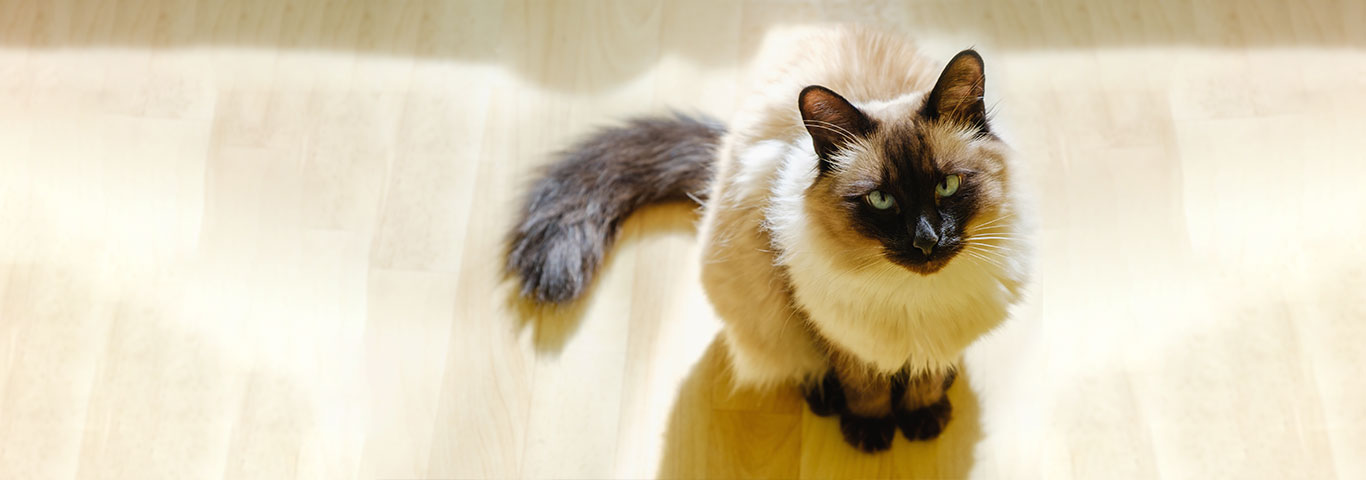
Balinese are easy to care for, robust animals. They don’t need any special grooming or health care. Like all cats, however, you benefit from combing or brushing once or twice a week. When the coat changes in spring and autumn, cat grass and malt paste help to shed swallowed hair in a natural way.
The annual check-up at the vet is also a must. Here your Balinese cat will be put through its paces – in the truest sense of the word. The brief examination can also clarify any questions.
As intelligent animals, the Balinese get bored easily. A species-appropriate keeping of oriental cat breeds should therefore always include a varied environment with opportunities for climbing, playing, and hiding! Scratching posts with several floors are recommended here, as cats prefer elevated places. Playhouses and cat tunnels can also be offered to the fur noses. So your Balinese cats can really let off steam and, if necessary, withdraw.
If you do not want to release your Balinese cat into the great outdoors, you are well-advised to have a secure balcony or garden. Water pools, outdoor climbing trees, and a bowl of cat grass ensure fun and games.
Balinese Diseases
Due to their close relationship with the Siamese, Balinese cats, unfortunately, show some hereditary diseases that are typical for this breed. This includes hypertrophic cardiomyopathy, a hereditary thickening of the heart muscle. Cardiac ultrasound is the method of choice for diagnosing HCM and testing breeding animals. Hypertrophic cardiomyopathy cannot be cured, but an early diagnosis can exclude sick animals from breeding. HCM is not a death sentence – the animals can live long, healthy lives as family cats! However, they should be excluded from breeding to avoid inheriting the disease.
Balinese Cat Nutrition
A species-appropriate diet with plenty of healthy protein is essential for all cats. Active races like the Balinese often need a lot of energy. Since cats can only utilize carbohydrates to a limited extent, you should primarily focus on high-quality cat food with a high meat and protein content.
Perhaps you are also flirting with alternative feeding methods such as BARF and do-it-yourself cooking? With raw feeding, often called BARF, the daily feed portion is made up of raw meat, a small portion of offal, and specific supplements. A thorough familiarization period is essential here. This is how you make sure that your cat is getting everything it needs to stay healthy. The same applies to cooking your own cat food.
Breed
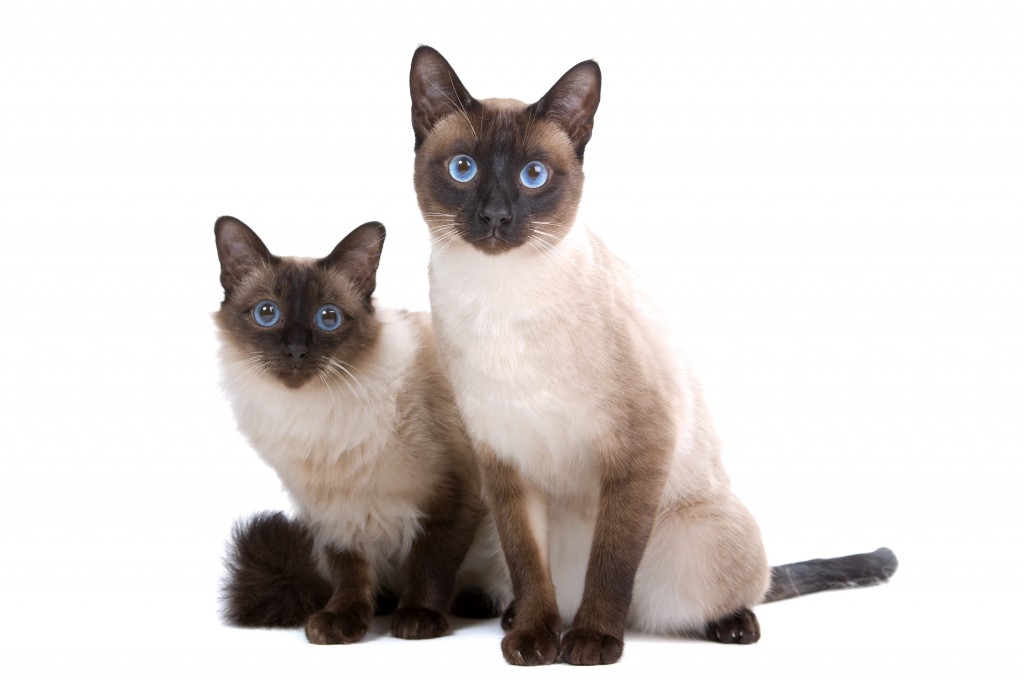
As the Siamese breed, there are also two types of Balinese: the original, more stable breed type and the more modern breed variant. The latter is the more popular variant, often seen at breeding shows. The type of Balinese cats is more and more similar to that of modern Siamese. To achieve this, Siamese cats are specifically crossed to breed the Balinese. The resulting “Siamese variants” appear as short-haired Siamese cats, but they carry the gene for long fur. This long hair enables variants to be used for Balinese breeding.
As you can see, cat breeding is not an easy matter and requires genetic background knowledge as well as precise knowledge of the respective breeding regulations. Professional cat breeders are therefore members of a breed club. This is the only way to ensure that breeding animals and offspring correspond to the type of the respective breed. Hereditary diseases and inbreeding are avoided through targeted, well-thought-out mating. At the same time, responsible breeders ensure that parent animals and kittens receive regular health care. Species-appropriate cat food and rearing in the family are a must. In the first twelve weeks of life, the kittens learn everything they need to know from parents and siblings – they should not be placed in a new home before the end of this development phase.
Breeding papers are therefore more than just a piece of paper. Even if you don’t worry about future breeding, you can be so sure that your Balinese is really a Balinese cat. But cat breeding is a time-consuming, expensive hobby and pedigree cats have their price. If you are interested in intelligent Balinese cats, you have to dig deep into your pocket: The cats cost several hundred to a thousand dollars. However, if you want to save money, you shouldn’t fall for dubious brokers of “pedigree cats without papers”. Breeders who bypass the breed association not only save show fees. Often there is a lack of knowledge of cat genetics, and animal welfare and nutrition are often lost. The supposed bargain turns out to be so expensive when signs of a hereditary disease or the consequences of malnutrition suddenly become apparent.
But there is an alternative for cat lovers who do not want to spend several hundred dollars on a pet. Shelters and animal welfare associations are temporary homes for cats of all ages, breeds, and temperaments. There are also many pedigree animals among them! Animal welfare cats are often given away for a nominal fee. This often does not cover the veterinarian and feed costs incurred by the association but discourages spontaneous purchases. You also support the rescue of other animals with this nominal fee!
We wish you and your Balinese cat a good time together!