The Maine Coon has now become one of the most popular cat breeds in the world and is also enjoying increasing popularity in the USA. This is probably due to their naturalness, robustness, and their great temperament. In our Maine Coon breed description, you will learn important facts about the loving fur noses.
The Maine Coon cat comes from the USA where it was originally a house and utility cat. In the 1980s she was named a “state cat” by the state of “Maine”, which is why it bears the state’s name. It is not therefore an aberration to find Main Coon in other parts of the world. A signpost in Ohio that says ‘Maine coon kittens in Ohio‘ recently generated online buzz. However, we can say with certainty, armed with facts and figures that Ohio boasts of top breeders of this Maine native
At the beginning of the 20th century, the Maine Coon was virtually supplanted by the popularity of the oriental cat such as the Persian or the Siamese. But the farmers, who had grown fond of the Maine Coon cats, protected the pedigree cats from extinction.
The Temperament of the Maine Coon: Intelligent and Active
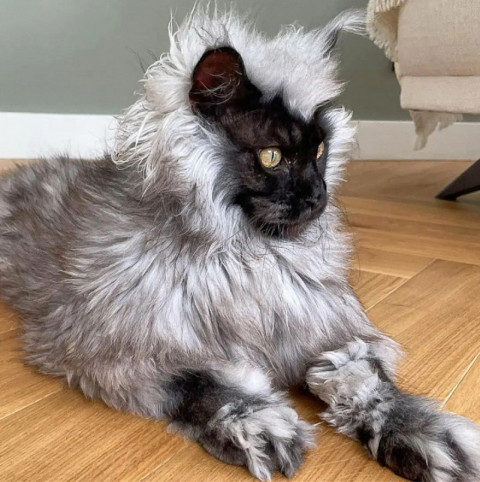
Maine Coons are very lovable and sociable animals. They like to play and are intelligent: you can even teach them minor tricks. It has even been reported of some Coons who have been taught to retrieve. Unlike most cat breeds, Maine Coon cats are known to be fond of water.
If a Maine Coon is kept alone, it needs a lot of human attention. The fur noses also talk a lot. Their sweet cooing and moaning accompany you through the day. They are very easy to get along with and get along with other animals and children.
Coons can be kept as indoor cats without any problems and are therefore well suited for working people. However, they are very active and active. Therefore, as indoor cats, they should still have enough opportunities to let off steam.
Appearance: Not Lightweight and a Lot of Furs
The average weight for Maine Coon cats is 6 to 8 kg. Cats should weigh up to 5 kg. The body is muscular, with a broad chest. The body should be elongated and angular. The Maine Coon can reach a length of up to 120 cm and a shoulder height of up to 40 cm. For size comparison: A Singapura, the smallest pedigree cat, has a maximum shoulder height of 20 cm.
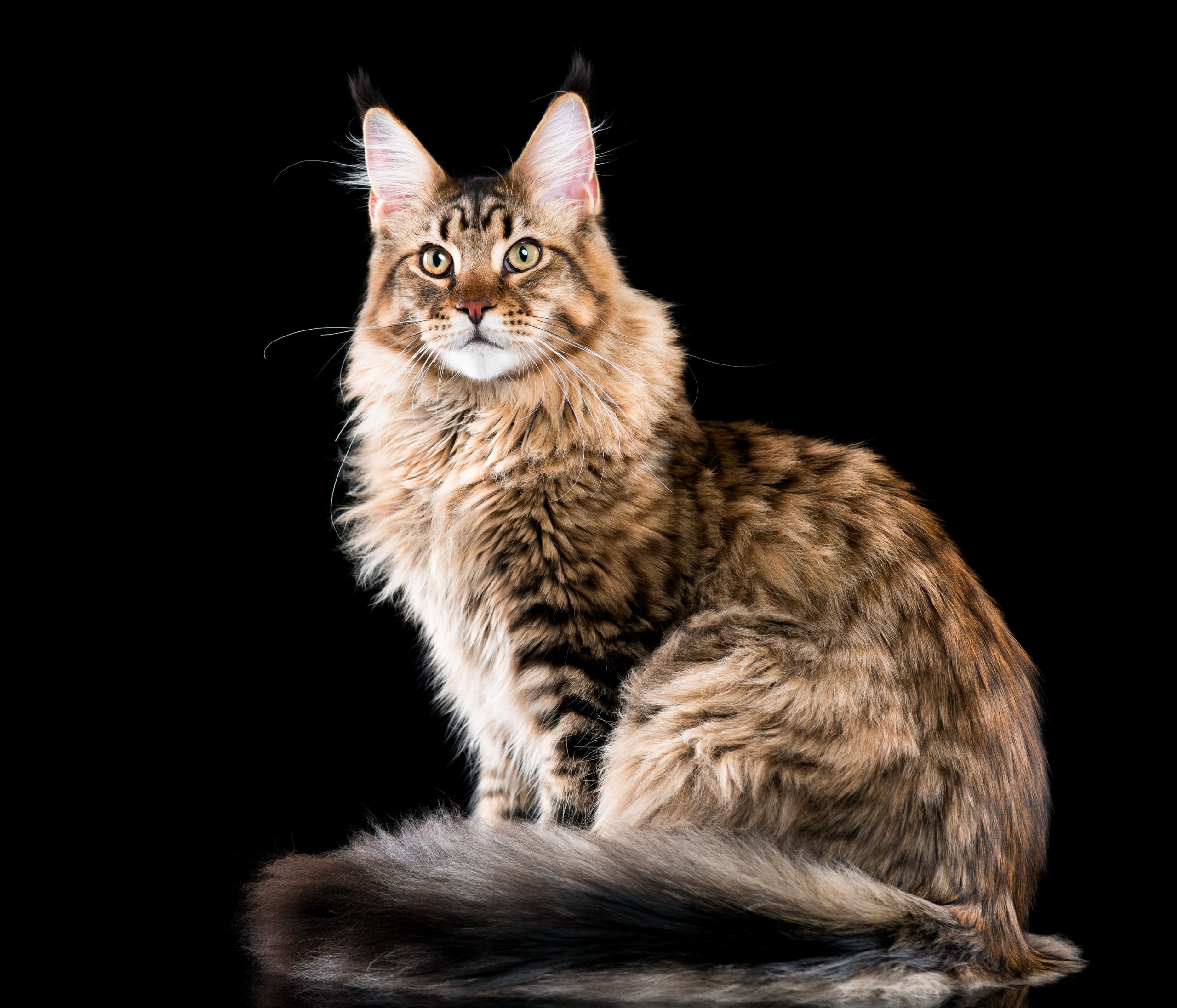
Maine Coons have large, pointy ears with tufts of hair at the end. The coat of the Coons is water-repellent. It has a dense undercoat, firm topcoat, and a bushy tail.
The tail should be about as long as the body. The fur can come in all possible variants, except in the color golden. The legs of the Coons are strong, muscular, set wide, of medium length, and well proportioned. The paws are large, round, and tufted with hair. The tufts of hair on the soles of some animals are so long that they protrude more than 2 cm between the toes.
Basically, there is no clear breed standard for the Maine Coons. This depends on the club to which the breeder belongs, although the differences in breed standards are small.
Polydactyly can also occur in some Maine Coons. This is a genetic defect in which cats are born with six or seven toes.
Maine Coon cats are big and are some of the largest pedigree cats there are. They also have a strong build with a broad chest and long back. The eyes are big, but the ears, which are far apart, are even bigger. The Maine Coon cat has an angular head with a strong chin and the tail of the Maine Coon cat is at least the length of the body. Maine Coon cats can reach a head-to-tail length of up to 120cm.
The Maine Coon Personality

As former utility cats, Maine Coons are gifted hunters. The clever kittens usually like to retrieve and are extremely water-loving. So please don’t be surprised if your fur nose doesn’t miss a water hole and likes to play with its water bowl. The scratching posts and sleeping caves should also be adapted to the enormous size of this cat breed. An adequate height and stability are important. You can find out more about this in our article on the right scratching post.
Maine Coons are considered affectionate. Nevertheless, you should offer your furry friends retreats such as playhouses. Also, when choosing the litter box, make sure it is the right size. The rule here is the bigger, the better and more pleasant for the cat!
In addition, Maine Coons can be socialized with other cats without any problems. When socializing with other cat breeds, care should be taken to ensure that they are also of sociable nature. Since Coons are very active and enjoy moving, you need to ensure that you get enough exercise. Especially if it is kept as a purely indoor cat. You can set up a cat-safe garden or balcony, for example. It is also possible to lead your cat on a cat leash, but this should be practiced in the apartment beforehand. Cat toys and intelligence toys should also be available for the clever animals to occupy.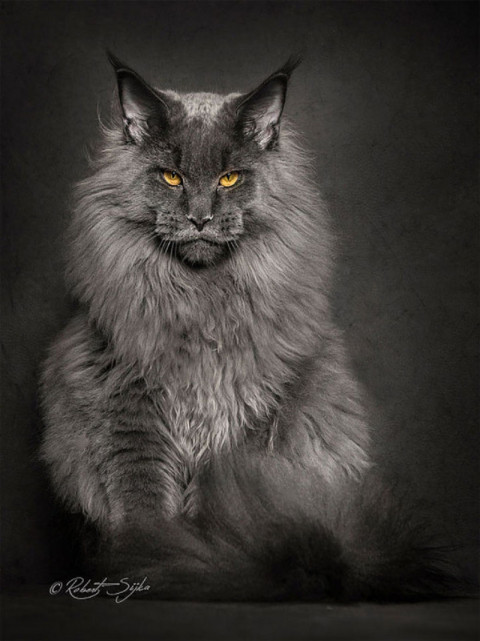
The Maine Coon cat is very affectionate and very often has a great need to cuddle. Nevertheless, she loves being outdoors and wants to be outside. Maine Coon cats are enterprising but nonetheless have a calm temperament. They are particularly well-known because they are very talented – which is mainly due to the use of their front paws. With this, Maine Coon cats even open doors or take smaller objects “into their hands”, so to speak. This can be seen particularly well when feeding the Maine Coon: They prefer to take the food with their paws instead of eating directly from the bowl.
The Maine Coon cat is also so intelligent that it can learn to retrieve.
How Old Do Maine Coon Cats Get?
Life expectancy is 12 to 15 years. The Maine Coon cat age is influenced by various factors. Always pay attention to species-appropriate housing, healthy cat nutrition, and many hours of cuddling. This forms a good basis for a happy cat life. There are also reports of Coons that have even become over 20 years old.
What are the Typical Diseases of the Maine Coon?
The Maine Coon cat is a very robust cat breed that can live up to 15 years, but this cat breed had to struggle with inbreeding for a while.
In addition, there are basically four diseases left from which the Maine Coon cat is particularly often affected – compared to other cat breeds.
These include, for example, hypertrophic cardiomyopathy, or HCM for short, a congenital disease of the heart muscles that can lead to shortness of breath. In addition, it can even lead to sudden cardiac death if it goes undetected.
Due to its size, the Maine Coon can also suffer from joint diseases such as hip dysplasia, elbow dysplasia, and patellar dislocation.
It is also very special that the Maine Coon cat can suffer from so-called spinal muscular atrophy or SMA for short. This is a disease of the nerve cells, which can be avoided by genetic tests (no breeding license for example). If a Maine Coon cat suffers from SMA, it will be noticeable as early as three or four months. The result is often a shortened service life.
The Maine Coon can also suffer from polycystic kidney disease, where cysts form in the kidneys that restrict the organ. This kidney disease is a slowly progressing disease that can be avoided with the help of genetic testing, but regular ultrasound examinations should still be carried out.
Maintenance: Less Effort Than You Think
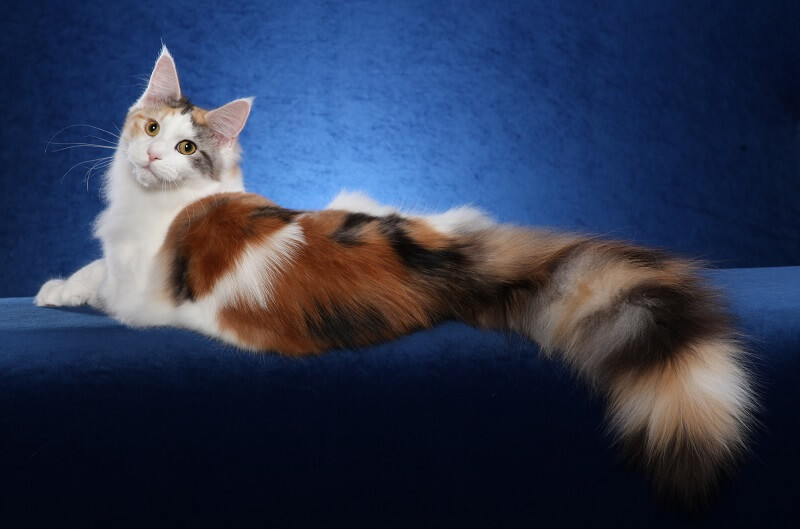
One would expect that the coat of a semi-long-haired cat would require a lot of maintenance. Contrary to all expectations, the coat of the Maine Coon does not require excessive care. This is because Coons have a very little undercoat and only half-long top hair. As a result, knots are not so easily formed. So it is enough if you carefully comb the cat’s fur once a week.
Although the Maine Coon cat is a semi-longhair cat, it does not need a lot of care. Her fur is a so-called all-weather fur, which she looks after very well on her own. The Maine Coon has adapted very well to life in the wild over the years and is very resilient. Their thick and lush fur is particularly evident in winter. It then looks even more impressive than usual.
However, during the period of coat change, you should take care of the coat more often. Also, be sure to check the fur of outdoor cats for parasites.
What Should You Watch Out for When Keeping the Maine Coon?
When feeding the Maine Coon, you should make sure that the cat is adequately cared for, because: It is a lot bigger than the average cat, and therefore an undersupply of commercial food is often inevitable. A meat-based diet or even fresh meat is great for the Maine Coon cat.
The Maine Coon cat is also a cat that likes to hunt and romp. She has a great urge to move and wants to enjoy life in freedom.
But not only that is important, but the equipment in the apartment should also be adapted to the Maine Coon cat. They need bigger sleeping spaces, a larger litter box, and thicker sisal logs than other cats. Maine Coons are also very open-minded towards other conspecifics, other people, and dogs.
Diet: Maine Coons Need a Lot of Energy
Maine Coons are large cats that have a high urge to move around and are active. Accordingly, the animals must have a correspondingly large amount of energy available. Different life situations also play a role in the Maine Coon diet. For example, older cats need different amounts of nutrients than younger cats.
With kittens, in particular, you should make sure that the right amount of energy is supplied. This ensures optimal development.
The state of health and weight of your four-legged friend also influence the number of nutrients required. When choosing cat food, make sure it has high-quality ingredients. The proportion of meat should be the highest. However, sugar, preservatives, grains, and animal by-products should only be present in small amounts.
Your furry four-legged friends will of course also be happy to receive treats, although the amount should remain within limits. Basically, you should pay attention to the weight of your cat, because being overweight can lead to painful joint problems.
What Feeding Methods are There?
In addition to dry and wet food, BARF and self-cooking are further options for nutrition. Before choosing any of these methods, do your research so that you can avoid dangerous nutritional deficiencies. Remember never to feed raw pork as it can transmit the Aujeszky virus. Cook the meat well before feeding.
Offer your Coons cat grass. When grooming their fur, the Maine Coons swallow a lot of hair, which forms balls in the stomach. The cat grass helps the four-legged friends vomit their hair, as they support nausea. The Coons should always have enough water at their disposal. Feeding milk should be avoided as cats are naturally lactose intolerant. However, cats tolerate special cat milk with a reduced proportion of lactose. However, it should only be offered as a snack and not as a water substitute.
History: America’s First Show Cats
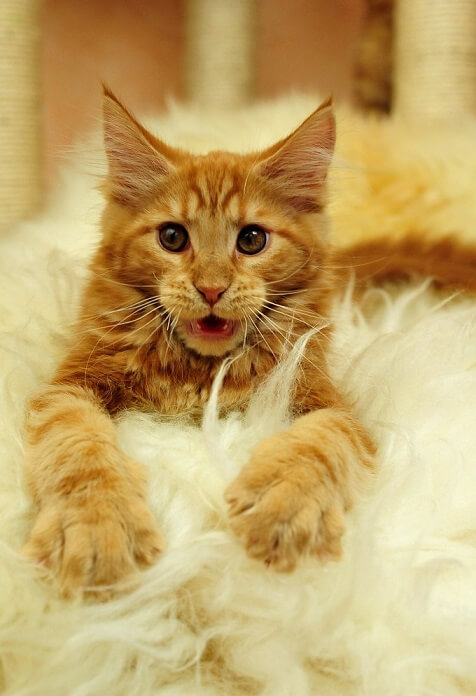
Outwardly, the Maine Coon is very similar to the Norwegian Forest Cat. In contrast to this, however, it comes from America, from the US state of Maine.
There are many legends about their origins. Among other things, it was claimed that she was a mixture of cat and raccoon, which is purely biologically impossible. It is more likely that the cats were used to control rats and mice on immigrant ships. That’s how they got to America. The Maine Coon was then forgotten, but was popular again from the 1950s and presented at breed shows.
Did you know that Coons are also called America’s first show cats? The people of Maine were very proud of their unusual cats. They were convinced that they were more intelligent, faster, stronger, and therefore better than other cats in everything. As early as the 18th century, they began to compare their Maine Coons with those of their neighbors at rural folk festivals.