Seeing our faithful four-legged friends suffer or pass away can be extremely painful. But do the dogs themselves know that they have to die?
Losing a pet is usually a terrible nightmare for owners. But while we humans are quickly tempted to transfer our own perceptions to the animal, there is one thing we cannot answer with complete certainty: does our dog know whether it is dying or does it not know?
There is some evidence to suggest that dogs are well aware of their death. Therefore, every owner should know how to best support them in their last days and hours.
Do dogs know they are dying?

It is not easy to say how much a dog feels or understands its approaching end. Nevertheless, towards the end, we can usually see a clear change in their behavior. For example, some dogs seem to become more clingy as death approaches and don’t leave their family members.
Other dogs, on the other hand, distance themselves and spend more time alone. In order to make the last few weeks and days as comfortable as possible for our fur friends, we need to be attentive to their mental, emotional, and physical symptoms. Even if our dogs don’t know they are dying, they definitely know something is wrong.
Do dogs distance themselves from us when they die?
It is known that some dogs retire to die. This primal instinct serves to protect the rest of the pack. In order not to draw the attention of predators to the other pack members, the sick or dying animal would distance itself from the group in the wild.
This instinctive behavior is so deeply anchored in animals that even domesticated dogs tend to do it, even if there is no threat to their human pack. However, the animal may just be old, confused, or scared and run away for this reason.
Do dogs want to be alone when they die?
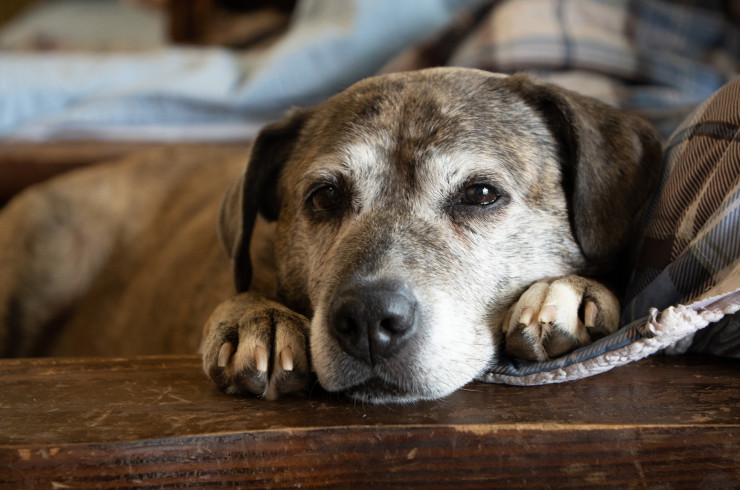
Although their natural instincts tend to move away from their pack or family, dogs typically do not want to be alone when they die. They prefer to be with you as they have been all their lives.
Losing a loved one can be heartbreaking. For many people, the death of their dog is as great a loss as that of a family member. While incredibly painful, you should make sure that your four-legged friend feels as loved, safe, and secure as possible at the moment of his death.
Why do dogs hide when they die?
Dogs listen to their bodies. So when they find that their body is failing them or that they no longer have the strength to defend themselves, they tend to hide. Their instincts tell them to hide to protect themselves.
Older dogs in poor health, who are blind or deaf, have difficulty finding their way around or suffer from neurological complaints, often look for a quiet and deserted place.
Do dogs know when their friends are dying?
Just like humans, dogs notice when others are sick or are about to die. Dogs usually have a finer sense of their environment than humans and understand quickly when one of their dog friends is about to die. In this case, they tend not to leave the side of the sick or old dog.
Dogs have an incredible sense of smell and can use it to perceive the smallest chemical and behavioral changes. In this way, diseases such as cancer or the coronavirus and other physiological changes can be recognized.
Although it cannot be said with certainty to what extent dogs understand death, it is certain that they will mourn when a four-legged friend or their owner dies. Just like humans suffer, dogs can become depressed, lose appetite, and change dramatically in their behavior.
If you are worried about your dog after such a stroke of fate, you should therefore urgently consult a veterinarian.
How do I know my dog is dying?
You may have noticed that your decrepit dog is getting a little slower or sluggish. But even in young dogs, illnesses can lead to premature death. The signs that your dog is dying will depend on what he’s suffering from. However, there are some symptoms that are common with approaching death, including:
- They lose interest in activities like walking or playing games.
- They avoid contact with family members.
- They stop eating or drinking.
- They are becoming incontinent.
- They whine, gasp, or pant.
- Their breathing will go faster, deeper, or shallower.
- Their heart rate is lower.
- They are stiff and have difficulty orientating themselves.
- They are dejected and lethargic.
- Their gums will turn pale or blue in color.
- They are looking for comfort and reassurance.
Properly helping a dog
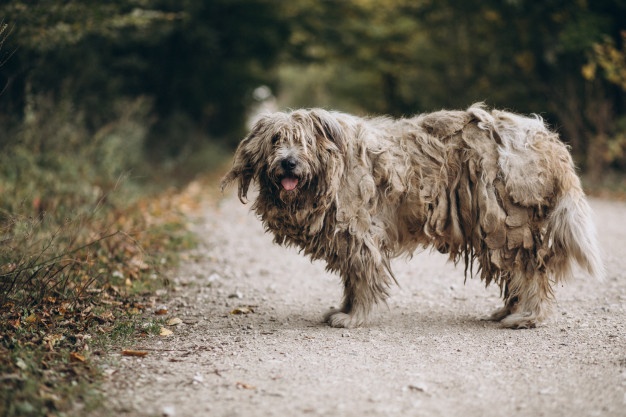
If your dog dies at home, there are a few things you can do to make the last few hours as comfortable as possible.
- Provide your dog with a quiet and warm area where they can rest comfortably and peacefully. Only allow contact with children and other pets under supervision, as they may not be able to understand your dog’s condition.
- Provide your dog with food and water, but do not force him to eat it, as there is a good chance he will lose his appetite in the process of dying.
- Gently pet your dog as you speak reassuringly. While it may be incredibly difficult, try to stay calm around your dog as the animals are very sensitive to their owners’ emotions.
- Keep waterproof mats ready or under your pet if it is no longer able to go out to do its business.
- If you think your dog is suffering speak to your veterinarian and they may also make house calls.