Dangerous infectious diseases, on the one hand, side effects after vaccination on the other: Many dog owners are becoming increasingly unsure when it comes to the question of whether they should have their four-legged friends vaccinated. The discussion heats the mind. Veterinarians often face skeptical dog owners. But it is an important topic that should not be treated lightly.
How does vaccination work?
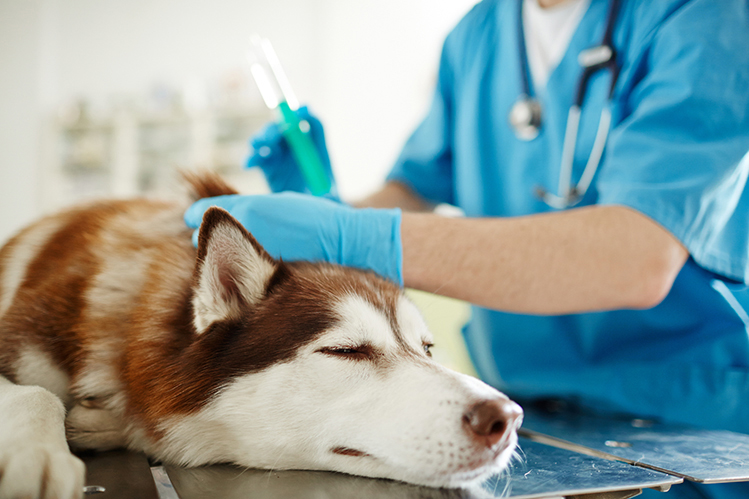
Vaccinated dogs are protected from infectious diseases. These are transmitted via bacteria or viruses. First of all, it is important to know what goes on in the dog’s body during a vaccination.
- During vaccination, the veterinarian uses a syringe to administer either killed pathogens or parts of them.
- The dog’s organism now forms defense substances (antibodies) against these pathogens.
- In the event of later infection, the four-legged friend is well prepared. The antibodies already present now take up the fight with the pathogens in a targeted manner.
- The dog stays healthy and cannot pass the pathogens on to fellow dogs or other individuals.
Small prick, big effect
If carried out regularly, vaccinations are the first thing to be able to protect your own dog from contracting a disease that is often fatal. In addition, widespread vaccination ensures that dangerous diseases spread and get out of control. In Europe, for example, where dogs are less vaccinated, certain infectious diseases such as distemper are more common than in the USA.
There is also a danger in the event that more and more dog owners in the USA decide against vaccination: If that part predominates, it is only a matter of time when diseases that have already been partially eradicated will spread again in this country.
Zoonoses
Finally, there is one more important point to mention: Living with animals and close contact with one another also harbors health risks. Zoonoses are infectious diseases that can be transmitted from vertebrates to humans. Rabies and leptospirosis are among them, for example. If vaccination fatigue increases among dog owners, the risk increases that more and more people will become infected with life-threatening diseases. Accordingly, there are three important reasons for vaccinating dogs.
Is it compulsory to have a dog vaccinated?
When talking about the subject of “vaccinations in dogs”, veterinary medicine distinguishes between mandatory vaccines (core vaccines) and optional vaccines (non-core vaccines). This designation is misleading because there is no general compulsory vaccination for dogs in Germany.
The EU pet passport with proof of certain vaccinations is only required if the dog owner travels to EU countries with his four-legged friend. Although it ultimately remains the decision of the dog owner: Compulsory vaccinations are important for the protection of the dog and are urgently recommended.
Compulsory vaccines
- Canine contagious hepatitis
- Distemper
- Parvovirus
- Rabies
- Leptospirosis
Choice vaccines
With the vaccines of choice, dog owners and vets should carefully weigh up whether they make sense for the respective dog. In some cases, the habitat of the fur nose plays a role, in other cases the state of health is decisive. The following vaccinations should not be initiated without careful and individual advice:
- Kennel cough
- Lyme disease
- Babesiosis
- Leishmaniasis
- Fungal infections
Dog vaccinations – how often?
The Vet Standing Vaccination Commission is an association of renowned veterinarians and immunologists. The Commission regularly publishes up-to-date guidelines on vaccination protection in dogs:
In the first two years, puppies or young dogs receive what is known as basic immunization. This provides for the dog to be vaccinated in the eighth, twelfth, and 16th weeks of life. When the young dog is 15 months old, the Vet advises having a new vaccination. After the basic vaccination, the veterinarian speaks of revaccination. Depending on the active ingredient, these are recommended annually (e.g. leptospirosis) or every two or three years (e.g. rabies).
The individual vaccination schedule must always be discussed with the veterinarian. Many factors flow into it and depending on the epidemic situation and state of health, it can vary from dog to dog.
Vaccinations for dogs – costs
The costs depend on the vaccine, the number of vaccines, and the veterinarian. There is the possibility of having individual vaccinations. Frequently, however, the so-called combined vaccinations, in which the dog is given several vaccines with one bite, are carried out. The cost of an eight-fold combination vaccination starts at around $75.
A single rabies vaccination costs around $50 per dog.
Is there anything to consider before and after the vaccination?
Before vaccination
A dog must be completely healthy before vaccination. This means that the fur nose should not show any fever, vomiting, diarrhea, or other symptoms. This also means that the dog is free from parasites. Therefore, the vet checks the body temperature before the vaccination and checks the general health of the four-legged friend. If the dog owner noticed complaints days before the vaccination, this must be reported to the veterinarian.
After vaccination
The dog bravely survived the little prick, but only after the vaccination can it be seen whether everything went well. Now the fur nose needs a lot of rest. Most retire to their homes, sleep in and show loss of appetite. Your two-legged friends should definitely accept the increased need for sleep. This means that for the sake of the dog, mistress or master refrains from extended walks on the day.
The fur nose will continue to be observed the next day. Some still look a bit dull, others are just the old ones again. There are some side effects that your dog may experience.
Vaccinations in the dog – side effects
As described above, the fur nose often feels tired and has no appetite. The risk of other side effects with the vaccines is extremely low. However, other symptoms can also occur in individual cases:
- Fever
- Sensitivity to pain at the vaccination site
- Diarrhea
- Vomit
- Swelling on the dog’s face
- Shortness of breath
In the worst case, an extreme allergic reaction can occur in the dog. This anaphylactic shock is life-threatening. Therefore, dog owners should not hesitate and bring their four-legged friends to the veterinary clinic as soon as possible. In the case of side effects, the following always applies: if in doubt, always consult the veterinarian.
Dog vaccinations: brief summary
- Mandatory vaccines are highly recommended.
- The individual vaccination scheme varies from dog to dog and should be discussed with the veterinarian.
- Vaccinations protect your own fur nose, fellow dogs, and, in the case of certain infectious diseases, people too.
- Unfortunately, side effects cannot be ruled out, although they are extremely rare.
- After the vaccination, the dog needs rest and has an increased need for sleep.