Open your mouth for the dental check! Good dental hygiene is essential to a dog’s wellbeing. Many four-legged friends suffer from tartar – these are hard deposits that, if left untreated, can lead to serious health problems. But how exactly do you recognize that your own fur nose has tartar, what does the treatment look like and how do dog owners prevent it?
How does tartar develop in dogs?
The precursor to tartar is plaque. This is dental plaque, which is caused by deposits of food residues, saliva, and bacteria. If the layer on the teeth is not removed – for example by cleaning with a toothbrush – the deposits will later harden. From this point on, tartar is mentioned. This is a rough layer that covers the tooth like a wall. The discoloration will later spread to the gums. At this stage, the gums become inflamed.
How do I recognize tartar in dogs?

First of all, it is important to recognize tartar in the dog in good time. As a dog owner, this ensures quick treatment and stops toothache.
With tartar, unsightly, yellow-brown discoloration occurs on the dog’s teeth, which can spread more and more to the entire tooth.
Most often the outside of the back molars and the front fangs are affected. Depending on the progress, the teeth are either only slightly discolored or look unaesthetic. Or – in the later process – dog owners will recognize clear yellowish and brownish layers, which also have a rough surface. But tartar in dogs brings out other characteristics. The following symptoms suggest advanced tartar build-up in dogs:
- The smell from the mouth
- Bleeding gums
- One-sided chewing or even refusal to feed (caused by severe pain)
- Pus in the oral cavity
- Tooth loss
Tartar in dogs – which dogs are particularly susceptible?
Basically: tartar can affect any dog. Nevertheless, there are breed-specific and other characteristics that favor the development:
- Dogs with small head shapes, such as Maltese or Chihuahua
older dogs; - both long-snouted dogs (e.g. dachshunds);
- as well as extremely short-snouted dogs (e.g. French bulldogs).
Tartar in dogs – treatment
If the diagnosis “tartar in the dog” has been made, treatment is inevitable. Here, as in many cases, ignoring is the wrong decision. Not just because dogs are in extreme pain. The bacteria from the gums spread to the entire dog’s body. As a result, serious damage to health occurs, for example to the kidneys, liver, and heart. In addition, if the tartar is strong, the tooth can no longer be saved. The only solution left is to remove the tooth. Since many dog owners want to avoid treatment under general anesthesia, there are gentler alternatives. However, dog owners should use these with caution.
Remove tartar from dogs with anesthesia
Veterinarians offer an ultrasound treatment in which the tartar is first removed during professional teeth cleaning and then the teeth are polished. The frequency of the ultrasound is so uncomfortable for dogs that the treatment can only be used under general anesthesia. Apart from that, the risk of injury would also be too high, since uncontrolled movements of the dog cannot be avoided.
Polishing has the effect that the teeth are smooth and so that deposits stick to them more difficultly in the future. This not only eliminates the acute problem of tartar but also helps to spare the dog from painful deposits in the future. Nevertheless, the following applies: Even after the distance, the dog owner’s help is still required.
Regular dental care and the elimination of unhealthy feed components such as sugar and grain are still essential.
Remove tartar from dogs without anesthesia
Since anesthesia is not without its risks – especially for older or susceptible dogs – there is an increasing number of options for tartar removal without anesthesia. This method is generally not recommended. Tartar removal without ultrasound treatment is only a cosmetic matter. This will make the teeth look white and healthy afterward, but the treatment will only keep the problem in check for a short time.
Remove tartar from the dog itself
The specialist trade offers many products that suggest easy tartar removal from the home. With many chews it is the same as with dry food: Although a minimal abrasion is possible under certain circumstances, ingredients such as grain or sugar in turn favor plaque and thus also tartar. When feeding bones, the dog needs more “work” because the bones are harder. In addition, beef breast bones and Co. do not have any additional ingredients such as sugar or grain, like the manufactured chewing bones. But even if (raw!) Bones are given regularly, tartar can develop and the existing ones only recede minimally. A useful dietary supplement is a seaweed meal (Ascophyllum nodosum). Existing tartar becomes softer and can be easily removed with a toothbrush. But be careful with the dosage: Dog owners should ask a veterinarian before adding a seaweed meal. This is because some dogs can experience an overdose of iodine.
Removing tartar from dogs: prices

A veterinarian calculates his services according to the fee schedule for veterinarians (GOT). Veterinarians are allowed to charge at least 1 and a maximum of 3 times the rate of the tariffs for their services. As a result, there can be differences in costs from vet to vet.
It should be noted that it often does not stick with tartar removal. A subsequent polishing to remove tartar in the dog in the future and possible tablets are usually added. A preliminary examination is also necessary, especially with older dogs, in order to assess the risk of anesthesia. The degree of difficulty and the extent of the tartar also flow into the actual total to be paid. As a rough guide, a dog owner expects about $150-$250 for a dental calculus removal with ultrasound.
How can I prevent tartar in dogs?
The good news: Regular grooming and grooming has been shown to reduce the risk of plaque and tartar build-up to a dog owner:
Do not forget to brush your teeth!
Even if some dogs find it annoying: brushing their teeth is a must. Regular cleaning with a toothbrush is essential, especially for susceptible dogs. For some, daily cleaning is recommended, for others, it is sufficient to clean their teeth with a toothbrush twice a week.
Check with the vet
A trained veterinarian’s eye is helpful in many cases. Therefore, if tartar develops, a regular check-up at the vet cannot do any harm.
Can the right food help?
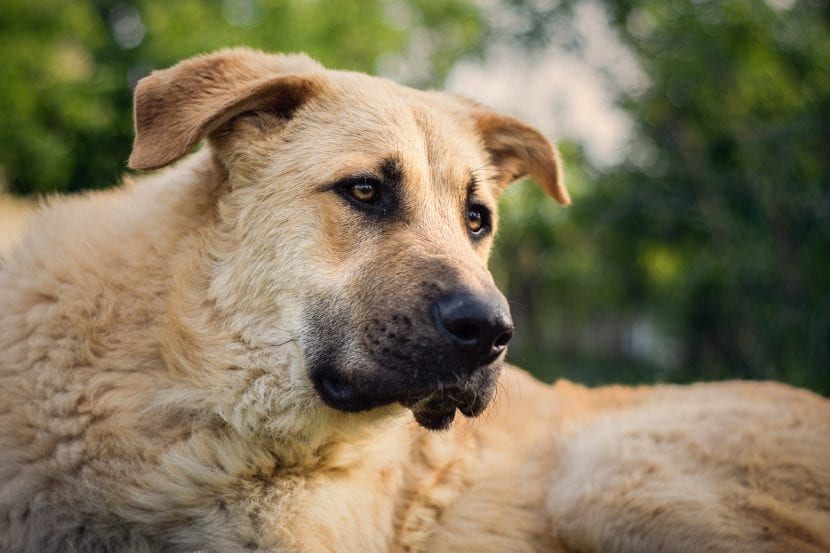
Food is not the only cause of tartar, but there are diets in dogs that can either promote or counteract tartar.
Wet food
Wet food can easily get stuck between teeth and lead to tartar in dogs. However, if it is high-quality wet food without grain and sugar, at least these two factors are good prevention against tartar.
Dried animal food
Opinions are divided when it comes to dry food. It is widely believed that the mechanical abrasion of the kibble causes teeth to be cleaned in a very practical way while chewing. There are two reasons against this: the croquettes disintegrate quickly and there are no studies that substantiate the preventive effect against tartar. In addition, there is an important reason against dry food: If you take a close look at the ingredients, you will find that many types of dry food contain a high amount of carbohydrates. However, this is crucial for the development of tartar in dogs.
Barps
With a barf diet (organic, species-appropriate raw feeding), it is advantageous that the dog also gets solid chunks of food in the bowl. Bones, in particular, but also harder pieces of meat can help to clean the teeth. In general, it should be ensured that the dog does not get any sugar and a high proportion of grain in its bowl.